
Salesforce, Inc. Just Recorded A 35% EPS Beat: Here's What Analysts Are Forecasting Next
Shareholders of Salesforce, Inc. (NYSE:CRM) will be pleased this week, given that the stock price is up 13% to US$261 following its latest quarterly results. It looks like a credible result overall - although revenues of US$10b were what the analysts expected, Salesforce surprised by delivering a (statutory) profit of US$2.19 per share, an impressive 35% above what was forecast. Earnings are an important time for investors, as they can track a company's performance, look at what the analysts are forecasting for next year, and see if there's been a change in sentiment towards the company. So we gathered the latest post-earnings forecasts to see what estimates suggest is in store for next year.
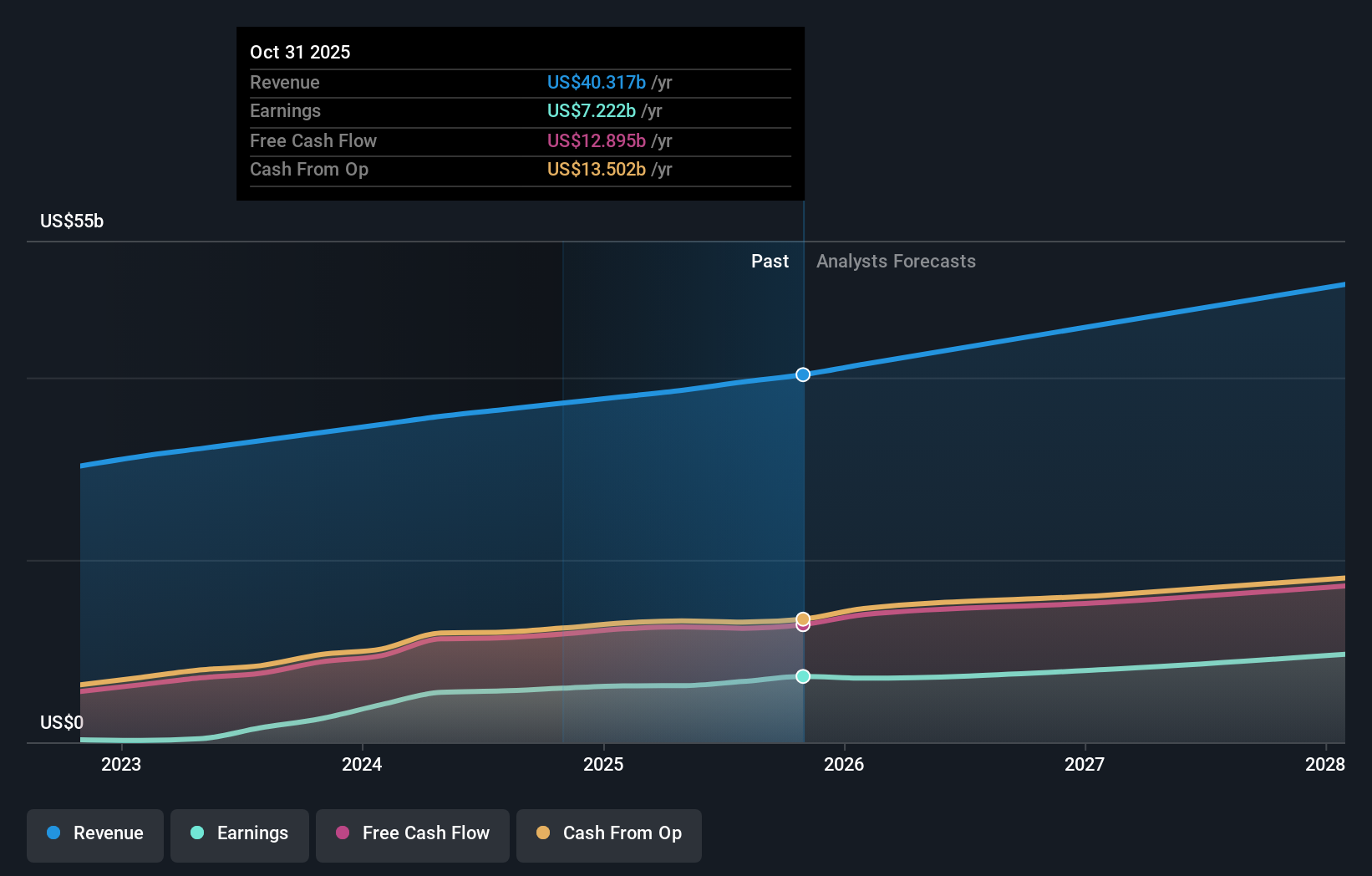
Taking into account the latest results, the consensus forecast from Salesforce's 51 analysts is for revenues of US$45.9b in 2027. This reflects a notable 14% improvement in revenue compared to the last 12 months. Per-share earnings are expected to accumulate 7.8% to US$8.31. Before this earnings report, the analysts had been forecasting revenues of US$44.9b and earnings per share (EPS) of US$8.46 in 2027. There doesn't appear to have been a major change in sentiment following the results, other than the slight bump in revenue estimates.
View our latest analysis for Salesforce
Even though revenue forecasts increased, there was no change to the consensus price target of US$327, suggesting the analysts are focused on earnings as the driver of value creation. There's another way to think about price targets though, and that's to look at the range of price targets put forward by analysts, because a wide range of estimates could suggest a diverse view on possible outcomes for the business. Currently, the most bullish analyst values Salesforce at US$415 per share, while the most bearish prices it at US$223. This shows there is still a bit of diversity in estimates, but analysts don't appear to be totally split on the stock as though it might be a success or failure situation.
These estimates are interesting, but it can be useful to paint some more broad strokes when seeing how forecasts compare, both to the Salesforce's past performance and to peers in the same industry. The period to the end of 2027 brings more of the same, according to the analysts, with revenue forecast to display 11% growth on an annualised basis. That is in line with its 13% annual growth over the past five years. By contrast, our data suggests that other companies (with analyst coverage) in a similar industry are forecast to see their revenues grow 15% per year. So it's pretty clear that Salesforce is expected to grow slower than similar companies in the same industry.
The Bottom Line
The most important thing to take away is that there's been no major change in sentiment, with the analysts reconfirming that the business is performing in line with their previous earnings per share estimates. Fortunately, they also upgraded their revenue estimates, although our data indicates it is expected to perform worse than the wider industry. The consensus price target held steady at US$327, with the latest estimates not enough to have an impact on their price targets.
Keeping that in mind, we still think that the longer term trajectory of the business is much more important for investors to consider. We have forecasts for Salesforce going out to 2028, and you can see them free on our platform here.
We also provide an overview of the Salesforce Board and CEO remuneration and length of tenure at the company, and whether insiders have been buying the stock, here.
Have feedback on this article? Concerned about the content? Get in touch with us directly. Alternatively, email editorial-team (at) simplywallst.com.
This article by Simply Wall St is general in nature. We provide commentary based on historical data and analyst forecasts only using an unbiased methodology and our articles are not intended to be financial advice. It does not constitute a recommendation to buy or sell any stock, and does not take account of your objectives, or your financial situation. We aim to bring you long-term focused analysis driven by fundamental data. Note that our analysis may not factor in the latest price-sensitive company announcements or qualitative material. Simply Wall St has no position in any stocks mentioned.