
BREAKING NEWS: Fed Cuts Rates Again as Officials Clash Over Next Steps: Post Analysis
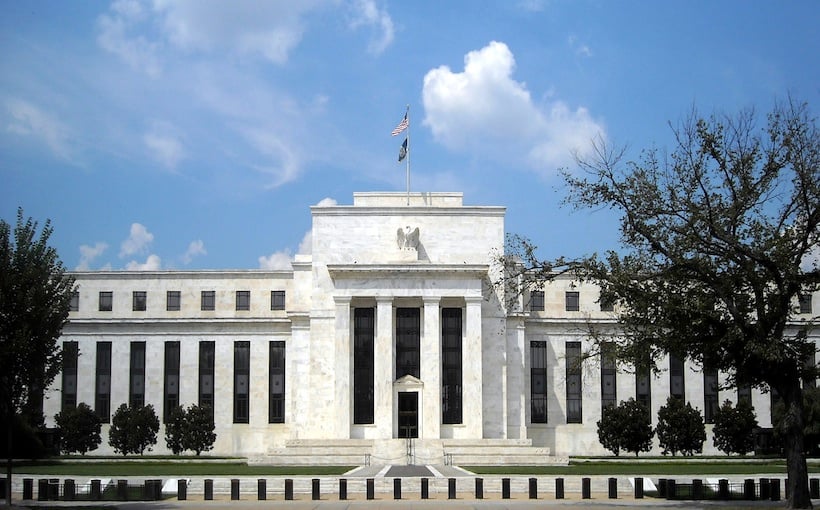
The Federal Reserve delivered an expected quarter-point rate cut on Wednesday, lowering the federal funds rate to a range of 3.50%–3.75%. But the decision was far from unanimous, and new language in the policy statement suggests the path forward is murkier than many anticipated.
Three FOMC members dissented. Governor Stephen Miran favored a larger half-point reduction for the third consecutive meeting. Kansas City Fed President Jeffrey Schmid again voted to hold rates steady, joined this time by Chicago Fed President Austan Goolsbee.
A Fractured Forecast
The Fed’s latest dot plot shows a median forecast of just one quarter-point cut in 2026, though consensus remains elusive. Four officials expect that scenario, seven see no cuts at all, another four project two reductions, and four envision even deeper easing—including one anticipating the equivalent of six quarter-point cuts.
While divided on the policy path, most officials share common concerns about the economy’s direction, with 13 of 19 officials seeing unemployment as more likely to rise than fall, and 12 believing inflation will stay stubbornly high. The real debate lies in how to balance those two risks.
“I don’t believe inflation is where the Fed wants it to be,” David Scherer, co-CEO of Origin Investments, told Connect Money. “The question becomes: why cut rates unless there is a broader economic problem?” Scherer advocates a wait-and-see approach for 2026. “Traditionally, four to five rate cuts in a year would signal a weaker economy characterized by stubborn inflation, a higher unemployment rate, and slower job growth. Those advocating for aggressive rate cuts should be careful what they wish for.”
Mixed Implications for Real Estate
Real estate professionals expressed cautious optimism about the Fed’s decision, though many emphasized that rate cuts alone don’t guarantee sector-wide gains. “Many people root for the Fed to cut rates in the hopes that those cuts will ultimately impact CRE in a positive way,” Ryan Severino, Chief Economist at BGO, told Connect Money. “But reality is more complicated. Cap rates, valuations, and returns are not a function of simply one factor. History has demonstrated that CRE returns can fare well, even in a higher rate environment.”
Severino noted that during the 1980s and 1990s, Treasury yields ran significantly higher than in recent decades, yet commercial real estate still generated solid performance.
Ronald Dickerman, founder and president of Madison International Realty, said that while the Fed’s rate cuts send a positive signal for commercial real estate, investors shouldn’t expect borrowing costs to fall indefinitely. “Continued deficit spending across developed markets, including the U.S., creates a natural floor on how low rates can realistically go,” he noted, adding that although the adjustments offer some relief, investors will need more sophisticated strategies to generate alpha in today’s fragile market environment.
Still, some sectors stand to benefit more directly. Noel S. Liston, Managing Broker of Core Industrial Realty in Chicago, called the rate cut a “positive event for industrial real estate.” Lower borrowing costs should boost economic growth and lift profits at smaller companies—many of which occupy industrial space. Liston expects cap rates for investment properties to decrease modestly, breaking the holding pattern of the past year.
Scott Hensley, Principal at Piedmont Properties/CORFAC International in Charlotte, added that the cuts are “good news” not only for developers and buyers pursuing new acquisitions, but also for property owners who financed between March 2020 and April 2022, when rates were near zero. Many of those loans carry five-year balloons, meaning renewals are now coming due.
“Even though a renewal rate will be more than their current interest rate, it will be less painful than it was six or 12 months ago,” Hensley said. “We are seeing regional lenders now quoting rates in the high 5% to low 6% range.”
Marion Jones, Principal and Executive Managing Director of U.S. Capital Markets at Avison Young, described the third cut of the year as particularly significant. “In an era of prolonged volatility, it signals directional conviction,” Jones said. “As we move into 2026, this sets the stage for more capital deployment, kickstarting development pipelines and leasing activity that reflects renewed confidence in growth.”
Jay Godman, Partner in the Real Estate practice at HSF Kramer, echoed that sentiment. His firm’s real estate division has seen a notable surge in activity since September—a trend he expects will accelerate. “Lower rates should enable lenders to take a more competitive approach on loan terms and potentially broaden the range of real estate assets they’re willing to finance,” Godman said.
Origin Investment’s Scherer noted that the current rate environment has already benefited firms focused on ground-up development. “Credit spreads in multifamily have remained stable to even at tighter levels as SOFR declined from 5.25% to 3.75%,” he said. “This means borrowing costs on multi-development have declined from 7.5%–9% to 6%–7.25%, making development more attractive in returns.”
Treasury Purchases Return
The Fed also announced it will resume buying Treasury securities to ensure adequate liquidity in the banking system and prevent short-term borrowing costs from spiking. Beginning December 12, the central bank will purchase $40 billion in Treasury bills over the next 30 days. The move comes just weeks after the Fed halted quantitative tightening, a process that had been shrinking its balance sheet.
The post BREAKING NEWS: Fed Cuts Rates Again as Officials Clash Over Next Steps: Post Analysis appeared first on Connect CRE.