
Is It Too Late to Consider Natera After a 511% Three Year Surge?
- Wondering if Natera is still attractive after such a massive run, or if the easy money has already been made? Let us unpack what the market is really pricing in here.
- The stock has cooled slightly over the last week, down 3.7%, but that comes after a strong 12.8% gain over 30 days and an impressive 45.2% return year to date, building on a huge 511.2% gain over 3 years.
- Recent momentum has been driven by growing investor enthusiasm around Natera's core genetic testing platforms and their expanding applications in areas like oncology and women’s health. In addition, regulatory and clinical milestones have continued to reinforce the long term adoption story, helping justify some of the optimism baked into the share price.
- Despite all this excitement, Natera only scores 1/6 on our valuation checks, which suggests the stock might not be the clear bargain some investors expect. Next, we will walk through different valuation approaches to see what they miss and then finish with a more complete way to think about what Natera is really worth.
Natera scores just 1/6 on our valuation checks. See what other red flags we found in the full valuation breakdown.
Approach 1: Natera Discounted Cash Flow (DCF) Analysis
The Discounted Cash Flow model estimates what a company is worth by projecting its future cash flows and then discounting them back to today in dollar terms. For Natera, the model starts with last twelve months free cash flow of about $108.7 million and then layers on analyst forecasts followed by longer term extrapolations.
Analysts see free cash flow rising sharply over the next few years, with Simply Wall St extending those projections further out. By 2029, Natera’s free cash flow is expected to reach roughly $747 million, and by 2035 the extrapolated figure climbs to around $2.0 billion, which would represent aggressive but not implausible growth for a successful platform biotech.
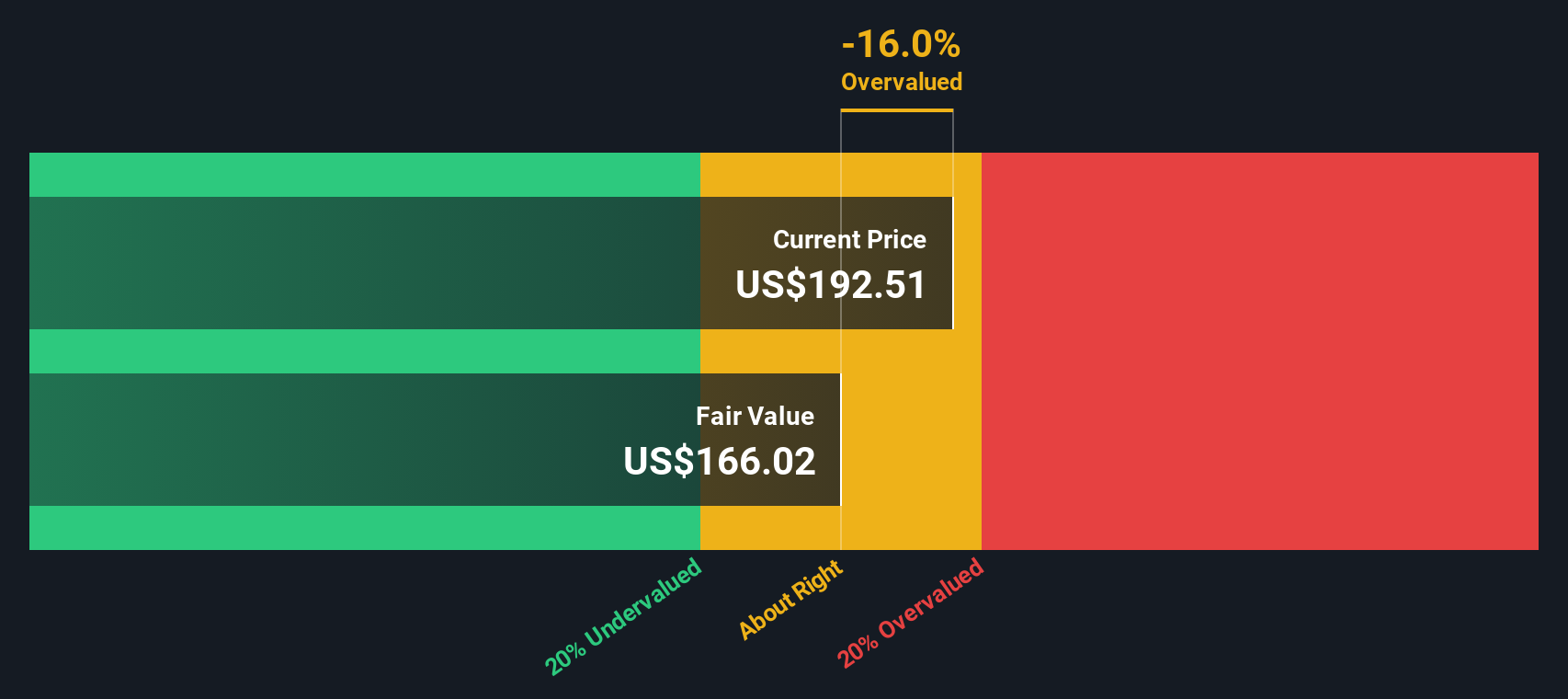
When these cash flows are discounted back using a 2 Stage Free Cash Flow to Equity model, the resulting intrinsic value comes out at roughly $250.47 per share. Compared with the current share price, this suggests Natera is trading at about a 6.9% discount, which is small enough that it could be explained by normal market noise.
Result: ABOUT RIGHT
Natera is fairly valued according to our Discounted Cash Flow (DCF), but this can change at a moment's notice. Track the value in your watchlist or portfolio and be alerted on when to act.
Approach 2: Natera Price vs Sales
For a high growth biotech that is not yet consistently profitable, revenue is often the cleanest way to compare value, which makes the price to sales multiple a useful yardstick. Investors typically accept a higher multiple when they expect faster, more durable growth and lower perceived risk, while slower, riskier businesses usually command lower, more conservative ratios.
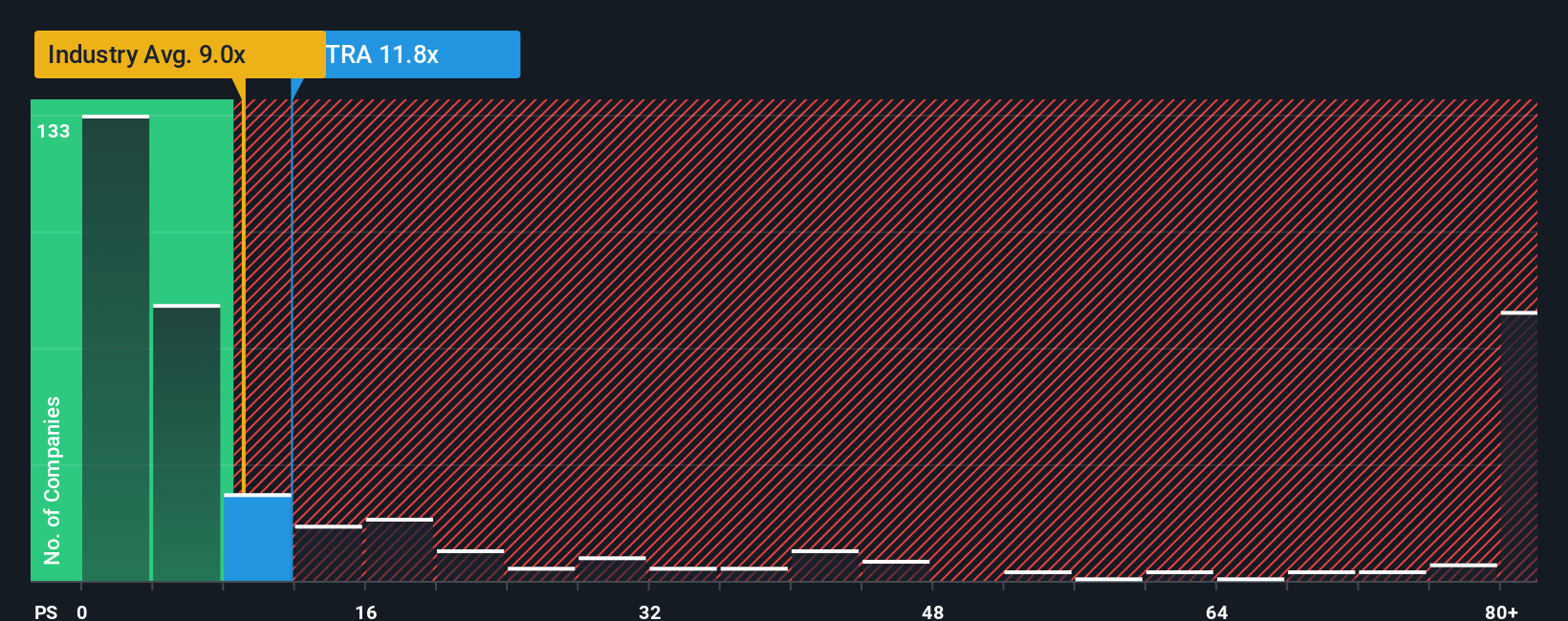
Natera currently trades at about 15.2x sales, which is rich compared to the broader Biotechs industry on roughly 11.8x and even above its peer group average of around 8.6x. To go a step further, Simply Wall St calculates a proprietary Fair Ratio of about 8.26x for Natera, which reflects what investors might reasonably pay given its growth outlook, margins, size, sector and risk profile.
This Fair Ratio is more informative than a simple peer or industry comparison because it adjusts for Natera’s specific fundamentals rather than assuming all biotechs deserve the same multiple. Comparing the two, Natera’s current 15.2x sales is materially higher than the 8.26x Fair Ratio, suggesting the market is baking in a lot of optimism already.
Result: OVERVALUED
PS ratios tell one story, but what if the real opportunity lies elsewhere? Discover 1446 companies where insiders are betting big on explosive growth.
Upgrade Your Decision Making: Choose your Natera Narrative
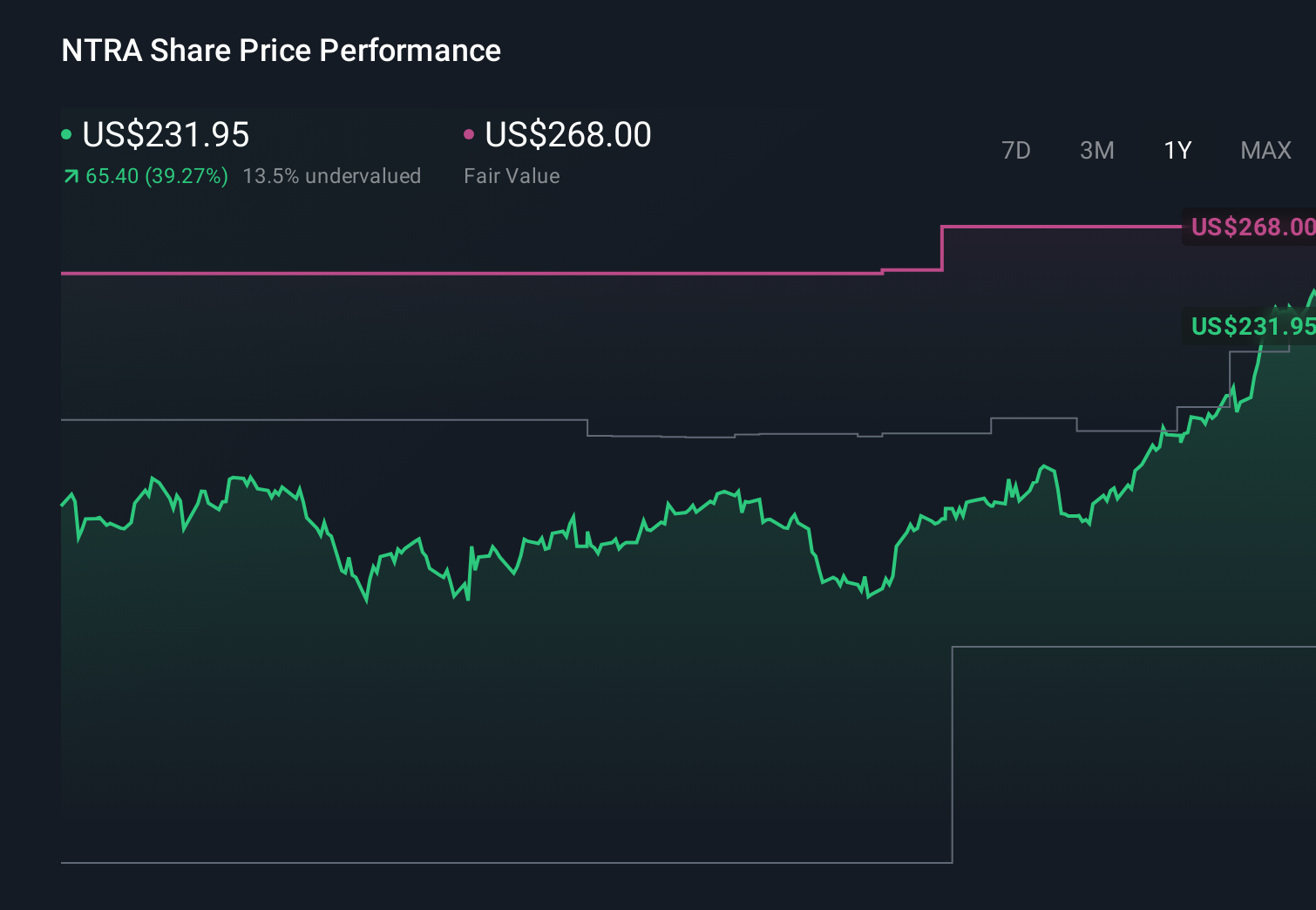
Earlier we mentioned that there is an even better way to understand valuation, so let us introduce you to Narratives, which are simply the stories investors tell about a company that link its business outlook to a concrete forecast for revenue, earnings and margins, and then to a fair value estimate. On Simply Wall St’s Community page, millions of investors use Narratives as an easy, accessible tool to record their view of Natera’s future, translate that story into numbers, and then compare their Fair Value to today’s share price to decide whether it is a buy, hold or sell. Because each Narrative is backed by assumptions that can be updated when new earnings, trial results or news breaks, the fair value adjusts dynamically as the story changes, helping investors stay aligned with the latest information rather than relying on a static DCF or multiple. For example, one bullish Natera Narrative might assume rapid adoption of Signatera and assign a fair value near $268 per share, while a more cautious Narrative, focused on reimbursement and competition risks, could land closer to $37. Yet both investors can clearly see how their different stories drive different valuations and decisions.
Do you think there's more to the story for Natera? Head over to our Community to see what others are saying!
This article by Simply Wall St is general in nature. We provide commentary based on historical data and analyst forecasts only using an unbiased methodology and our articles are not intended to be financial advice. It does not constitute a recommendation to buy or sell any stock, and does not take account of your objectives, or your financial situation. We aim to bring you long-term focused analysis driven by fundamental data. Note that our analysis may not factor in the latest price-sensitive company announcements or qualitative material. Simply Wall St has no position in any stocks mentioned.
Have feedback on this article? Concerned about the content? Get in touch with us directly. Alternatively, email editorial-team@simplywallst.com