
Will a Retail Bankruptcy and Social Innovation Push Whirlpool (WHR) Toward a New Risk‑Reward Narrative?
- Whirlpool has recently been drawn into the abrupt shutdown and Chapter 11 bankruptcy of Howard's Appliance in Southern California, where the 79-year-old retailer closed all stores, laid off staff, and moved to liquidate assets while carrying US$17.20 million in liabilities, including unpaid taxes and vendor liens that list Whirlpool as a creditor.
- At the same time, Whirlpool Foundation's backing of The Washing Machine Project's Divya manual washer, named one of TIME's Best Inventions of 2025, highlights how the company is pairing community-focused innovation with a business facing housing-related margin pressure and potential tariff-driven advantages from its largely U.S.-made product mix.
- We will now examine how the Howard's Appliance bankruptcy, and related credit exposure, could reshape Whirlpool's investment narrative and risk-reward profile.
These 15 companies survived and thrived after COVID and have the right ingredients to survive Trump's tariffs. Discover why before your portfolio feels the trade war pinch.
Whirlpool Investment Narrative Recap
To own Whirlpool, you need to believe that a pressured but entrenched appliance maker can translate product refreshes, tariff support, and cost cuts into sustained, higher-margin earnings. The Howard's Appliance bankruptcy appears immaterial to that thesis near term, with credit exposure small against Whirlpool’s scale. The bigger swing factor remains how quickly housing-related demand and pricing power firm up, while the key risk is that competition and weak consumer spending keep margins stuck near current levels.
Against that backdrop, Whirlpool’s decision to cut its annual dividend rate to US$3.60 per share stands out as the announcement most connected to today’s risks. It underlines how management is prioritizing balance sheet resilience and reinvestment at a time when tariffs could help, but earnings, cash generation, and debt coverage are still under pressure, and investors are watching closely for tangible progress on margins and free cash flow.
Yet even with potential tariff benefits, investors should be aware that Whirlpool’s reliance on mature, slow growing markets could...
Read the full narrative on Whirlpool (it's free!)
Whirlpool's narrative projects $15.8 billion revenue and $741.4 million earnings by 2028. This requires a 0.6% yearly revenue decline and a $887.4 million earnings increase from $-146.0 million today.
Uncover how Whirlpool's forecasts yield a $86.78 fair value, a 14% upside to its current price.
Exploring Other Perspectives
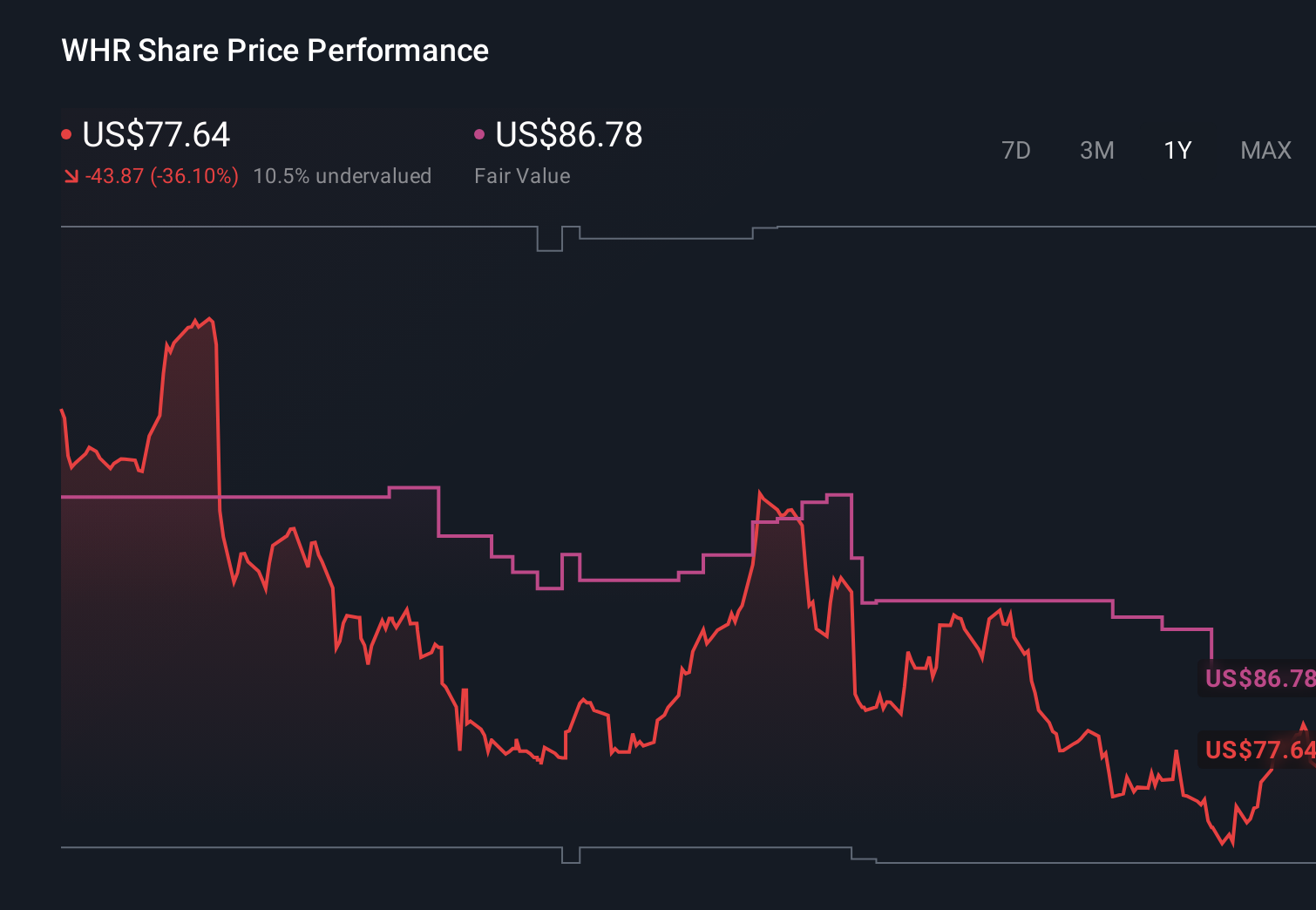
Four members of the Simply Wall St Community currently see Whirlpool’s fair value between US$86.78 and US$145, underlining how far opinions can stretch. Against this, ongoing dividend cuts and leverage concerns may weigh on how comfortably Whirlpool can fund the product, cost, and capacity moves underpinning any earnings recovery, so it is worth comparing several of these viewpoints before forming your own view.
Explore 4 other fair value estimates on Whirlpool - why the stock might be worth just $86.78!
Build Your Own Whirlpool Narrative
Disagree with existing narratives? Create your own in under 3 minutes - extraordinary investment returns rarely come from following the herd.
- A great starting point for your Whirlpool research is our analysis highlighting 3 key rewards and 2 important warning signs that could impact your investment decision.
- Our free Whirlpool research report provides a comprehensive fundamental analysis summarized in a single visual - the Snowflake - making it easy to evaluate Whirlpool's overall financial health at a glance.
Want Some Alternatives?
Opportunities like this don't last. These are today's most promising picks. Check them out now:
- We've found 13 US stocks that are forecast to pay a dividend yield of over 6% next year. See the full list for free.
- Find companies with promising cash flow potential yet trading below their fair value.
- Uncover the next big thing with financially sound penny stocks that balance risk and reward.
This article by Simply Wall St is general in nature. We provide commentary based on historical data and analyst forecasts only using an unbiased methodology and our articles are not intended to be financial advice. It does not constitute a recommendation to buy or sell any stock, and does not take account of your objectives, or your financial situation. We aim to bring you long-term focused analysis driven by fundamental data. Note that our analysis may not factor in the latest price-sensitive company announcements or qualitative material. Simply Wall St has no position in any stocks mentioned.
Have feedback on this article? Concerned about the content? Get in touch with us directly. Alternatively, email editorial-team@simplywallst.com