
Trump's withdrawal signal sparks optimism! The three major US stock indexes recorded the biggest one-day gain in nearly a year Wall Street bets on the “early end” of the Middle East war
The Zhitong Finance App learned that, driven by the latest market expectations that the situation in the Middle East may ease, the three major US stock indices soared across the board on Tuesday, recording the biggest one-day increase in nearly a year. US President Trump said that the US will end military operations against Iran within the next two to three weeks, and will begin withdrawing troops even if no relevant agreement is reached with Iran. This statement has greatly allayed market concerns about soaring oil prices, a rebound in inflation, and the tightening of the Federal Reserve's monetary policy.
At the close, the Dow Jones Industrial Average rose 2.49% to 46341.51 points; the S&P 500 surged 2.91% to close at 6528.52 points; and the Nasdaq Composite surged 3.83% to 21590.63 points. The three major stock indexes all recorded their biggest one-day gains since May 2025.
The immediate trigger for a reversal in market sentiment comes from the political level. According to reports, Trump has indicated to his aides that even if the Strait of Hormuz remains largely closed, he is willing to end military action against Iran. Trump further clarified the withdrawal schedule to reporters at the White House on Tuesday: “I can say within two weeks, maybe two weeks, maybe three weeks. We'll be leaving because there's no reason to keep doing this.”
Trump added that America's core military goal of preventing Iran from acquiring nuclear weapons has been achieved. Even without reaching a formal agreement with Iran, it will not affect the end of the US military's military operations, while claiming that the current state of the Iranian regime is better than before the war.
This statement quickly heated up market expectations that the month-long conflict would turn around ahead of schedule or “stop hostilities.” Previously, the escalation of the situation in Iran had led to a sharp rise in oil prices and reignited concerns about global inflation. Bill Northey, senior investment director at U.S. Bank Wealth Management, said: “What the capital market is reflecting today is an expectation that the situation will take an early turn or the conflict will stop. Although the relevant details are still unclear, the market is looking for any sign that energy transportation in the Strait of Hormuz will return to normal.”
In terms of sector performance, technology stocks led the market. The communications services sector of the S&P 500 index rose 4.42%, while the information technology sector rose 4.24%. Big tech companies saw significant gains, with Nvidia (NVDA.US) surging 5.6%, Google (GOOGL.US) rising 5.1%, and Meta Platforms (META.US) jumping 6.7%. The Philadelphia Semiconductor Index surged 6.24% to record its strongest single-day performance in nearly a year.
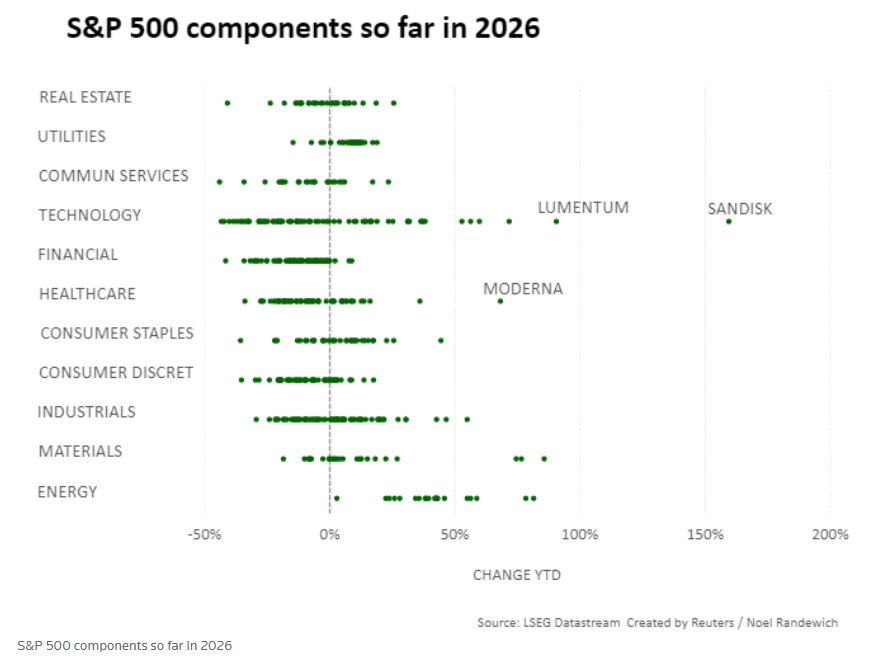
The energy sector bucked the trend and fell 1.2%, although the market rejoiced in anticipation of a cease-fire. Previously, due to the ongoing conflict, the sector had a cumulative increase of 10% in March. In terms of oil prices, crude oil futures contracts weakened after Trump's latest remarks.
There are still many uncertainties behind the optimism
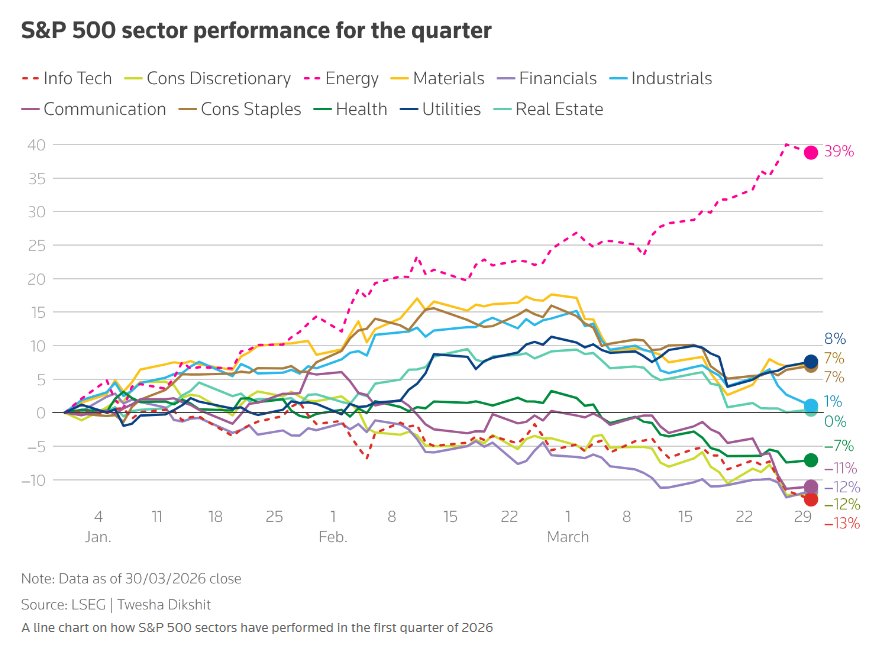
It is worth noting that this month-long conflict has clearly dragged down the quarterly performance of US stocks. At the end of the first quarter, the S&P 500 index and the Dow fell 4.6% and 3.6% respectively, while the NASDAQ fell 7.1%, both the worst quarterly results since 2022. Investors previously generally feared that rising fuel costs would dampen demand for goods and services while forcing the Federal Reserve to raise interest rates to curb inflation.
According to the Chicago Mercantile Exchange's FedWatch tool, money market traders currently believe that the possibility that the Fed will raise interest rates before the end of the year is still higher than cutting interest rates. This is in huge contrast to the expectations that the market bet on to cut interest rates several times throughout the year at the beginning of the year. The market is concerned that rising fuel costs will suppress demand for goods and services, further impacting the US economy and corporate profits. Meanwhile, the latest US economic data shows that the decline in US job vacancies in February exceeded expectations, the recruitment scale fell to its lowest level in nearly six years, and concerns about the fundamentals of the US economy have not been resolved.
Despite Trump's clear withdrawal schedule, there is still uncertainty about its exact implementation. The report points out that Trump is accustomed to using “two weeks” as a potential time frame for major decisions, and often exceeds the deadline he has set himself. Recently, the United States is still sending additional troops to the region, reserving the possibility that the situation will escalate again. Meanwhile, the US military's third aircraft carrier strike group has set sail for the Middle East.
Trump also expressed dissatisfaction with the lack of support from allies on the Strait of Hormuz issue, and hinted that countries that rely on the Strait should resolve navigation issues on their own. White House press secretary Karina Levitt clearly stated that the core goal of the US military's “Epic Fury” operation was to destroy Iran's navy, ballistic missiles, and defense industry infrastructure, and prevent Iran from acquiring nuclear weapons, and did not list the full restart of navigation through the Strait of Hormuz as a core military goal. US Secretary of Defense Pete Hegseth also stated that the next few days will be a critical period for military action against Iraq. If Iran does not reach an agreement, the conflict will escalate further. At the same time, he emphasized that the Strait of Hormuz issue “is not just an American issue,” and that other countries should assume corresponding responsibilities.
Analysts pointed out that even if the US military ends military operations, the navigation status of the Strait of Hormuz is still unclear, and Iran has always made sovereignty claims over this waterway the core content of agreement negotiations, which means that the global energy market and economy will still face the risk of long-term fluctuations in the future. The Strait of Hormuz is responsible for about 20% of the world's marine oil supply. It has basically been closed since the outbreak of this round of conflict, directly driving the cumulative surge of Brent crude oil by about 60% in March, and the US gasoline price also surpassed 4 US dollars/gallon for the first time since 2022.
At the political level, the current military action against Iraq has also brought Trump quite a bit of political risk. They promised not to launch a new war during the election campaign, and the Republican Party is also facing pressure to lose control of Congress in the November midterm elections. Senior White House officials are increasingly concerned about the economic pain caused by the war, which will directly affect the prospects for re-election of Republican lawmakers.