
Here's Why the Price of Oil is Likely to Remain High Even After the War Ends
Key Points
Repairing damaged infrastructure will cost tens of billions of dollars and last many months.
Oil stocks' share prices have retreated to near prewar levels and may be a bargain now.
Since the Iran war began on Feb. 28, the price of Brent crude, the international benchmark, has bounced between about $90 and $112 a barrel. And the average price in March was $103 a barrel.
The obvious reason for the price spike is that Iran has been able to essentially halt the flow of crude oil and related products through the Strait of Hormuz, through which passes between a fifth and a quarter of seaborne oil trade in normal times. That has limited global supply and sent prices higher.
Will AI create the world's first trillionaire? Our team just released a report on the one little-known company, called an "Indispensable Monopoly" providing the critical technology Nvidia and Intel both need. Continue »
For the 12 months before the war began, the price of a barrel of oil fluctuated between $55 and $75.
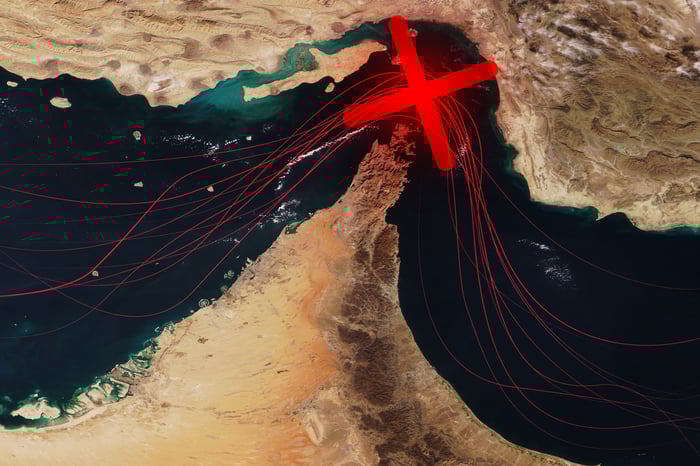
Image source: Getty Images.
So you might assume that once the war ends and the Strait is fully reopened, the price of oil will revert to its prewar range.
That assumption is probably wrong, experts say.
Damage to oil infrastructure in the Middle East will take time to repair
Full global oil production is unlikely to return to prewar levels for quite a while after the guns go quiet. Since the war began, there's been massive damage to oil infrastructure in and around the Persian Gulf, one of the world's vital energy corridors. Dozens of oil refineries, oil fields, gas facilities, ports, and other facilities have sustained attacks from rockets and drones.
Repairing all those facilities -- and returning production to its prewar level -- will cost between $34 billion and $58 billion and take many months, energy consultancy Rystad Energy estimates (assuming no further damage).
As economic and market analyst Edward Yardeni says, "The supply shock is likely to have a long tail."
He estimates that once the war ends, Brent crude will trade between $75 and $95 a barrel, significantly above prewar levels.
"Damage to gas infrastructure and delayed production mean the price impact could linger for months, even if headline risks fade," says Angie Gildea, head of oil and gas for accounting organization KPMG.
What does that mean for the economy and the market?
Fortunately, the U.S. economy is not as reliant on oil as it once was, and today requires about half the petroleum inputs it did in the 1990s, according to Yardeni. The economy is more efficient in its energy use, and it has also shifted away from energy-intensive industries like manufacturing (though growing demand from AI data centers will likely reverse that trend).
That means that the oil price spike isn't affecting most stocks, either. The exception, of course, is the energy sector. Stocks in that sector have risen and fallen in recent weeks as the outlook for the war has changed.
Major stocks in the sector -- ExxonMobil (NYSE: XOM), Chevron (NYSE: CVX), Marathon Petroleum (NYSE: MPC), and ConocoPhillips (NYSE: COP) -- soared in March but recently returned to near their prewar levels on optimism that the war will end soon.
Indeed, the State Street Energy Select Sector SPDR ETF (NYSEMKT: XLE), which tracks the entire S&P 500 energy sector, is back to its prewar price after rising sharply through March.
Yet even if the war ends soon, oil prices are likely to remain elevated for some time. That may present an opportunity for investors. The XLE ETF might be a good way to play it.
Matthew Benjamin has no position in any of the stocks mentioned. The Motley Fool has positions in and recommends Chevron. The Motley Fool recommends ConocoPhillips. The Motley Fool has a disclosure policy.