
GM to Pay $12.75 Million Penalty for Selling Driver Data. That's Good News for GM Investors.
Key Points
If a court approves, General Motors will pay a $12.75 million civil penalty for selling location and driving data on hundreds of thousands of Californians to two data brokers.
GM would be better off keeping data and simply using it to make a better product.
Advanced electric vehicle (EV) platforms, and the possibility of truly driverless vehicle development, combined with software-defined vehicles bring a wave of possible new revenue streams for automakers such as General Motors (NYSE: GM). One of those tantalizing new revenue streams is the ability to collect more consumer data, and potentially sell it or use it to develop a better product.
Now, GM faces a multimillion-dollar penalty for selling consumer data illegally. This is actually a positive development for a reason you might not expect.
Will AI create the world's first trillionaire? Our team just released a report on the one little-known company, called an "Indispensable Monopoly" providing the critical technology Nvidia and Intel both need. Continue »
Selling data is a no-go
General Motors reached a settlement with prosecutors in California for $12.75 million that bars the Detroit automaker from selling driving data for five years. If this is news to you -- and it might be, because a $13 million settlement for a global juggernaut automaker is a drop in the bucket -- here are the specifics and why it matters.
According to the California attorney general, GM illegally sold data it had gathered from hundreds of thousands of drivers to two data brokers between 2020 and 2024, which was in violation of state law. The information that GM collected and sold included names, locations, driving behavior, and more. Just as important, perhaps, was that it did not notify its customers that it was selling data collected through OnStar. "GM reportedly made approximately $20 million nationwide from these data sales," said California Attorney General Rob Bonta in a press release.
This settlement -- which is awaiting court approval -- comes roughly a year after the automaker settled a similar matter with the Federal Trade Commission, which imposed a similar ban for five years.
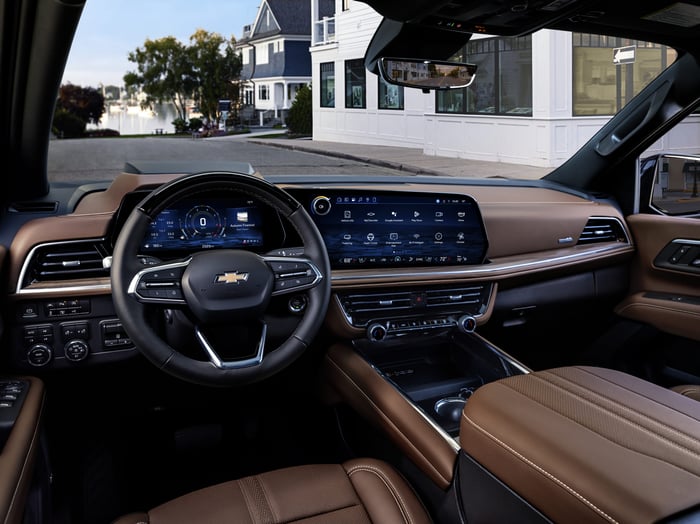
Image source: General Motors.
What it all means
It's obviously highly unusual for a company to do anything illegal and have it be a good thing, but bear with me. General Motors allegedly only made about $20 million selling this data, which brokers used to develop a driver-rating product that automotive insurers could use to set rates. That $20 million figure emphasizes what all automakers are now figuring out: This driver data isn't yet that valuable.
This once-promising new revenue stream has now turned into a much more irrelevant reality -- at least for now. In fact, for better context, consider that Honda made a paltry $0.26 per car selling data between 2020 and 2024, according to 2024 information released by U.S. Sens. Ron Wyden and Edward J. Markey, while Hyundai managed to more than double that for a modest $0.61 per car between 2018 and 2024.
Mounting regulatory barriers against selling information, consumer backlash, and the disappointing payoff have made collecting and selling driver data difficult. In addition to those negative factors, the process is made more complicated by differing policies around the globe. This all means that automakers will perhaps pivot going forward.
There's certainly a growing sense that automakers are better off using this data to make their own products better, rather than selling it for monetary gains. So, in a strange way, GM being slapped on the wrist for this -- while simultaneously realizing the disappointing value in such data -- is a good thing. Investors now know the company has far more important tasks to put time and effort into now that this potential new revenue stream failed to materialize. People who prefer that their data stay more private are probably happy, too.
Daniel Miller has positions in General Motors. The Motley Fool recommends General Motors. The Motley Fool has a disclosure policy.