
Earnings Season Is Almost in the Books -- but Guidance Is the Real Story Investors Need to Read
Key Points
AI giants like Nvidia and Palantir see a clear path toward continued growth.
Retail giants like Walmart and Costco are performing phenomenally, but the U.S. consumer might be showing signs of pressure.
Will AI create the world's first trillionaire? Our team just released a report on the one little-known company, called an "Indispensable Monopoly" providing the critical technology Nvidia and Intel both need. Continue »
Most of the biggest public companies in the U.S. have released their 2026 first-quarter earnings reports (or equivalents) by now, and they tell the story of a strong and resilient U.S. economy. According to FactSet's May 21 update, 84% of the companies in the benchmark S&P 500 index have beaten estimates on earnings per share, while 81% outperormed on revenue estimates.
The most exciting part of the story is artificial intelligence (AI). Companies like Nvidia (NASDAQ: NVDA) and Palantir Technologies (NASDAQ: PLTR) are demonstrating accelerating growth and anticipate a long runway. But even companies you might expect to be reeling from the impact of high inflation, like Costco Wholesale (NASDAQ: COST) and Walmart (NASDAQ: WMT), are reporting fantastic numbers.
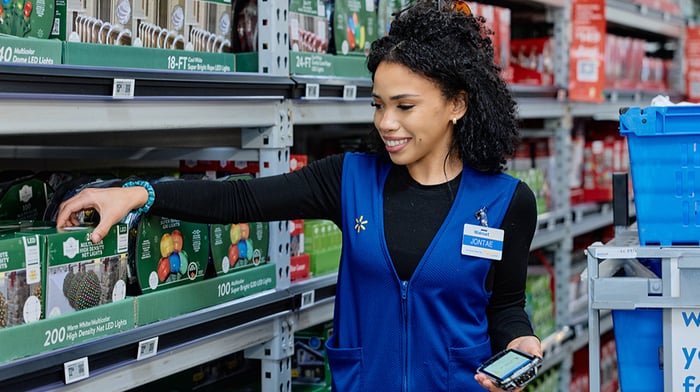
Image source: Walmart.
But the market typically cares about what's next more than what it just learned, and investors who aren't used to this dynamic can be surprised when a stock drops after a stellar earnings report. All four stocks I just mentioned have recently dropped after earnings due to worries about the future. Is it justified?
It's all about AI -- or is it?
Let's first take a look at what some of the AI companies are telling the market. Nvidia easily surpassed Wall Street's expectations on the top and bottom line in the first quarter of its fiscal 2027 (ended April 26), like it usually does. Revenue increased 85% year over year, an acceleration from the previous quarter and well above analyst expectations. But it doesn't end there; CEO Jensen Huang remained very positive about the future. "The build-out of AI factories -- the largest infrastructure expansion in human history -- is accelerating at extraordinary speed," he said. Management is guiding for revenue to increase by about 95% in the second quarter, another massive acceleration.
Palantir's first-quarter revenue increased 85% from last year, showing accelerated growth. Management is guiding for 80% growth in the second quarter, but it raised full-year guidance to an accelerated 71%, "driven by our confidence in an accelerating U.S. market," said CEO Alex Karp.
Oddly enough, both of these stocks sank after their respective earnings releases. While the guidance is phenomenally positive, it doesn't seem as if the market is buying it. There's intense competition, and growth may already be priced into some stocks. In fact, since the "Magnificent Seven" and other large AI companies are overrepresented in the weighted S&P 500, which is often used as a proxy for the market, market averages are increasingly based on a handful of companies. Earnings that come in above expectations are less rewarded because the baseline has been reset for the future -- making it harder to surpass.
The market may also be worried about an overall economic slowdown thanks to inflation.
Inflation, inflation, inflation
Companies like Walmart and Costco give a broader view of the general consumer and the economy. Both are doing fantastically well and have been for years straight through inflation. These stocks are a bellwether for consumer spending, and despite economic pressure, the U.S. shopper has been resilient.
However, Walmart's first crack is starting to show. Costco gave its most recent quarterly update in March, and the market gave a tepid response to outstanding results, including a 9.1% year-over-year increase in revenue. In Walmart's case, management reiterated its full-year guidance after a 7.3% year-over-year sales increase in the first quarter of its fiscal 2027 (ended April 30), but it didn't raise it, and that sent the stock down after the report. More specifically, it cited several examples of how U.S. consumers are under stress, and while the affluent consumer continues to spend, the budget-conscious consumer is "perhaps navigating financial distress." The most obvious place it sees that is at the pump; shoppers are already filling up with fewer gallons. Many experts are talking about a "k-shaped" economy, where the upper-income customer keeps spending while the lower-income customer pulls back.
Costco stock fell after Walmart's report as well, since Walmart's news tells the market more about the state of the shopper than the company itself.
What should investors do?
AI is exploding, and the companies that are the face of AI right now are providing positive guidance about their near future, at least. However, due to the nature of AI as a new and evolving technology, every investor should take this with a big grain of salt. By all means, invest in great AI stocks and ride the wave.
However, higher expecations for earnings are coinciding with increasing fuel costs and interest rates that remain high. On top of that, many companies, including all four I've been speaking about, are quite expensive, which means any misstep is going to send the stock down.
If even companies like Walmart and Costco are worrying the markets, be prepared for some volatility and make sure you're armed with excellent safe stocks and dividend stocks. Even these stocks may sag if the market becomes worried enough to crash, but they'll manage through.
In other words, take advantage of a thriving bull market by investing in top growth stocks, but be sure to remain diversified with stocks that can protect your portfolio in the event of an unpleasant outcome.
Jennifer Saibil has positions in Walmart. The Motley Fool has positions in and recommends Costco Wholesale, FactSet Research Systems, Nvidia, Palantir Technologies, and Walmart. The Motley Fool has a disclosure policy.