
The first major merger and acquisition in the “post-Buffett era”: Berkshire bought Taylor Morrison (TMHC.US) for 8.5 billion US dollars, bucked the trend and increased the US property market
The Zhitong Finance App learned that the global investment community ushered in a major deal. US investment giant Berkshire Hathaway (BRKA.S.US) announced that it will acquire major US housing developer Taylor Morrison (TMHC.US) in an all-cash transaction with a total corporate value of about 8.5 billion US dollars. This is the first major acquisition completed after Berkshire's new CEO Greg Abell officially took charge of the company. According to the final agreement signed by the two parties, Berkshire will purchase all of Taylor Morrison's tradable shares at $72.50 in cash per share, with a corresponding share value of about US$6.8 billion, which is a 24% premium over the company's closing price of $58.50 on May 29. After the transaction is completed, Taylor Morrison will be delisted from the New York Stock Exchange and privatized.
The Abel era begins: the first large-scale sale of 397 billion US dollars in cash
The market generally sees this acquisition as an important strategic signal for the “post-Buffett era.” Since the retirement of legendary investor Warren Buffett, Abell has officially taken over this investment group with a market capitalization of more than a trillion dollars. Over the past year, the outside world has continued to worry about when the new management will deploy capital in the true sense of the word under pressure from record cash reserves.
By the end of the first quarter of 2026, Berkshire's cash holdings and US Treasury bonds reached about US$397 billion, a record high. Over a long period of time, the company has been questioned by some investors due to continued reduction in stock holdings and delays in large-scale mergers and acquisitions. Although the $8.5 billion acquisition represents only about 2% of its cash reserves, its symbolic significance far exceeds its financial size.
In a statement, Abel said: “We are very pleased Taylor Morrison has joined Berkshire's portfolio. As time goes by, we hope to integrate the on-site housing business into a unified platform to help more Americans realize their housing dreams.”
Notably, the expression “integrated business platform” attracted widespread attention on Wall Street. For a long time, Berkshire has followed a “perpetual ownership and independent operation” acquisition philosophy, and acquired companies usually retain a high degree of autonomy. However, Abell has now clearly proposed the possibility of integrating the residential construction business in the future, which is viewed by many analysts as a subtle change in Berkshire's business thinking.
Christopher Davis, partner at investment agency Hudson Value Partners, believes that there is a clear difference between this model and the “decentralized autonomy” emphasized in the Buffett era, and investors may welcome this new strategy with more industrial synergy.
During the decades Buffett was in charge, there were few cases where Berkshire carried out a complete takeover of a listed company. Buffett's classic path is to hold high-quality enterprises with minority shareholding positions and achieve value addition through long-term shareholding rather than controlling operations. Abel, on the other hand, is writing a different story. In the first quarter after taking up his new job, he has deployed tens of billions of dollars of capital in various directions: in October 2025, he finalized the acquisition of Oxychem's chemical business from Occidental Petroleum in cash (the deal was settled in January 2026), bought about 39.8 million shares of Delta Air Lines in the first quarter (worth about 2.6 billion US dollars), increased his holdings in Macy's department store to 3 million shares, and tripled his holdings in Google's parent company Alphabet to about $22 billion, making it the fifth largest stock in the investment portfolio.
However, in the above operation, the Oxychem deal was led by Buffett before leaving office, and Abell participated in the negotiations. Both Delta and Macy's were purchased in the secondary market. The Taylor Morrison acquisition was Abell's first major merger and acquisition with full authority as CEO, and its exemplary significance is self-evident.
From manufacturing homes to on-site construction: Berkshire builds a residential ecosystem
In fact, this isn't Berkshire's first foray into real estate development. As early as 2003, the company acquired Clayton Homes, one of the largest manufacturers of prefabricated homes in the US. In addition, Berkshire also holds shares in American residential construction giant Lennar Corporation and controls a number of related companies, including construction materials, coatings, insulation materials, and construction software.
Industry insiders believe that the real value of this acquisition is not only to add a new home developer, but to fill the last piece of the puzzle in Berkshire's housing industry chain.
According to public information, Taylor Morrison operates more than 350 residential communities in 12 states and 21 markets in the US, covering the development of first-time buyers, improved homes, high-end vacation homes, and rental communities. It also has financial services such as mortgage loans, property rights services, escrow and insurance.
If a collaboration is formed with Clayton Homes in the future, Berkshire will simultaneously cover: supply of building materials; housing design and manufacturing; housing development and construction; mortgage services; and real estate insurance business.
From land development to housing delivery to subsequent financial services, a complete closed loop of housing ecology is formed. In discussions in the US investment community, some investors believe that Berkshire is building a “housing empire” covering the entire industry chain, and this acquisition is only the beginning.
Countercyclical betting: value investing in the doldrums of the US housing market
Judging from the industry cycle, this acquisition also has a clear “reverse investment” aspect. Currently, the US housing market is still being suppressed by high interest rates.
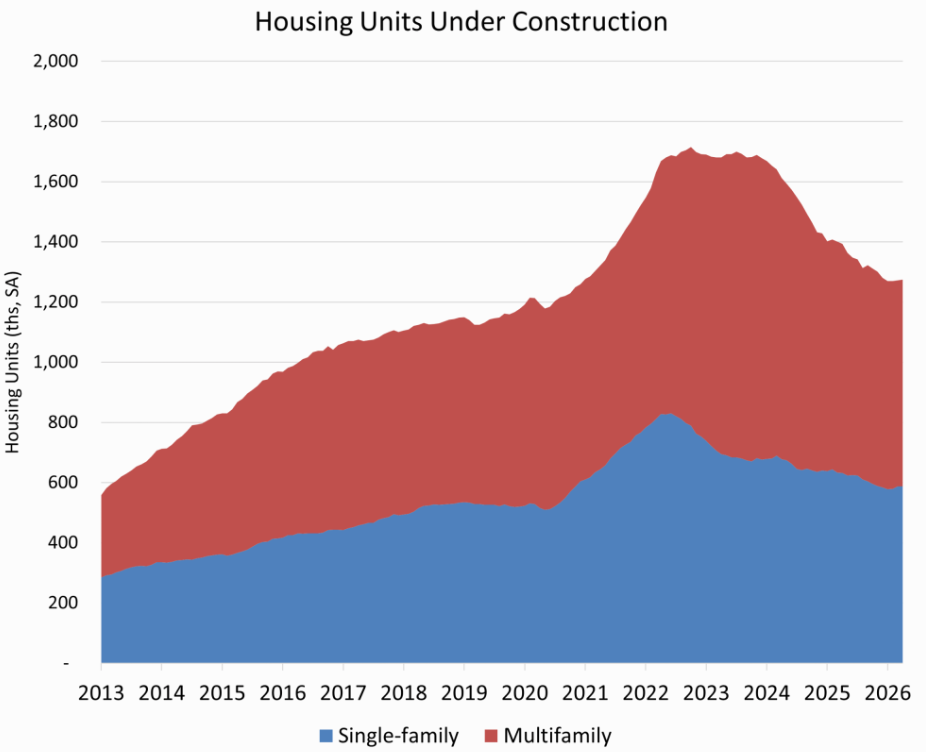
According to the latest US government data, the number of new housing starts fell 2.8% in April, with single-family housing construction falling 9%, the biggest monthly decline since August last year. High mortgage interest rates continue to dampen demand for home purchases, and the overall valuations of home builders are generally under pressure.
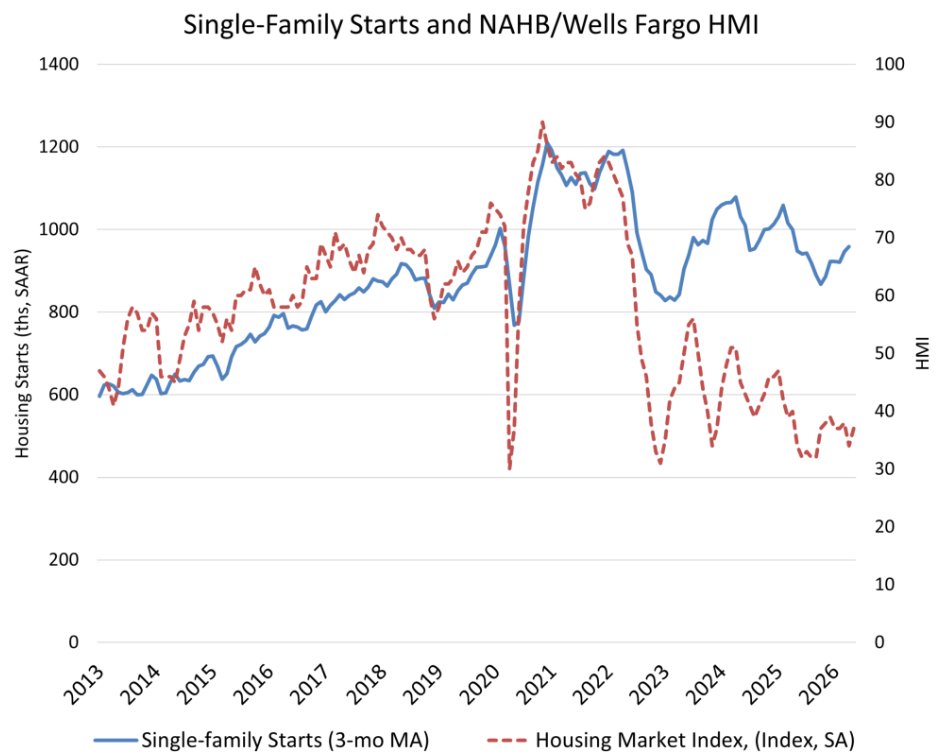
However, in Berkshire's opinion, this is probably the best buying window. According to market data, Taylor Morrison's current price-earnings ratio is only about 9 to 10 times, and the transaction price is about 1.1 times the book value, which is significantly lower than the valuation level of US technology stocks and consumer sectors.
The analysis points out that Berkshire's acquisition reflects a typical value investment logic — buying high-quality assets during a downturn in the industry and waiting for long-term recovery dividends.
Looking at it from a longer-term perspective, the problem of insufficient housing supply in the US has not been solved. Population growth, aging housing, and long-term supply gaps are still underpinning the demand outlook for the US housing market in the next few years. As a result, despite short-term industry pressure, Berkshire is clearly betting on housing demand trends over the next 10 to 20 years, rather than the current market cycle.
For Taylor Morrison, the deal also makes strategic sense. As a residential developer listed in 2013, the company has continued to expand its market footprint through mergers and acquisitions over the past ten years, and has now become one of the largest residential developers in the US.
According to the analysis, Taylor Morrison was carrying about 1.7 billion US dollars in debt at the time of the announcement, and with Berkshire's cash support, the cyclical vulnerability caused by these high leverage will be drastically reduced. For a homebuilder, income fluctuates sharply with mortgage interest rates and market sentiment, but interest payments on debt are rigid — when the cycle declines, leverage multiplies profit pressure. Berkshire's deal essentially uses a small portion of the $397 billion cash reserve to replace this cyclical leverage and make the same set of operating assets gain financial resilience across cycles.
Chairman and CEO Sheryl Palmer (Sheryl Palmer) said, “Berkshire's long-term investment philosophy is highly compatible with the multi-year cycle characteristics of the residential construction industry, which will help us achieve development goals that are difficult to achieve as an independent listed company.”
According to the agreement, Palmer and the existing management team will continue to be responsible for the company's operations to ensure a smooth transition to the business.
At the time of the announcement of the acquisition, Taylor Morrison's price-earnings ratio was 8.79 times, and InvestingPro's analysis suggests that the stock was undervalued compared to its fair value. The transaction's consideration was about 24% higher than the market value of about 5.47 billion US dollars before the announcement, showing Berkshire's high recognition of the quality of the underlying assets and its desire to gain control.
Market Watch: Can Berkshire regain its imagination for growth?
For the capital market, another level of significance of this merger and acquisition is to reevaluate Berkshire in the Abell era.
Judging from the structure of the portfolio, Abel is carefully widening Berkshire's directional boundaries. In the context of the market paying more attention to AI-driven technology stock momentum investment, Berkshire's stock price has fallen by a cumulative total of about 5.6% since this year, clearly outperforming the S&P 500 index, which has risen by more than 10%. Some investors are worried about whether the company will be able to maintain its long-term ability to surpass returns after losing Buffett as its core spiritual leader.
The company's AI exposure is minimal, and this extremely conservative configuration has caused it to outperform the market significantly in the AI bull market. The direction Taylor Morrison chose for the deal is intriguing in itself — instead of betting on the AI circuit to catch up with the market, Abell is still following Berkshire's traditional value line and betting on traditional industries. This may be interpreted as a sign that at a time when old and new alternate, Berkshire's investment philosophy will not fundamentally shift due to changes in people at the helm.
Now, with $8.5 billion officially invested in the housing market, Abell is also sending a clear signal to the market: Berkshire will not wait forever for nearly $400 billion in cash opportunities, but is actively seeking new growth engines that fit its long-term value investment framework. From energy and chemicals to housing construction, the new management has shown a more positive will to allocate capital than market expectations.
For Wall Street, the deal was not only a real estate merger and acquisition, but also an important test of “how Berkshire will grow in the post-Buffett era.” If Abell can successfully integrate Clayton, Taylor Morrison and related building materials businesses in the future, a super platform covering the entire US housing industry chain may gradually emerge. And this is probably the starting point of Berkshire's next growth story.