
Warren Buffett's Berkshire Successor, Greg Abel, Just Bought More of This Magnificent Tech Stock
Key Points
Last month, Berkshire Hathaway made some major deals, including a $10 billion private placement investment in Google parent Alphabet.
Representing a further increase in Berkshire's equity position in the "Magnificent Seven" stock, this transaction could foreshadow a greater allocation into technology stocks.
Abel's pivot has only just started, and with nearly $400 billion in cash, the holding company remains well positioned in case a market downturn strikes.
Greg Abel, Warren Buffett's successor as CEO of Berkshire Hathaway (NYSE: BRKA) (NYSE: BRKB), made few changes to Berkshire's portfolio when he first took the role in January, but over the past month, he has made some major moves.
As you may recall, last month, Berkshire announced plans to acquire homebuilder Taylor Morrison for $8.5 billion. However, while this represents the first major acquisition of the Abel era, last month, Berkshire committed to an even larger capital investment, agreeing to purchase $10 billion in newly issued Alphabet (NASDAQ: GOOG) (NASDAQ: GOOGL) shares in a private placement.
Where to invest $1,000 right now? Our analyst team just revealed what they believe are the 10 best stocks to buy right now, when you join Stock Advisor. See the stocks »
Berkshire is no stranger to such private deals. Buffett executed plenty of them during his 60-year tenure. However, while Buffett's private deals typically involved financially distressed, "old economy" companies, Abel is making a different type of wager. That is, he's upping Berkshire's bet on a "Magnificent Seven" stock, perhaps as a means to increase the conglomerate's exposure to the artificial intelligence (AI) megatrend. And this deal could affect investors' perception of Berkshire Hathaway stock moving forward.
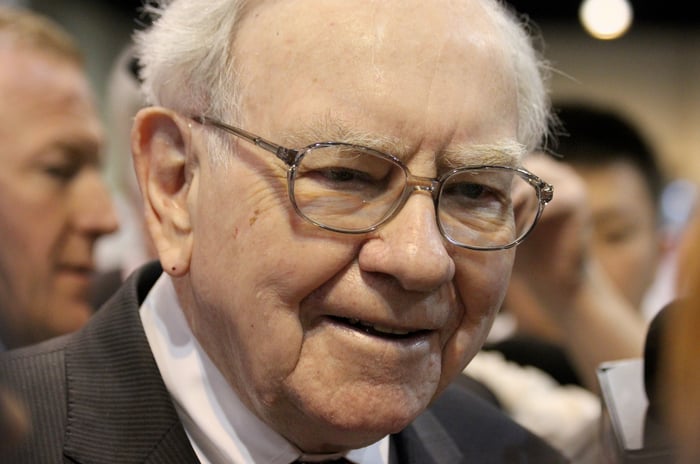
Image source: The Motley Fool.
Abel, Berkshire, and its increased bet on Alphabet
Over the past year, Berkshire Hathaway has gradually made Alphabet, the parent company of Google and YouTube, a key position in its equity portfolio. Late last year, Berkshire first disclosed ownership of around 17.9 million shares, worth $4.3 billion at the time, in its third-quarter 2025 13-F filing with the Securities and Exchange Commission.
In subsequent quarters, Berkshire continued to acquire Alphabet shares, with its position growing to around 57.8 million shares as of March 31, 2026. That stake was worth around $22.7 billion when Berkshire's most recent 13-F hit the street on May 15. But now, following the private placement deal, published reports estimate Berkshire now owns around 86.4 million shares of Alphabet, or a 9.2% stake worth approximately $31.6 billion.
The holding company's equity positions in Coca-Cola, American Express, and Apple remain larger, but the increased long-term wager on Alphabet, presumably based largely on the company's AI growth, still suggests a slight shift in Berkshire Hathaway's investing style under Abel's leadership.
What this means for shares moving forward
Make no mistake. Berkshire Hathaway's overall asset allocation among its stock positions and subsidiaries has remained largely unchanged since Buffett's retirement. However, this latest move could mark the start of a shift toward a higher allocation to technology stocks. If the AI growth trend continues, that strategic adjustment could prove wise in hindsight.
However, if Abel increases Berkshire's tech exposure just before an "AI bubble" pops, that could bode badly for the conglomerate, both in terms of its stock price and its reputation as a long-term "stock for all seasons." If Abel's big bet backfires, investors could view his latest move as poorly timed chasing of short-term trends.
Still, if you hold Berkshire shares, that doesn't mean you should start eyeing the sell button just yet. Though the stock is trading near its all-time high, Berkshire's nearly $400 billion cash position, representing around 36% of the company's market cap, leaves it well positioned to weather a downturn. I would grow more cautious, though, if Abel decides to further increase Berkshire's exposure to tech, and particularly its exposure to pure-play AI stocks.
American Express is an advertising partner of Motley Fool Money. Thomas Niel has no position in any of the stocks mentioned. The Motley Fool has positions in and recommends Alphabet, American Express, Apple, and Berkshire Hathaway. The Motley Fool has a disclosure policy.