
“Go to Musk Deal” is coming! The market always has capital and doesn't believe in Musk's “flatbread”; Wall Street tailors ETFs for them
For every investor looking to increase their exposure to large-scale technology asset allocations under Elon Musk, the richest man in the world, Wall Street asset management giants seem to be continuously launching corresponding exchange-traded funds (that is, ETF assets that are deeply tied to Musk), and are even frequently linked to highly leveraged operations. Now, Wall Street is once again planning products for investors who want to reduce any risk allocation exposure associated with Musk.
Despite Musk's historic breakthroughs in cutting-edge technology such as electric vehicles, commercial aerospace, artificial intelligence, and satellite communications, some investors are unwilling to unconditionally pay the “Musk Vision Premium,” but instead want to actively avoid risks such as corporate governance, political risk relationships, severe valuation overdrafts, high stock price fluctuations, and excessive reliance on core figures.
As the richest person in the world so far, Musk has accomplished what others thought was impossible in the past — building a commercially viable high-frequency rocket launch business through SpaceX, bringing electric vehicles into the mainstream market through Tesla, the global electric vehicle leader, and providing internet connection infrastructure services from space through Starlink (Starlink). However, there are also investors who doubt whether Musk will actually be able to build the “most epic” core building operation he recently proposed in Austin and whether he can actually achieve the “superblueprint for artificial intelligence, autonomous driving, humanoid robots, and space AI data centers.”
The Zhitong Finance App learned that Wall Street's emerging ETF issuer Subversive ETFs has submitted documents to launch two exchange-traded funds (ETFs) that could set off a huge wave in the stock market. While tracking the NASDAQ 100 Index and the S&P 500 Index, all Musk affiliated companies founded, controlled, or led by the world's richest man are excluded. The trading codes for these two proposed products will be QQNE and SPNE, respectively, and are the latest example that the exchange-traded fund industry is cutting wider market exposure with increasingly specific investment views.
These application documents continued a contest that continued for several years: packaging almost every opinion about Musk into a tradable ETF stock market product. Investors can now buy highly leveraged ETF funds that amplify Tesla's rise and fall, and newly launched leveraged funds linked to SpaceX; until not long ago, the market even had an exchange-traded fund directly named ELON, while also going long on Tesla and shorting traditional car manufacturers such as Ford Motor Company. The newest product will allow investors to hold almost the entire benchmark index while expressing specific opinions about one person. In effect, they turned a passive index fund into an active investment idea for someone.
There are always lots of funds in the market that don't trust Musk, and Wall Street ETF issuers are starting to restructure the index for them
This segment of the investment industry was initially founded on low-cost broad-based index investments, but now it is increasingly evolving into an ETF asset management business built around personalized investments. As demand for niche products surges, issuers are scrambling to launch funds that not only track the market, but also express investors' increasingly specific views on individual companies, corporate executives, and investment topics.
Whether the “excluding Musk” portfolio will receive lasting demand remains to be seen. But this application highlights a broader reality behind the current exchange-traded fund boom: as long as investors can imagine a transaction, Wall Street is increasingly convinced that it can be wrapped in an ETF product trading code.
“Elon Musk is a highly controversial and polarizing figure, so it is logical that exchange-traded fund issuers are trying to profit from it.” Nate Gerage, president of NovaDius Wealth Management, said, “But having said that, if we are now entering a world of exchange-traded funds — where issuers remove individual companies from major indices simply because investors feel about one person — then we may have segmented the market a little too closely.”
The launch of these products also occurred after SpaceX was recently included in the Nasdaq 100 Index. Previously, SpaceX was included in the FTSE Russell and MSCI indices after several index providers revised their index inclusion rules to ensure that large-scale initial public offering projects could enter the index more quickly. The inclusion decision triggered passive purchases of billions of dollars to track the benchmark index and put the stock into an increasingly large portfolio of millions tracking the benchmark index — some investors rejoiced at this milestone, while others criticized that they were willing to take on this unprofitable and overvalued SpaceX. In contrast, S&P Dow Jones Indices declined to accelerate the inclusion of the company (SpaceX) in its various benchmark indices.
Skeptics about SpaceX's rapid inclusion in the benchmark index believe that this practice forces passive investors to buy some of the most expensive companies on the market before the regular price discovery process is fully completed.
Dave Nadig, president and head of research at ETF.com, said that funds built around highly specific investment ideas are often difficult to form a lasting investor base.
“They may be able to attract some capital that hasn't been given much thought, but this microconcept, which has an extremely narrow audience, actually isn't really suitable for all retail investors.” Commenting on this new application, he said, “It's fun marketing, not real investment logic.”
According to data compiled by Bloomberg Intelligence senior market research analyst Eric Balciunas, applications for these products also followed a record 6 months: around 214 exchange-traded funds were launched in that month, a record high. The entire exchange-traded fund market attracted about 191 billion US dollars in capital inflows in the same month, making it the second-highest monthly fund intake on record. More than 2,700 funds received capital inflows. Trading volume is also approaching an all-time high, reaching around $7 trillion.
According to the ETF issuance prospectus submitted on Wednesday, financial advisors of these funds are betting that some investors will believe that companies linked to Musk have “potential corporate governance concerns, political risks, higher valuations, and increased stock price volatility.”
“I understand why publishers feel the need to design new ways to stand out.” Jeffrey Puttack from Morningstar, a well-known financial institution on Wall Street, said, “Investors should still be wary because this product may not achieve a truly reasonable investment purpose, or may require investors to pay extremely high prices for extremely limited narrow rather than broad-based returns.”
Passive investment also began to choose a position: when the “Musk Premium” began to experience trust discounts, Wall Street followed the trend and launched Musk ETFs
QQNE plans to remove Tesla and SpaceX from the Nasdaq 100 index; SPNE currently plans to remove Tesla from the S&P 500 index, and also exclude SpaceX after it is included in the future. The fund application documents clearly list potential corporate governance concerns, political risks, and higher share price fluctuations as product attractions. It also admits that if excluded companies such as Tesla and SpaceX continue to outperform the market by a large margin, such ETF funds may lag behind the original benchmark index.
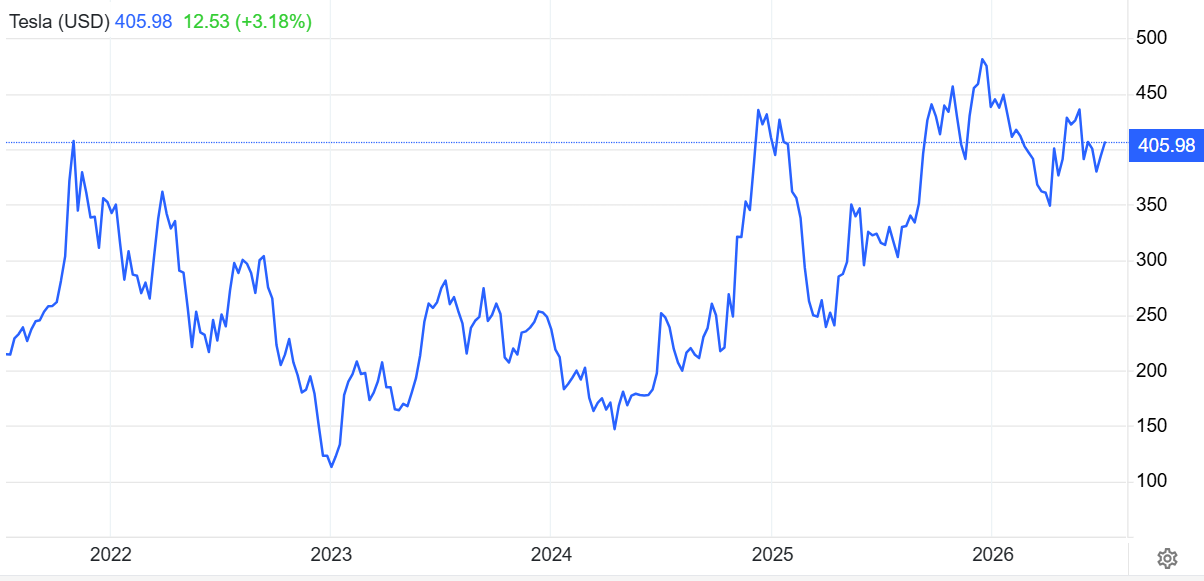
The macro-investment theme reflected in this latest market trend is that passive investment is being reformed by “idealization” and “personalization.” SpaceX quickly entered the Nasdaq 100 index after listing, and J.P. Morgan estimates that this may trigger passive buying of about $4.3 billion; this means that even if they disagree with its valuation, governance structure, or Musk himself, a large number of index fund holders will passively hold the stock due to index rules.
The “Go to Musk” ETF re-splits this unselectable index exposure, upgrading the original investment judgment on corporate fundamentals to a tradable expression of the founder's reputation, political behavior, and risk of key figures. The real meaning is not to prove that the market has denied Musk, but rather that Wall Street has begun to provide tools for the refined demand of “I am optimistic about large US technology stocks, but I am unwilling to take risks related to Musk.”
This type of product is more like a risk budgeting tool than an anti-Musk bet that naturally creates alpha. For investors who value governance stability, political neutrality, or a single personal risk, it can reduce the impact of the impact of the Tesla and SpaceX incident on the portfolio; however, the costs may include management fees, tracking errors, lower liquidity, and missing out on the two companies' rising profits. Currently, the specific rate in the application documents has not been determined, and the fund has no actual performance records, so what investors really need to compare is not “whether they like or hate Musk,” but rather whether the reduced risk obtained after excluding these stocks can cover costs and potential opportunity costs.
Admittedly, Musk's historic achievements in the field of technology that can be recorded in the annals of human society can be respected, but the capital market will not be exempted from judgment on valuation implementation, corporate governance, and return on cash flow; the so-called “go to Musk” transactions essentially restore personal admiration/personal delays back into quantifiable risk asset exposure.