
Insiders Sold Marechale Capital At UK£0.083, Meanwhile Stock Sits Near UK£0.048
Even though Marechale Capital Plc (LON:MAC) has fallen by 27% over the past week , insiders who sold UK£249k worth of stock over the past year have had less luck. Insiders would probably have been better off holding on to their shares given that the average selling price of UK£0.083 is still lower than the current share price.
Although we don't think shareholders should simply follow insider transactions, logic dictates you should pay some attention to whether insiders are buying or selling shares.
The Last 12 Months Of Insider Transactions At Marechale Capital
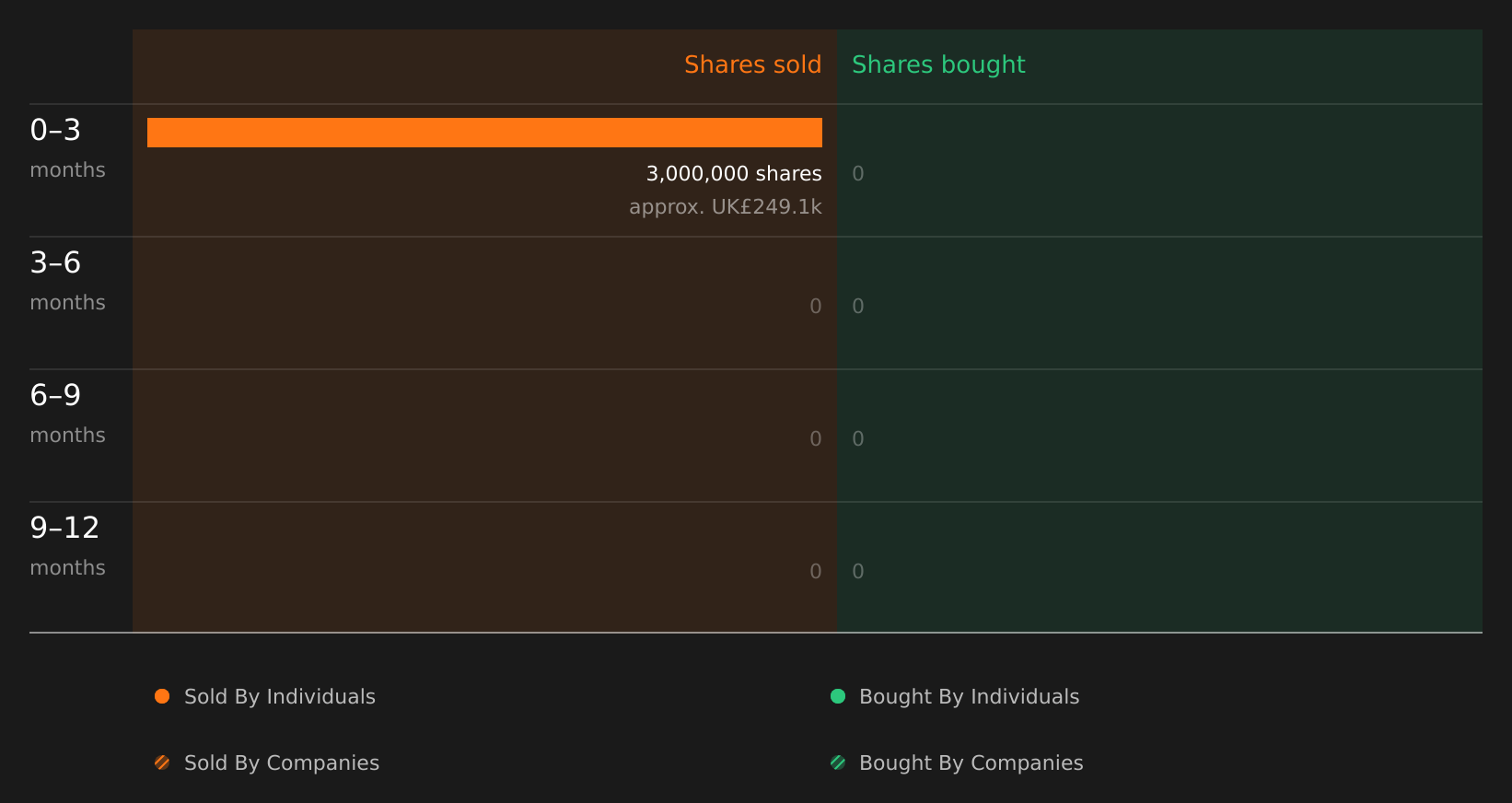
In the last twelve months, the biggest single sale by an insider was when the Non-Executive Director, Chris Arthur Kenning, sold UK£249k worth of shares at a price of UK£0.083 per share. While insider selling is a negative, to us, it is more negative if the shares are sold at a lower price. The good news is that this large sale was at well above current price of UK£0.048. So it may not tell us anything about how insiders feel about the current share price. The only individual insider seller over the last year was Chris Arthur Kenning.
The chart below shows insider transactions (by companies and individuals) over the last year. By clicking on the graph below, you can see the precise details of each insider transaction!
View our latest analysis for Marechale Capital
For those who like to find hidden gems this free list of small cap companies with recent insider purchasing, could be just the ticket.
Marechale Capital Insiders Are Selling The Stock
The last quarter saw substantial insider selling of Marechale Capital shares. Specifically, Non-Executive Director Chris Arthur Kenning ditched UK£249k worth of shares in that time, and we didn't record any purchases whatsoever. Overall this makes us a bit cautious, but it's not the be all and end all.
Insider Ownership Of Marechale Capital
I like to look at how many shares insiders own in a company, to help inform my view of how aligned they are with insiders. I reckon it's a good sign if insiders own a significant number of shares in the company. Marechale Capital insiders own 49% of the company, currently worth about UK£2.8m based on the recent share price. This kind of significant ownership by insiders does generally increase the chance that the company is run in the interest of all shareholders.
So What Do The Marechale Capital Insider Transactions Indicate?
An insider sold Marechale Capital shares recently, but they didn't buy any. And even if we look at the last year, we didn't see any purchases. While insiders do own a lot of shares in the company (which is good), our analysis of their transactions doesn't make us feel confident about the company. So these insider transactions can help us build a thesis about the stock, but it's also worthwhile knowing the risks facing this company. For instance, we've identified 5 warning signs for Marechale Capital (4 make us uncomfortable) you should be aware of.
But note: Marechale Capital may not be the best stock to buy. So take a peek at this free list of interesting companies with high ROE and low debt.
For the purposes of this article, insiders are those individuals who report their transactions to the relevant regulatory body. We currently account for open market transactions and private dispositions of direct interests only, but not derivative transactions or indirect interests.
Have feedback on this article? Concerned about the content? Get in touch with us directly. Alternatively, email editorial-team (at) simplywallst.com.
This article by Simply Wall St is general in nature. We provide commentary based on historical data and analyst forecasts only using an unbiased methodology and our articles are not intended to be financial advice. It does not constitute a recommendation to buy or sell any stock, and does not take account of your objectives, or your financial situation. We aim to bring you long-term focused analysis driven by fundamental data. Note that our analysis may not factor in the latest price-sensitive company announcements or qualitative material. Simply Wall St has no position in any stocks mentioned.