
How New Wind-Ready Substations Could Shape Exelon’s (EXC) Long-Term Grid and Renewables Strategy
- Exelon subsidiary ComEd recently energized two new 345 kV transmission substations in LaSalle and Woodford counties, enabling up to 550 megawatts of wind generation to connect to its grid and support future wind farms Osagrove Flats and Panther Grove.
- This expansion of transmission capacity not only strengthens grid reliability but also enhances ComEd’s role in delivering renewable energy into the PJM market, reinforcing Exelon’s position in clean energy infrastructure.
- We’ll now examine how this new wind-enabled transmission capacity could influence Exelon’s longer-term investment narrative around grid growth and renewables.
This technology could replace computers: discover 26 stocks that are working to make quantum computing a reality.
Exelon Investment Narrative Recap
To own Exelon, you need to believe in a regulated utility that can keep growing its grid and earnings while managing regulatory and capital intensity risks. The new ComEd substations are positive for long term transmission and renewables growth, but they do not materially change the near term focus on rate outcomes and cost recovery, which remain the key catalyst and risk.
The recent PJM approved 220 mile, 765 kV transmission project with NextEra Energy Transmission ties directly into this theme of grid expansion. Together with the newly energized substations, it illustrates how Exelon is building out transmission capacity that could support future rate base growth, while also increasing its exposure to regulatory approvals and capital cost pressures.
Yet, behind these growth projects, investors should be aware of the growing capital needs and reliance on regulators...
Read the full narrative on Exelon (it's free!)
Exelon’s narrative projects $27.4 billion revenue and $3.5 billion earnings by 2029. This requires 3.4% yearly revenue growth and a $0.7 billion earnings increase from $2.8 billion today.
Uncover how Exelon's forecasts yield a $49.33 fair value, a 6% upside to its current price.
Exploring Other Perspectives
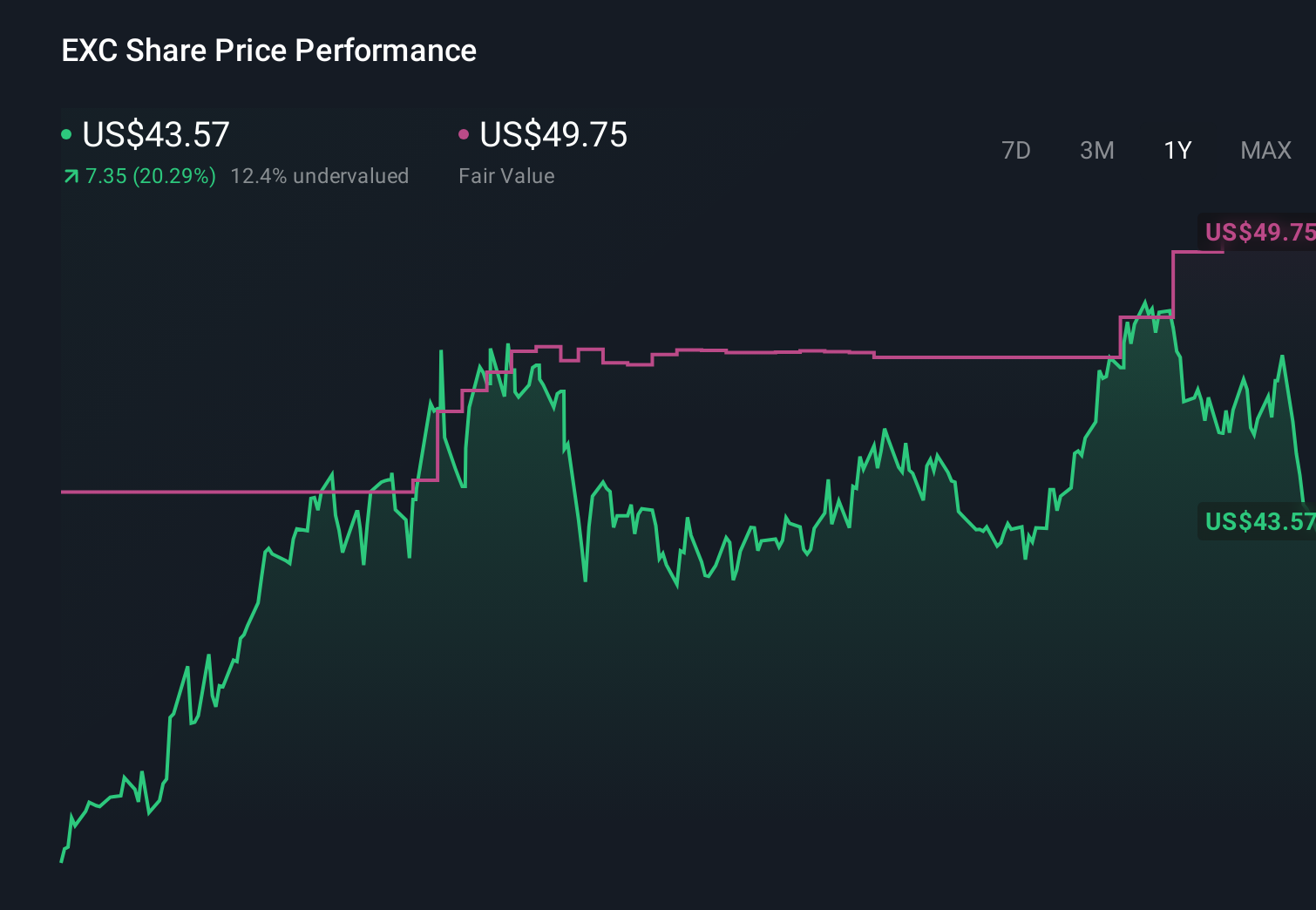
Simply Wall St Community members offer 2 fair value views for Exelon, ranging from just US$6.89 up to about US$49.33 per share, underlining how far opinions can spread. Set against this, the emphasis on large scale grid and renewables expansion as a key earnings catalyst invites you to weigh how different growth and regulatory outcomes could shape the company’s path.
Explore 2 other fair value estimates on Exelon - why the stock might be worth as much as 6% more than the current price!
Form Your Own Verdict
Disagree with existing narratives? Extraordinary investment returns rarely come from following the herd, so go with your instincts.
- A great starting point for your Exelon research is our analysis highlighting 4 key rewards and 2 important warning signs that could impact your investment decision.
- Our free Exelon research report provides a comprehensive fundamental analysis summarized in a single visual - the Snowflake - making it easy to evaluate Exelon's overall financial health at a glance.
Interested In Other Possibilities?
Our daily scans reveal stocks with breakout potential. Don't miss this chance:
- Outshine the giants: these 16 early-stage AI stocks could fund your retirement.
- The future of work is here. Discover the 31 top robotics and automation stocks leading the charge in AI-driven automation and industrial transformation.
- Uncover the next big thing with 20 elite penny stocks that balance risk and reward.
This article by Simply Wall St is general in nature. We provide commentary based on historical data and analyst forecasts only using an unbiased methodology and our articles are not intended to be financial advice. It does not constitute a recommendation to buy or sell any stock, and does not take account of your objectives, or your financial situation. We aim to bring you long-term focused analysis driven by fundamental data. Note that our analysis may not factor in the latest price-sensitive company announcements or qualitative material. Simply Wall St has no position in any stocks mentioned.
Have feedback on this article? Concerned about the content? Get in touch with us directly. Alternatively, email editorial-team@simplywallst.com