
Beishui Trends | Beishui traded net sales of 5.995 billion, Beishui sold off some AI hardware stocks and continued to raise Smart Spectrum (02513) over HK$2.8 billion
The Zhitong Finance App learned that in the Hong Kong stock market on July 10, Beishui traded net sales of HK$5.995 billion. Among them, Hong Kong Stock Connect (Shanghai) had net sales of HK$3.344 billion and Hong Kong Stock Connect (Shenzhen) had net sales of HK$2,651 billion.
The individual stocks that Beishui Net bought the most were Zhi Spectrum (02513), Mega Easy Innovation (03986), and Alibaba-W (09988). The individual stocks sold the most by Beishui Net were Yingfu Fund (02800), Tencent (00700), and Huahong Hongli (01347).
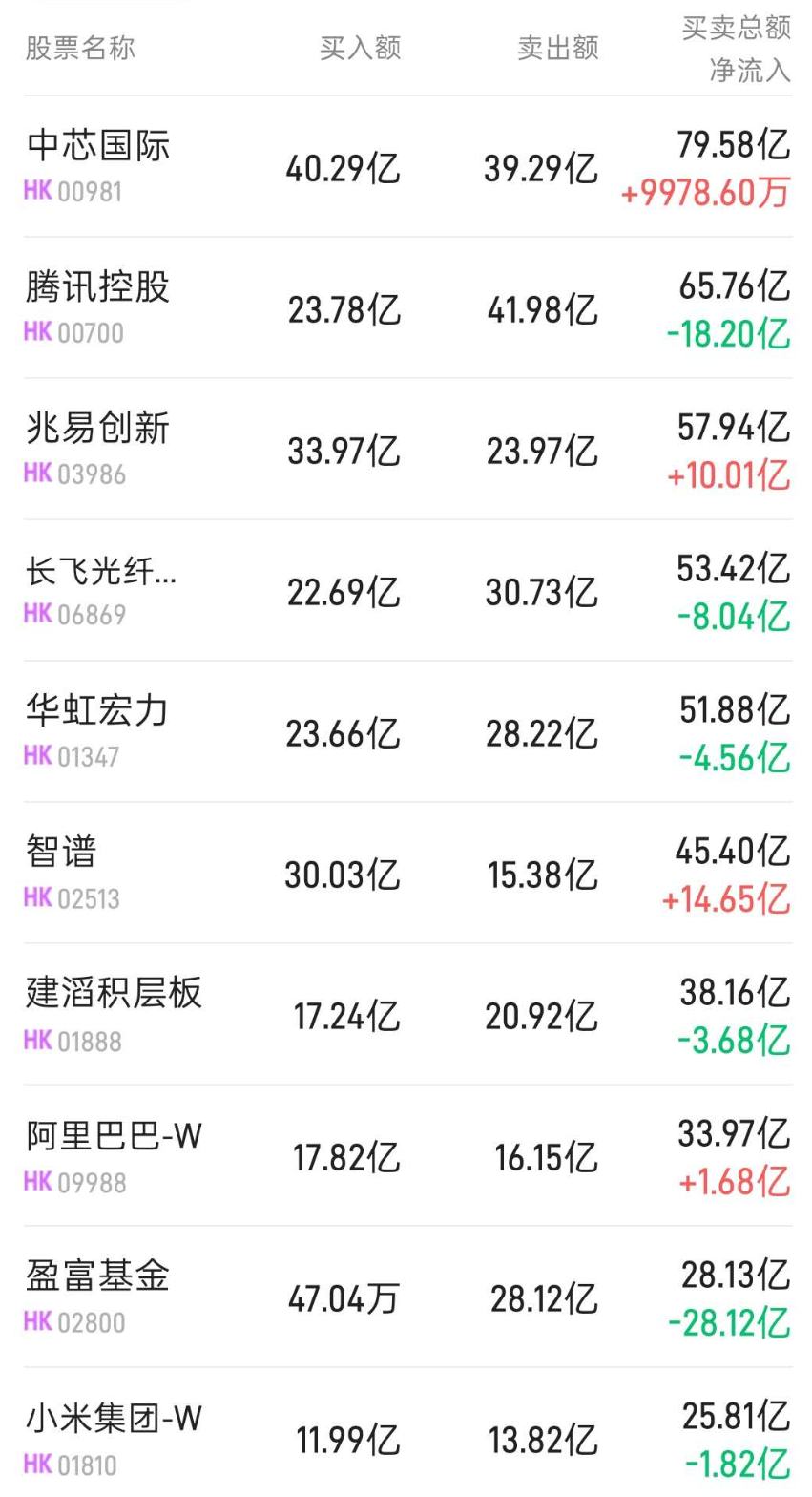

Hong Kong Stock Connect (Shanghai) active trading stocks
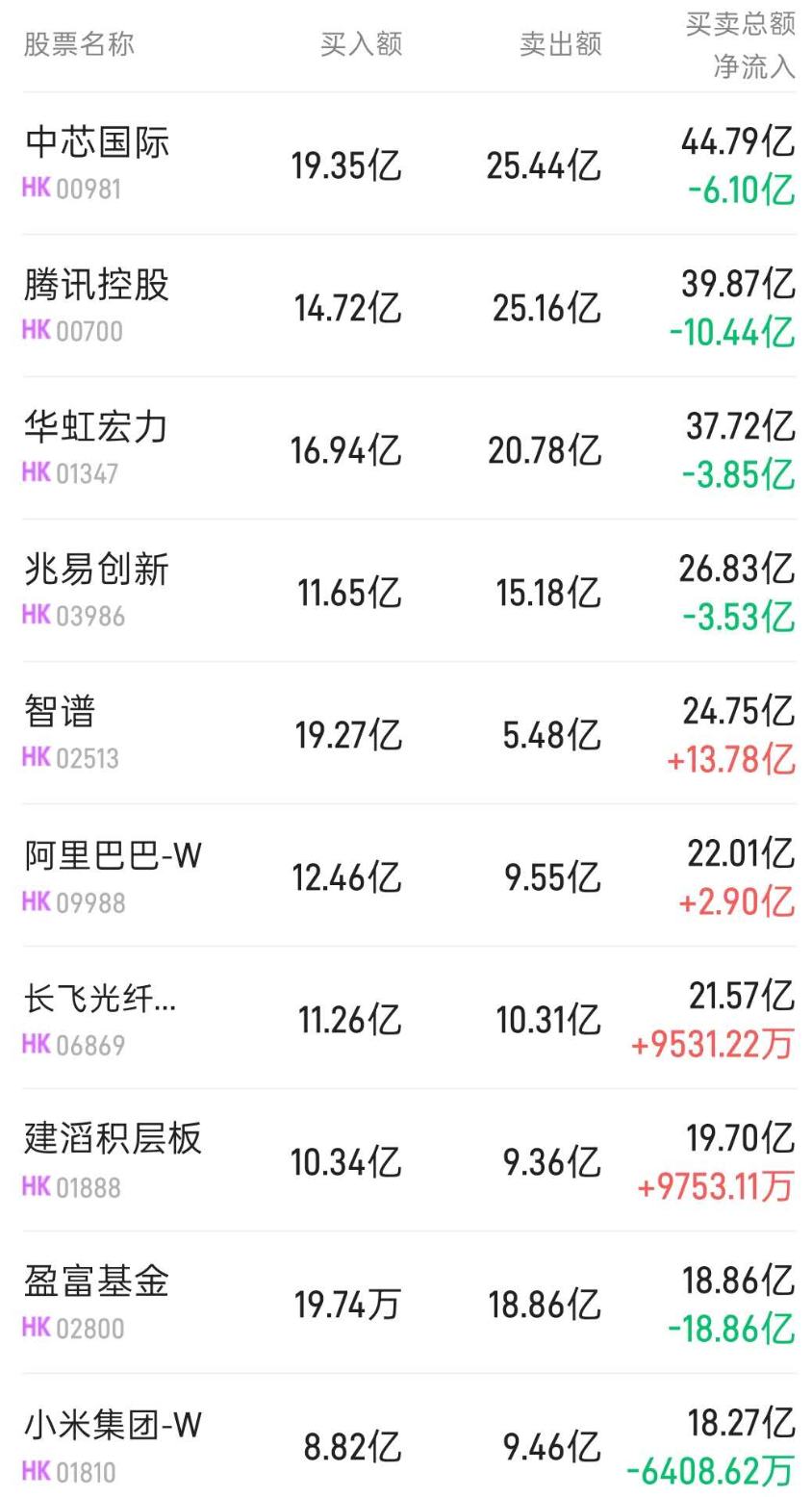
Hong Kong Stock Connect (Shenzhen) active trading stocks
Zhi Spectrum (02513) received another net purchase of HK$2,843 million. Zhi Spectrum completed a placement of approximately HK$31.4 billion. Lyon released a research report saying that this allotment of shares has greatly enhanced the company's financial situation and supports the expansion of the scale of inference services and the increase in annual recurring revenue. With the expandable API business and increased profit margins brought about by the upgrade of the inference engine, the company is expected to achieve balance of payments by 2028 one year ahead of schedule.
GigaYi Innovation (03986) received a net purchase of HK$648 million. According to the Zhaoyi Innovation announcement, revenue was about 11.5 billion yuan, up 177% year on year; net profit to mother was about 6.9 billion yuan, surging 1099% year on year; deducted non-net profit was about 4.85 billion yuan, up 791% year on year. It is worth noting that on July 13, Mega Yi Innovation H shares will soon welcome the lifting of the ban on restricted shares by Cornerstone Investors. According to the data, a total of 18 shareholders have been unbanned, and a total of 14.3943 million shares have been unbanned.
Alibaba-W (09988) received a net purchase of HK$458 million. American startup PrisMML said it has successfully compressed the 27 billion parameter version of Alibaba's open source big prophecy model Qwen 3.6 so that it can run on the iPhone 17 Pro. According to reports, people familiar with the relevant negotiations revealed that Apple has already communicated with PrismML on how to use its technology.
Some AI hardware stocks were sold off by Beishui. Jiantao Laminate (01888), SMIC (00981), Changfei Optical Fiber Cable (06869), and Huahong Hongli (01347) were net sold at HK$270 million, 509 million, 708 million, and HK$840 million respectively. The Guolian Security Fund said that this round of overseas market sell-off stemmed from the loosening of traffic congestion on the AI hardware circuit. The market was worried that AI hype was too intense in the early stages, and the funds collectively began to take risks and reduce positions. In the first half of the year, core circuits such as semiconductors, AI computing power, and optical modules emerged from strong markets. Most popular targets rose significantly during the year. The sector as a whole accumulated a large amount of floating profit chips, and the risk of a short-term pullback continued to accumulate. The adjustment was the first to be launched from the popular target with the highest increase during the year, and has clear profit settlement characteristics.
Tencent (00700) had a net sale of HK$2,863 billion. According to reports, Tencent is in talks to take a stake in Manus, a Chinese smart AI startup. Early Manus investors (most of whom agreed to participate in this deal will cancel Meta's previous acquisition plan with an original valuation of 2 billion US dollars. People familiar with the matter added that it is expected that Tencent will buy the largest share of the shares in this round of transactions.
Yingfu Fund (02800) had a net sale of HK$4.698 billion. Cathay Pacific Haitong said that Hong Kong stocks entered a period of concentrated release of micro-liquidity shocks this week. Along with the gradual digestion of such short-term shocks, the possibility that the Hong Kong stock interim results will bottom out continues to increase, and the market is expected to return to a rational understanding of the fundamental price-performance ratio. Overall, the impact is gradually over, and the long-term investment value and cost performance ratio of Hong Kong stocks is once again highlighted.