
Deepen Intelligence (02723): How to insert AI into enterprise operation processes to truly unlock the value of enterprise-level AI
The Zhitong Finance App learned that almost all companies are talking about AI, but there aren't many companies that actually use AI as productivity. In the past two years, big models have been iterated on a monthly basis, and AI agent has become a new word that the capital market and industry are chasing together; however, in real enterprises, another scenario is also common: there are many pilots, many demonstrations, and not many AI applications that actually enter the workflow and can continue to contribute to business results.
Huang Xiaonan, founder and CEO of Shenyan Intelligence (02723), reduced this problem to one sentence: To realize the value of enterprise AI, the card points are not in the model, but in the way AI is used.
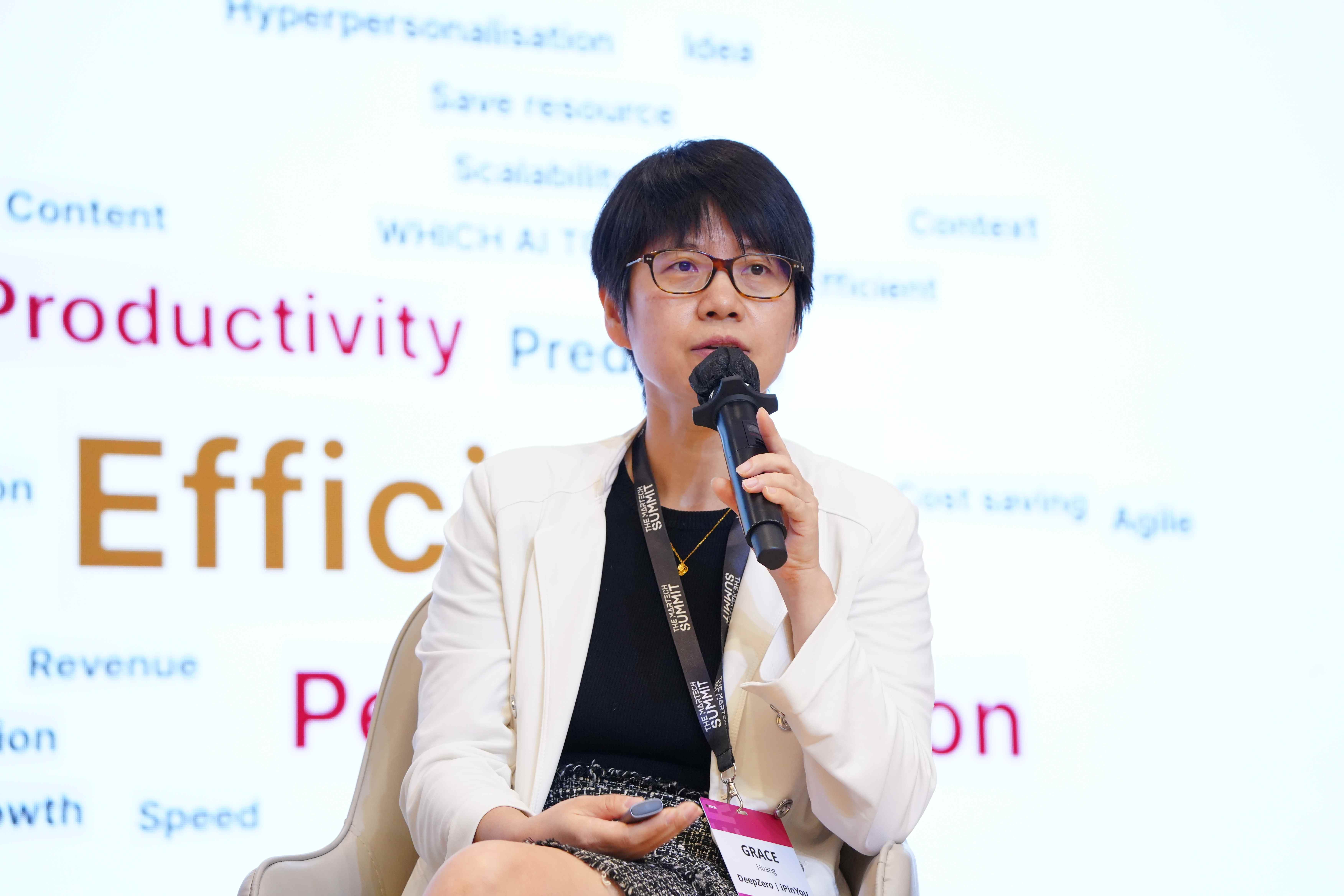
(Huang Xiaonan, founder and CEO of Shenyan Intelligence)
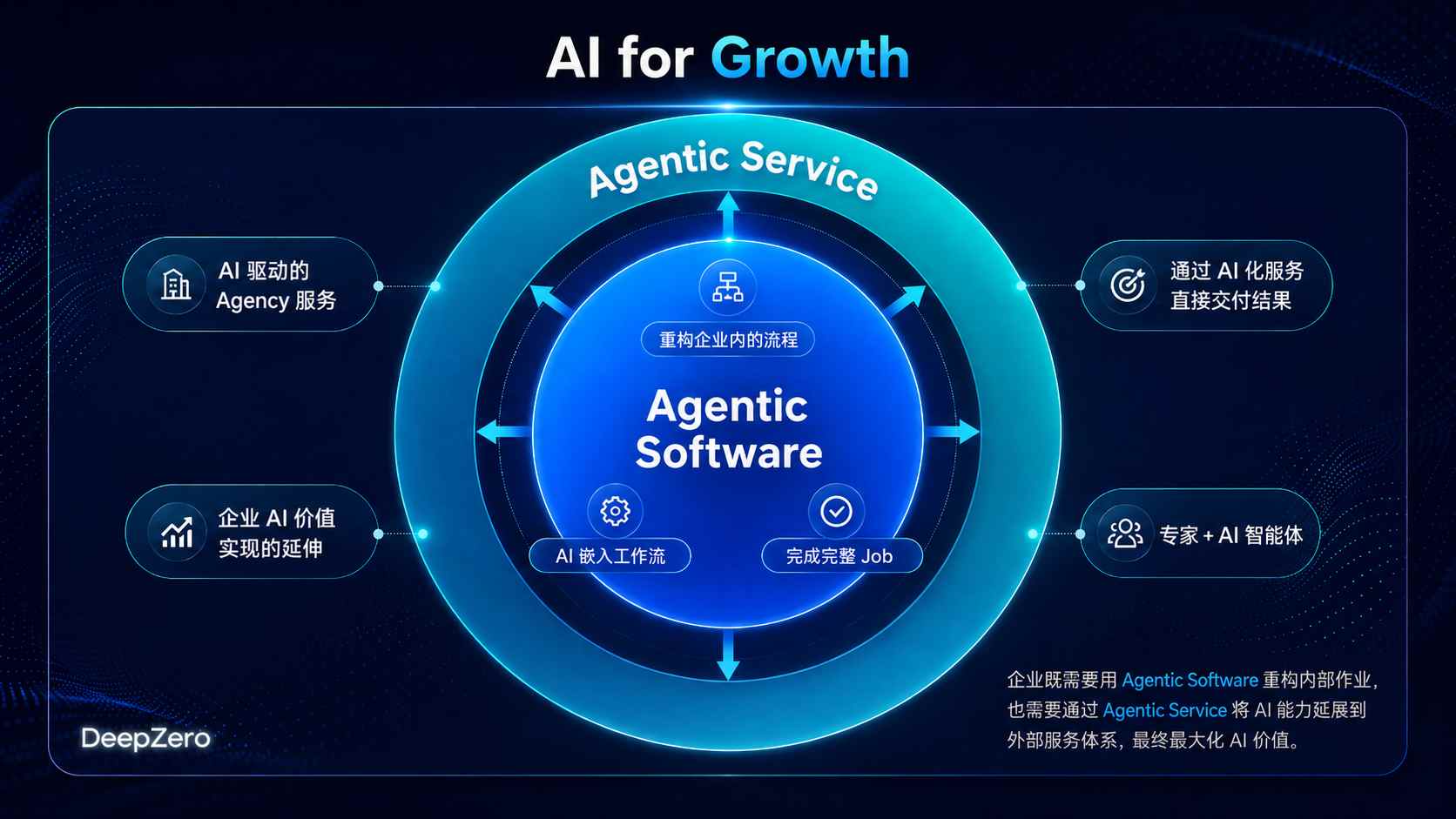
In May 2026, Shenzhen Intelligent was listed on the main board of the Hong Kong Stock Exchange, becoming the “First Enterprise Decision AI Smart Company” of the Hong Kong Stock Exchange. After listing, the company proposed “reconstructing the way enterprise AI operates with Agentic Software + Agentic Service”. This is not a simple product slogan, but an operating system-style methodology for enterprise AI implementation: advancing AI from a single point tool into a process, and then making the enterprise's external service links AI into AI.
From decision-making AI to “golden wings”
Huang Xiaonan has repeatedly emphasized that deepening intelligence is not a company that only switched to AI at the beginning of the generative AI boom. “What we wrote in our 2008 business plan is that data and algorithms will change advertising. Until now, it's called AI-enabled decision-making. It's called a different name; the core hasn't changed.” she said in an interview.
In her opinion, the earliest form of advertising with deep intelligence is essentially not “advertising,” but rather making high-frequency, complex, and real-time marketing decisions: when an enterprise faces hundreds of millions of users, tens of thousands of ideas, and different time and channels, which content should actually be shown to whom. These kinds of problems cannot be solved by the human brain; they must rely on data, algorithms, and predictive models.
R&D investment in public data can also confirm this continuity. According to the prospectus, development of AlphaDesk, which is deeply intelligent, began in 2011, and AlphaData was developed in 2017. Both carry intelligent advertising and intelligent data management capabilities, respectively. Prior to the record period, the company had invested more than 300 million yuan in R&D on the two major platforms; from 2023 to 2025, it continued to invest 156.2 million yuan.
These figures show that the so-called “AI gene” of deep-rooted intelligence is not a conceptual package after launch, but rather a continuous evolution from predictive AI, machine learning, and deep learning to large models and multiple agents. Huang Xiaonan mentioned in the interview that the company's English name Deep Zero is also inspired by Deep Learning and Alpha Zero, pointing to a technological belief in self-learning and continuous iteration through algorithms.
The significance of generative AI for deepening intelligence is not an ordinary technological upgrade, but an industrial revolutionary amplification. “We think this wave of generative AI is an industrial revolution; it's not a technological iteration.” Huang Xiaonan said that this is equivalent to “putting golden wings” into the data, algorithms, models, and customer scenarios that Shenzhen Intelligence has accumulated over the past 17 years.
The value of this “golden wing” is that it allows deep exploration of enterprise-level capabilities that were difficult to replicate on a large scale of intelligence in the past, and for the first time has the possibility of more efficient commercialization. In the past, the company has accumulated data, models, and industry experience in the two high-value decision-making scenarios of digital advertising and CRM; today, the language understanding, intent recognition, content generation, and agent orchestration capabilities of big models can extend these accumulations to more scenarios such as product innovation, GTM, social marketing, sales training, intelligent shopping guide, and user operation.
Agentic Software: From Task to Job
Huang Xiaonan believes that many companies' AI projects are not significant because they only completed Tasks (“single-point tasks”) and did not complete Jobs (complex tasks in the full sense of the word).
An AI tool can help people write a copy, determine whether a piece of content is compliant, generate a user tag, or answer a customer question. However, in the actual work of an enterprise, the business goal is usually not an isolated action, but rather a complete process: insight, strategy, content, review, release, delivery, recycling, and review. Every step must be connected to context, data, and organizational rules.
This is the background behind Deepen Intelligence's proposal of Agentic Software. Huang Xiaonan explained it in a figurative way: On the surface, it still looks like a software process, but all the robots that work underneath the process are robots. When a human clicks on a node, there may be multiple agents behind it to complete information reading, task disassembly, content generation, model judgment, compliance verification, and result feedback.
For example, in sales training scenarios, traditional systems are often just questions and exercises; Agentic Software, which is deeply intelligent, first generates training scenarios and customer profiles with AI, then sets evaluation standards, and then allows sales staff to enter into simulated conversations. During the conversation, the system can immediately determine whether speech reduces the conversion rate, whether customer sentiment improves, and whether product knowledge is accurate. Behind a seemingly simple software interface, there are probably a dozen agents working together.
This is also the key logic of the company's desire to replace traditional marketing software: instead of adding an AI assistant next to the old software, the AI is embedded in the process itself to transform the software from a “set of functions” into a “task completion system.”
Agentic Service: External services also need to be AI-enabled
If Agentic Software solves the AI transformation of “self-work” within the company, then Agentic Service solves the AI transformation of enterprise outsourcing services.
Businesses don't do all of their marketing work in-house. Many aspects of social media marketing, content planting, advertising, talent selection, distribution heating, and effect analysis have been handled by external agencies or service providers for a long time. Huang Xiaonan believes that if an enterprise only AI internal software and external services still rely on traditional human delivery, the value of AI will still be incomplete.
Therefore, Deepen Intelligence proposes Agentic Service: customers don't necessarily buy and operate software, but rather buy the results of AI-driven services.
Take social media marketing as an example. The complete link includes competitive analysis, strategy generation, content generation, K selection, distribution, and performance analysis. Traditional agencies rely on human experience and execution ability, and service quality is easily affected by fluctuations in team levels; the logic of Agentic Service is that experts determine the direction, AI agents complete most of the execution and optimization, and ultimately deliver results to customers.
This is in line with the logic of deepening the intelligent advertising business in the past. Advertisers are not concerned about how service providers target, but whether they can get higher quality new customers, better conversions, and more controlled KPIs under the same budget. The source of value from deepening intelligence is not reselling traffic, but rather using AI to achieve the same or even better results at a lower cost.
Palantir-like enterprise AI implementation capabilities
Where is the moat for AI application companies? Huang Xiaonan's answer is not a mystery: vertical industry data assets, vertical industries, and the ability to implement the system into the enterprise scenario.
This is what she emphasized when talking about deepening intelligence in common with Palantir. Palantir is commonly used in the market as an analogy to an enterprise-level AI company: they don't just sell standardized software, nor are they traditional consulting firms, but they go deep into the customer's business site, connect data, models, processes, and organizational decisions, and ultimately form the ability to operate sustainably.
Huang Xiaonan believes that the similarity between deep intelligence and Palantir is not that the service industry is exactly the same, but that the methodology for implementing enterprise-level AI is similar: first, someone must be able to understand the customer's real business pain points; second, it must have product capabilities, not just customized projects; third, it is also necessary to have an implementation and delivery team to truly embed AI products into customer processes.
In the context of Palantir, this type of role is often called FDE (Forward Deployed Engineer), or front-end deployment engineer. Deep intelligence internals are more likely to be referred to as AI product managers or AI solution teams. This type of person needs to understand both business and products, and AI, and be able to work with customers to identify what needs are real and valuable, and which scenarios are suitable for solving with AI.
This is the hardest part of enterprise-grade AI to replicate. Single-point tools can be developed quickly, and generic models are constantly being upgraded, but going deep into the data structures, organizational processes, budget systems, and business goals of major customers and transforming AI from a demonstration system to a production system that can be delivered, reproducible, and continuously iterated requires long-term accumulation. For deep intelligence, 17 years of To-B service experience, marketing and sales scenarios, and the product and delivery system formed around AlphaData, AlphaDesk, and DeepAgent form the foundation for such Palantir-like capabilities.
In the end, the competition for enterprise AI is not who can tell the model story better, but who can incorporate AI into the real process of the enterprise and make customers willing to continue to pay. What we need to prove by deepening intelligence is whether a company that starts from advertising decisions can become an AI operating system for corporate marketing, sales, and user operations in the Agentic AI era.