
Rio Tinto (RIO.US) latest report: Q2 copper production fell 7% month-on-month, iron ore business recovery had limited impact of disturbances in the Middle East
The Zhitong Finance App learned that Rio Tinto (RIO.US) said on Wednesday that the unplanned shutdown of its US Kennicott copper mine dragged down copper production in the second quarter, while the iron ore business gradually resumed after interruptions due to weather factors at the beginning of the year. Rio Tinto also said that the current direct impact of the US-Iran conflict on the company's overall operations is limited. The company maintains the same production and shipment guidelines throughout the year.
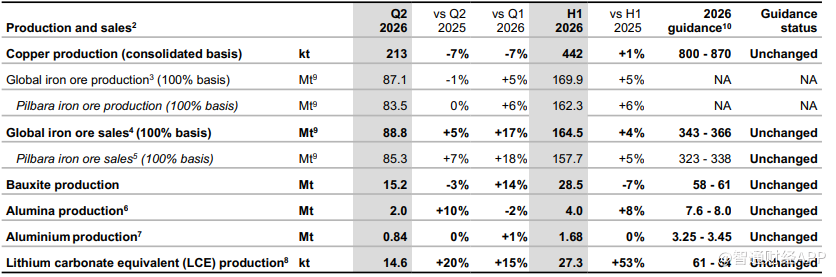
According to Rio Tinto's latest operating report released on Wednesday, copper production fell 7% month-on-month to 213,000 tons in the second quarter due to a failure at the Kennecott smelter in Utah, which shut down production of a furnace and currently needs to be rebuilt.
Rio Tinto said the mine supplies 15% to 20% of US domestic copper demand and is expected to continue to be affected over the next six months.
Copper is an important metal for electrification. As the energy transition and the expansion of artificial intelligence data centers drive rapid growth in copper demand, copper occupies a central position in Rio Tinto Group's growth strategy. Despite problems at the Kennicott copper mine, the company has cut costs in the copper business and maintained production expectations of more than 800,000 tons for the whole year.
On the other business side, Rio Tinto Group's iron ore business has recovered from production disruptions caused by the Pilbara region of Western Australia in the first quarter. In the three months up to June, iron ore shipments increased 17% month-on-month and 5% year-on-year to 88.8 million tons.
According to the Rio Tinto report, the aluminum supply chain is still resilient. Aluminum production increased 1% month-on-month in the second quarter and remained flat; lithium production increased 15% month-on-month and 20% year-on-year, mainly due to the continued decline in production capacity at the Rincon plant and the early commissioning of the Sal de Vida and Fénix 1B projects.
The mining company also said that so far, the Middle East conflict has had limited impact on its production and operation. This also provides an early reference basis for the market to evaluate the impact of the US-Iran conflict on the global mining industry.
Rio Tinto stated in the operation report: “There has been no substantial interruption in the production and export supply chain of the company's core categories.” However, the report also mentioned that the price of diesel has soared from about 85 US dollars/barrel to 140 US dollars/barrel, and the unit cost of the Pilbara iron ore business has increased by about 80 cents/ton in the past six months.
Rio Tinto Group warned that the situation in the Strait of Hormuz remains highly volatile. The company continues to closely follow the evolution of the situation and develop complete emergency plans to deal with the potential risk of escalating conflicts or greater shocks to the global energy and logistics markets.