
Is Enphase Energy (ENPH) Reasonably Valued After Mixed Cash Flow Signals?
Enphase Energy stock is caught between mixed valuation signals, with the Discounted Cash Flow (DCF) intrinsic value estimate pointing to a premium to today’s price while market based multiples screen as more supportive, all against a five year share price record that has been heavily negative.
- Over the last 5 years, Enphase Energy has delivered a share price decline of 77.0%, which sets a cautious backdrop for any valuation case today.
- On the upside, new products such as the IQ9N microinverters and IQ PowerPack portable power station may support expectations for future cash flows. However, the shareholder lawsuit over European growth disclosures highlights legal and competitive risks that could weigh on how investors price those cash flows.
- Across Simply Wall St’s checks, Enphase Energy scores 3 out of 6 on valuation, which points to a mixed picture rather than a clear bargain or clear overvaluation.
The issue now is whether today’s share price for Enphase Energy already reflects these cross currents between the intrinsic value estimate, the market multiples and the stock’s long term return profile.
Find out why Enphase Energy's 6.0% return over the last year is lagging behind its peers.
Has Enphase Energy Run Too Far on Cash Flow?
The Discounted Cash Flow (DCF) model estimates what Enphase Energy could be worth based on the cash it is expected to generate for shareholders. Enphase Energy has recently reported last twelve month free cash flow of about $136.2 million, and the model assumes that cash flows recover and then grow from this base over time.
On these assumptions, the 2 Stage Free Cash Flow to Equity model arrives at an intrinsic value of about $34 per share. Compared with the current share price, that implies the stock appears to be roughly 20% overvalued on a pure cash flow basis. The shareholder lawsuit over alleged misstatements about European growth helps explain why investors might be reluctant to pay much more than the DCF suggests for Enphase Energy, even with new products rolling out.
Overall, the DCF workup indicates that Enphase Energy stock currently appears overvalued relative to its projected cash flows.
Our Discounted Cash Flow (DCF) analysis suggests Enphase Energy may be overvalued by 20.0%. Discover 49 high quality undervalued stocks or create your own screener to find better value opportunities.
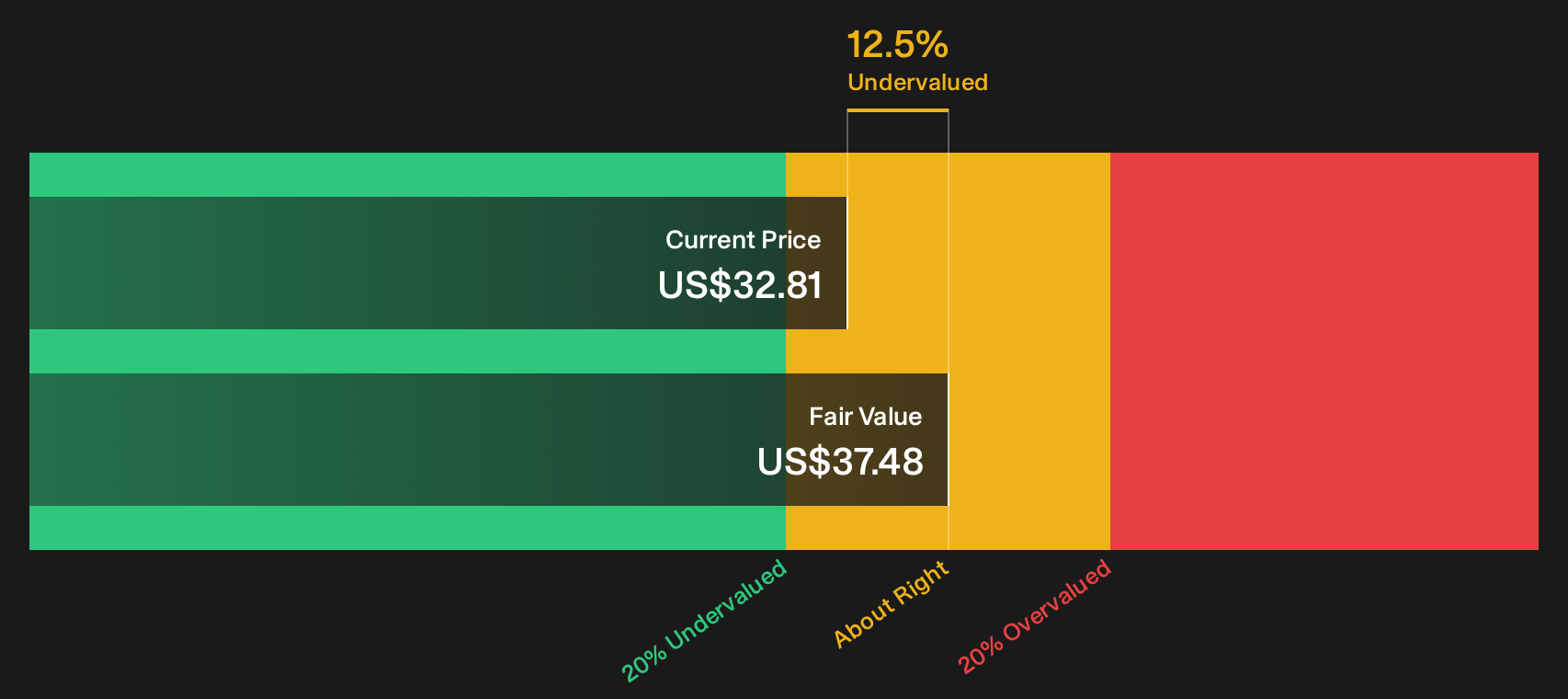
Is Enphase Energy a Bargain on Earnings?
The P/E ratio is a useful cross check for Enphase Energy because it ties the share price directly to the earnings that support it. Enphase Energy currently trades on a P/E of about 40.1x, which is below both the semiconductor industry average of roughly 59.4x and the peer group average of about 100.6x.
Simply Wall St’s fair P/E ratio for Enphase Energy is around 46.3x, which is slightly above where the stock trades today and indicates some headroom if earnings track the assumptions behind that fair multiple. Considered alongside the lower P/E versus both industry and peers, this framework indicates that the market is pricing Enphase Energy at a discount to what its earnings profile, sector and risk mix would typically command.
On the P/E yardstick, Enphase Energy stock currently appears undervalued relative to both its sector benchmarks and its tailored fair multiple.

See what the numbers say about this price — find out in our valuation breakdown.
The Enphase Energy Narrative: What Would Justify Today's Price?
Simply Wall St Narratives pick up where the Enphase Energy valuation puzzle leaves off by spelling out which assumptions on growth, margins and earnings would need to hold for the stock to be worth meaningfully more or less than today’s price, and sit on the company’s Community page. Each narrative ties its number to a specific view on where Enphase Energy’s growth, profitability and risks could go next, giving you a reference point to revisit as new information arrives.
The community is split on Enphase Energy, with one side leaning into policy and product momentum while the other focuses on a tougher residential solar backdrop.
Bull case: 15% undervalued
"Expansion of integrated solar, battery, and EV charging solutions is expected to boost growth, recurring revenue, and margin resilience through global trends and supportive policy changes…"
Read the full Bull Case to see why Enphase Energy could be undervalued
Bear case: 52% overvalued
"The expected expiration of the 25D homeowner tax credit and an ensuing 20% reduction in the U.S. total addressable market for residential solar in 2026 signal declining installation volumes, disproportionately hurting Enphase's core revenue base and threatening sustained top-line growth…"
Read the full Bear Case to see why Enphase Energy could be overvalued
Do you think there's more to the story for Enphase Energy? Head over to our Community to see what others are saying!
The Bottom Line
For Enphase Energy, the Discounted Cash Flow (DCF) work points to shares trading above intrinsic value, while the market multiple view suggests the stock screens as undervalued against earnings and peers. That tension largely comes down to how you weigh cash flow timing and capital needs versus market expectations for growth and sentiment in the sector. With broader valuation checks sitting in a mixed range, the key question is whether Enphase Energy can convert its product pipeline into durable earnings and cash flows, or whether legal and competitive risks mean the apparent earnings discount is simply the market pricing in those uncertainties.
This article by Simply Wall St is general in nature. We provide commentary based on historical data and analyst forecasts only using an unbiased methodology and our articles are not intended to be financial advice. It does not constitute a recommendation to buy or sell any stock, and does not take account of your objectives, or your financial situation. We aim to bring you long-term focused analysis driven by fundamental data. Note that our analysis may not factor in the latest price-sensitive company announcements or qualitative material. Simply Wall St has no position in any stocks mentioned.
Have feedback on this article? Concerned about the content? Get in touch with us directly. Alternatively, email editorial-team@simplywallst.com