
Sensor Tower: AI is profoundly reshaping the user experience, business model, and digital ecosystem
Zhitong Finance App learned that according to the “2026 AI Application Market Insight Report” released by Sensor Tower, from AI assistants and AI-enabled shopping experiences to the rapid spread of AI concepts in advertising marketing and non-native AI applications, AI is continuing to reshape products, commerce, and user experience. Looking at the entire mobile and online ecosystem, three major trends are defining the AI development pattern in 2026: the competitive landscape heats up, ChatGPT is facing more challenges; AI agents are changing the way consumers shop; and AI is becoming a new entry point for users to discover content and reach advertising.
As the competitive landscape heats up, ChatGPT faces more challenges
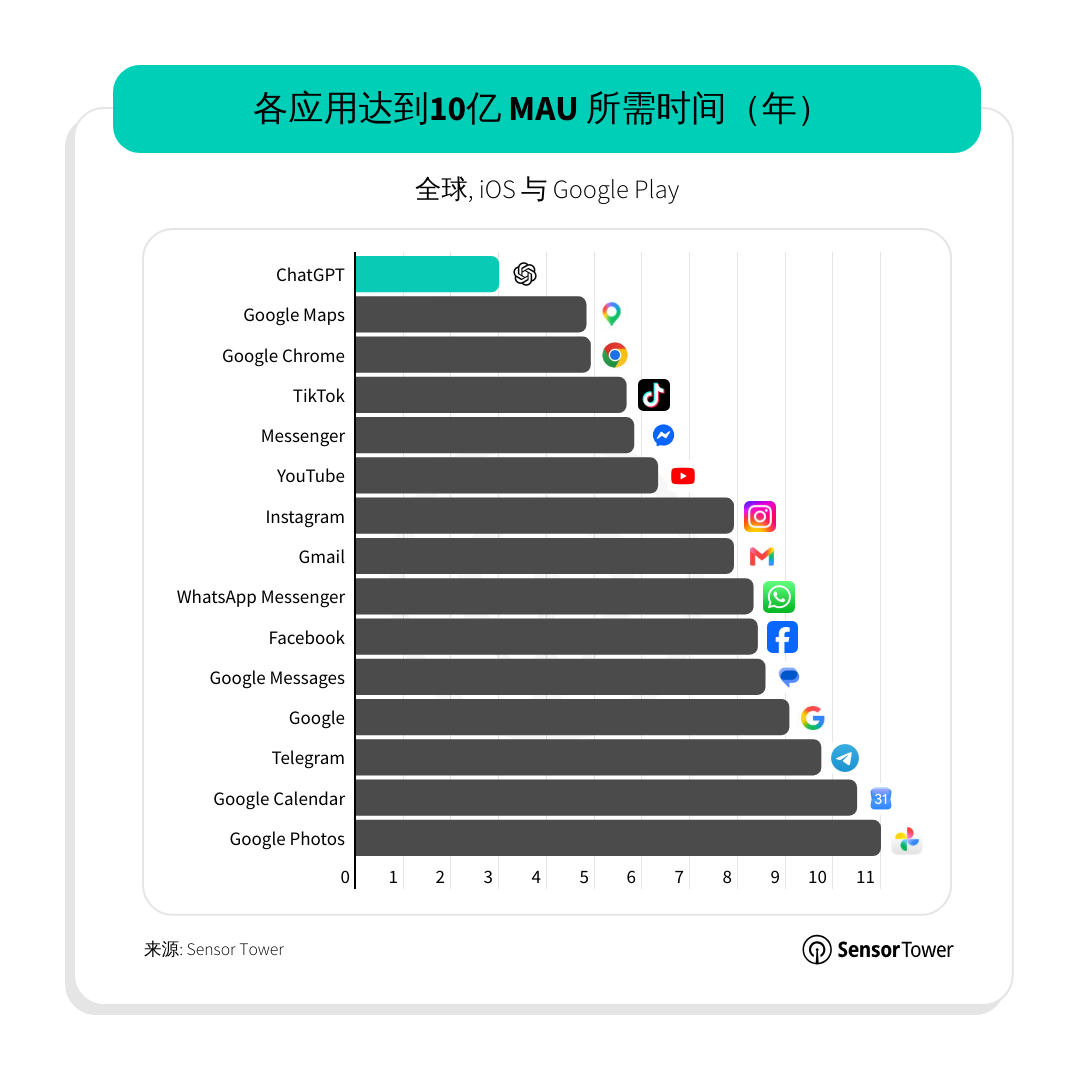
ChatGPT continues to lead the AI assistant market. In May 2026, it became the fastest app in global mobile app history to reach 1 billion monthly active users (MAU), and it only took three years to reach this milestone, surpassing TikTok, YouTube, and Instagram.
Meanwhile, outside of the leading pattern, market competition has clearly heated up. In the first quarter of 2026, the total usage time of ChatGPT, Google Gemini, and DeepSeek accounted for nearly 90% of the total time of AI assistant applications, indicating that few leading platforms still dominate.
However, at the edge of this highly concentrated market, competition has begun to intensify. As Google Gemini and Claude continue to gain strength in several core markets around the world, the share of ChatGPT's real audience (used to measure the number of deduplicated independent users across mobile apps and websites) fell below 50% for the first time in March 2026. Thanks to strong native Android integration and wider ecosystem distribution across Google services, Google Gemini has steadily expanded its market footprint, particularly in Europe, the US, Japan, and South Korea.
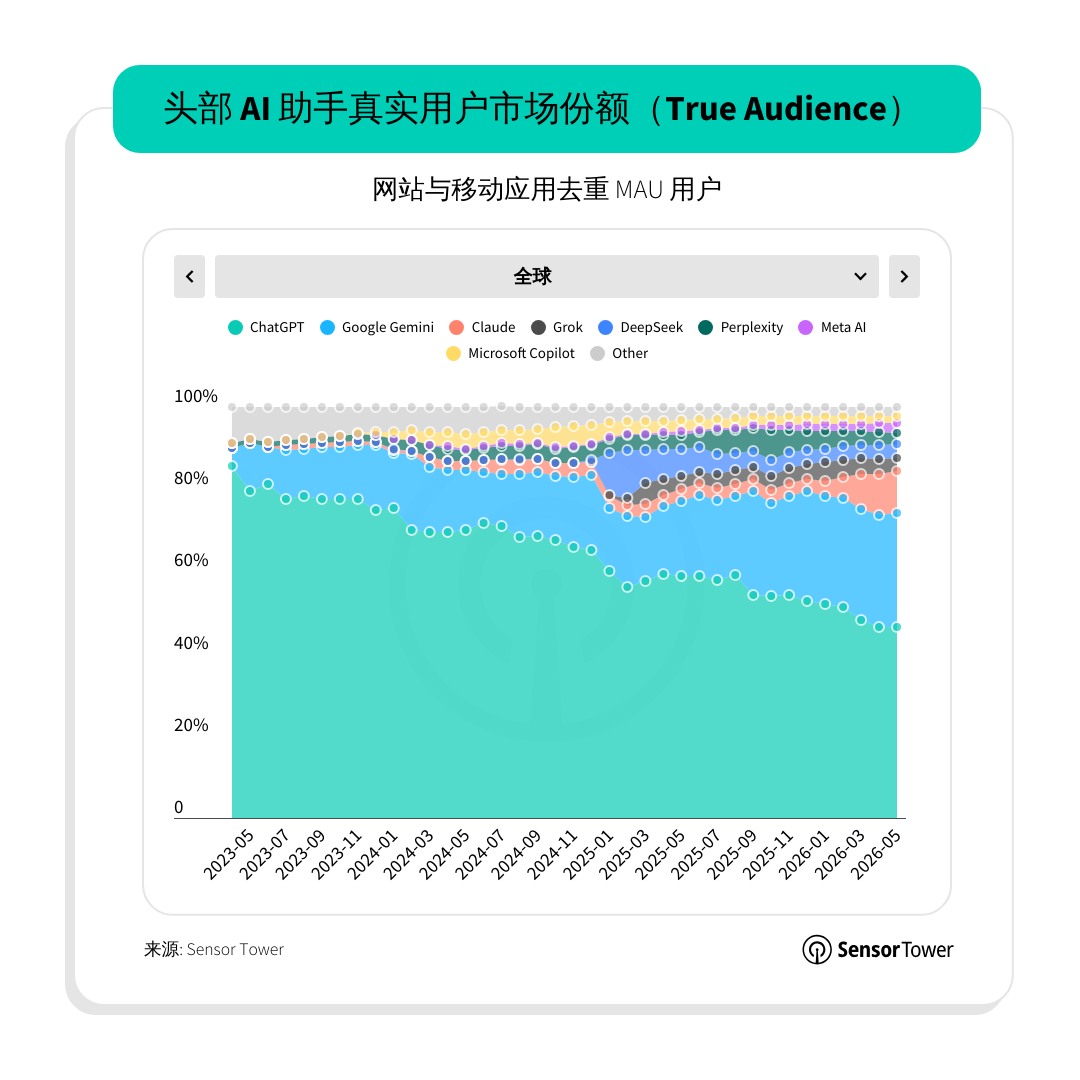
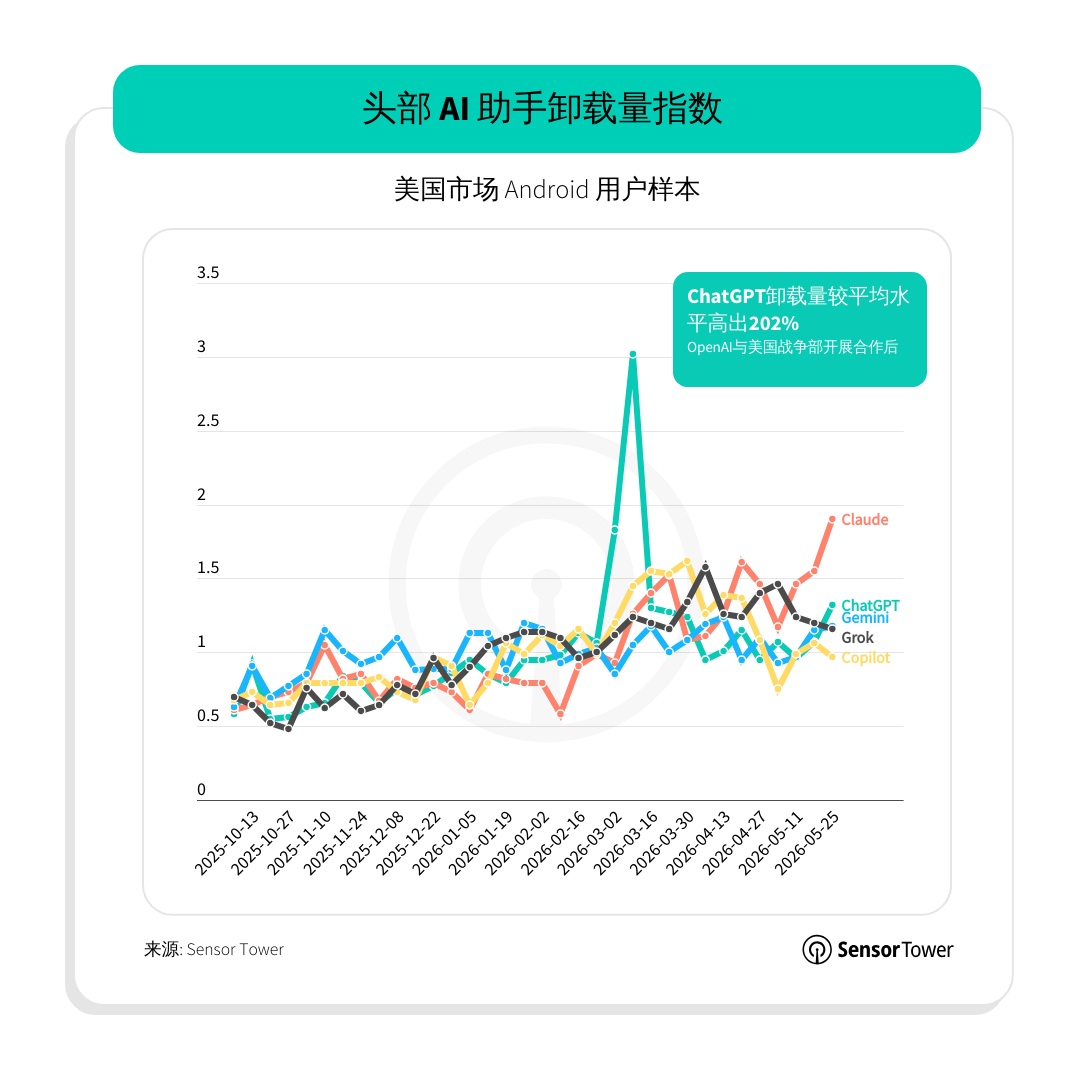
Claude became the biggest dark horse in 2026. In May 2026, its real audience size exploded by 452% year over year, and its share in the US market also climbed from 4.4% to nearly 14%. In the US market, after OpenAI reached an agreement with the US Department of War (Department of War), the number of uninstalls of ChatGPT increased markedly, and peaked during the week of March 9-15, which is about twice the average level of the app. As Anthropic clearly declined to cooperate with the Pentagon, many users who uninstalled ChatGPT seem to have turned to Claude. Claude once surpassed ChatGPT in single-day downloads between March 1 and 5. Although ChatGPT has once again maintained its lead in the daily download rankings since March 6, the gap between the two has narrowed significantly from before March.
The data shows that although ChatGPT is still the undisputed leader in this category, due to Gemini's structural channel access advantage and Claude's rapid penetration among professionals and highly motivated user groups, the market is gradually moving from a single oligopoly to a more diverse competitive pattern.
AI agents are changing the way consumers shop
AI assistants are increasingly influencing how consumers discover and evaluate products online, particularly in categories where high unit prices and purchasing decisions are highly dependent on information gathering and comparison (such as digital electronics, household goods, and fashion apparel). From the fourth quarter of 2024 to the first quarter of 2026, referral traffic directed from generative AI to shopping websites increased in all major retail categories. Among them, the computer and consumer electronics categories led the shift, and the share of traffic contributed by generative AI soared by nearly four times; at the same time, the home gardening and sports and outdoor categories all accounted for more than 0.35% of total visits.
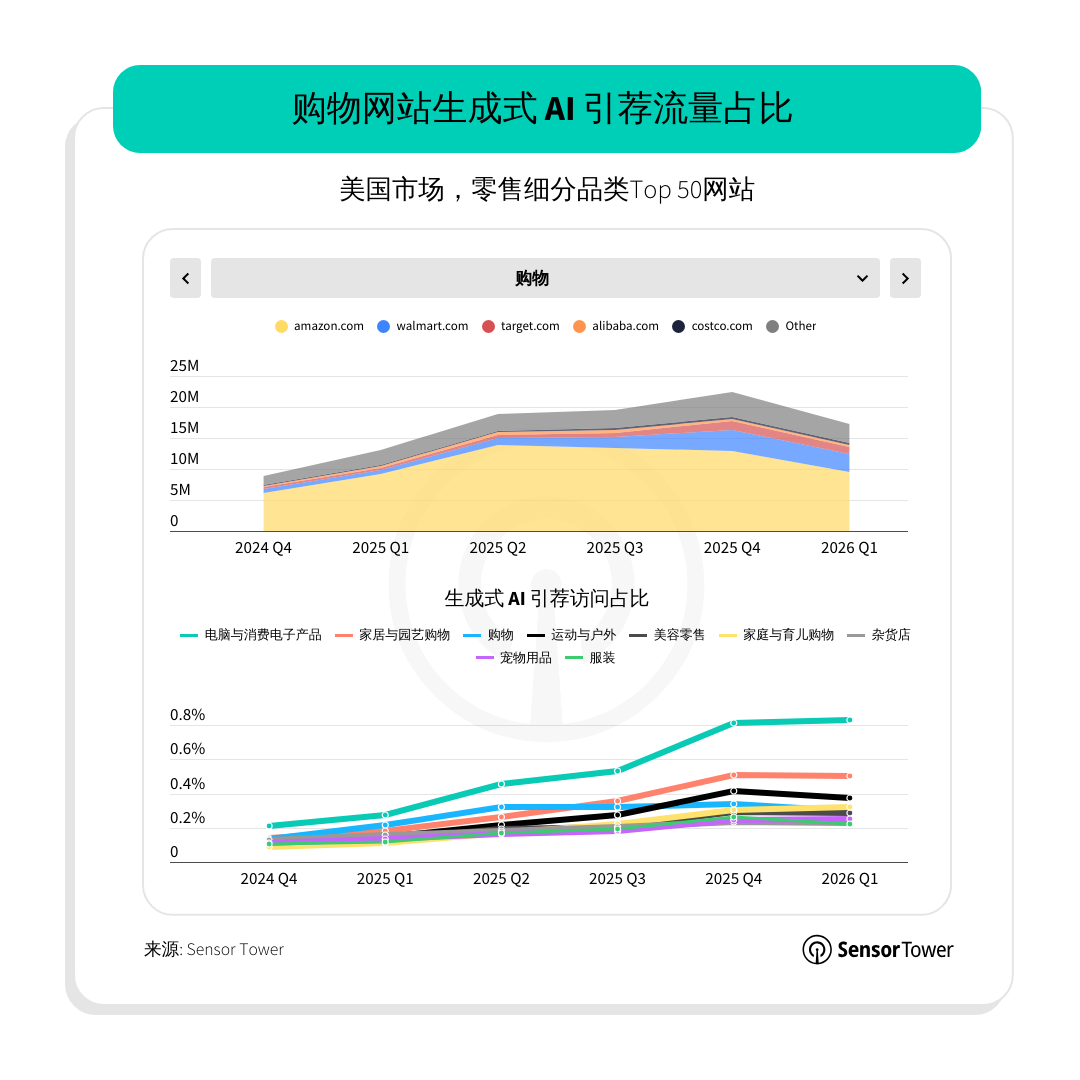
However, there are significant differences in the extent to which AI technology is being adopted by different retail platforms. Retail giants with deeply integrated AI assistants, such as Walmart (Walmart) and Target (Target), have climbed to over 1.5% of generative AI referral traffic. In contrast, Amazon (Amazon)'s share is currently still low due to restrictions on crawler access and a relatively closed ecosystem.
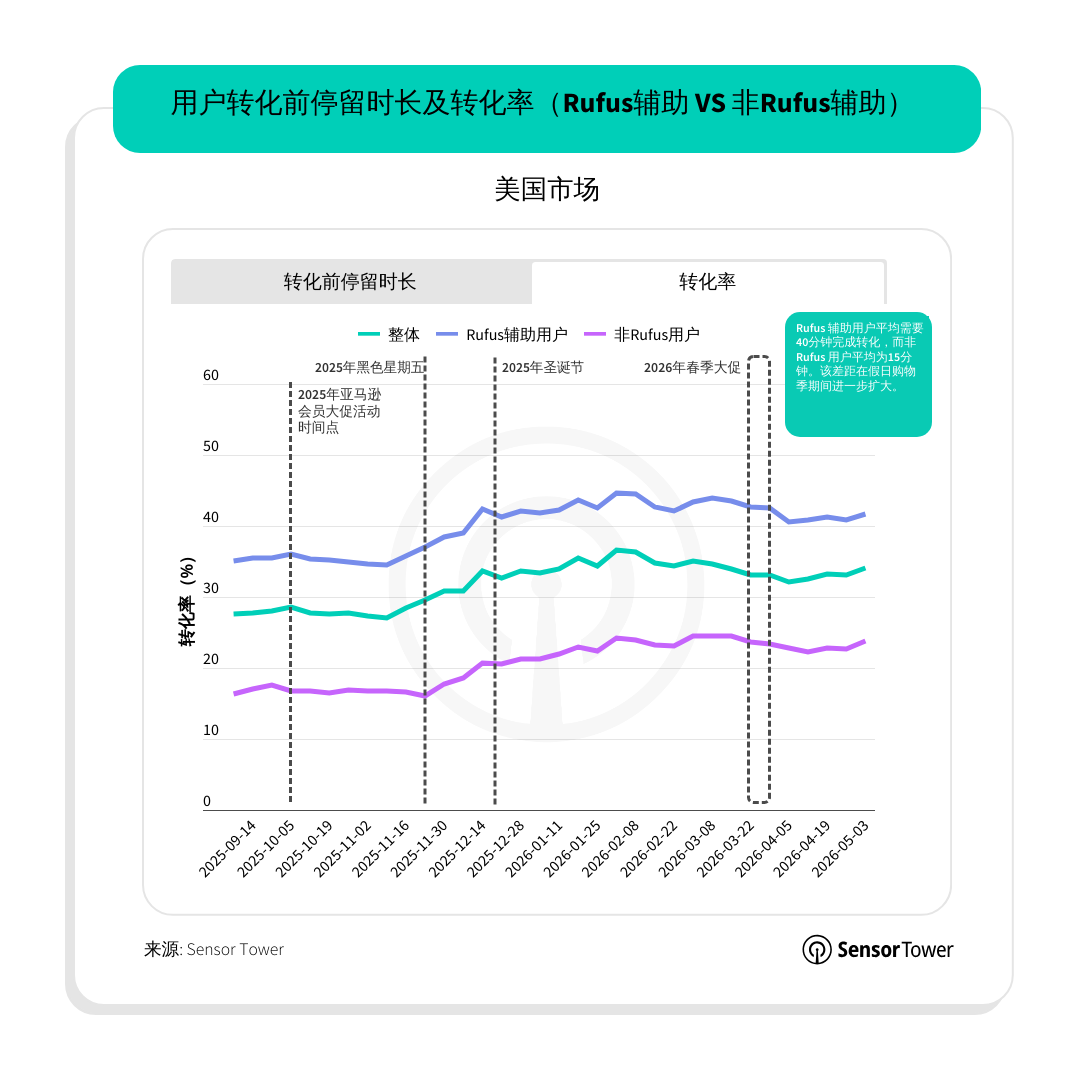
At the same time, early AI shopping assistants built into e-commerce platforms, such as Amazon's Rufus and Walmart's Sparky, are also reshaping users' in-site behavior. The data shows that users who use Rufus convert almost twice as many purchases as those who don't use it. While the adoption rate of Sparky is growing rapidly, it has also significantly lengthened users' time on the site and effectively increased the customer unit price (order amount).
This shows that the value of AI is not only reflected in drainage, but also in improving conversion efficiency and user engagement within retail platforms.
AI has become a new entry point for users to discover the reach of content and advertising
As AI applications continue to grow in popularity, it is becoming a new type of content discovery portal in the digital ecosystem after search and social networking. ChatGPT began testing ad placement in early 2026. As of May, its ad impressions surged more than 7 times compared to March. Although the current overall penetration rate is still at an early low level, AI platforms are rapidly evolving into new performance marketing and user reach channels that advertisers cannot ignore.
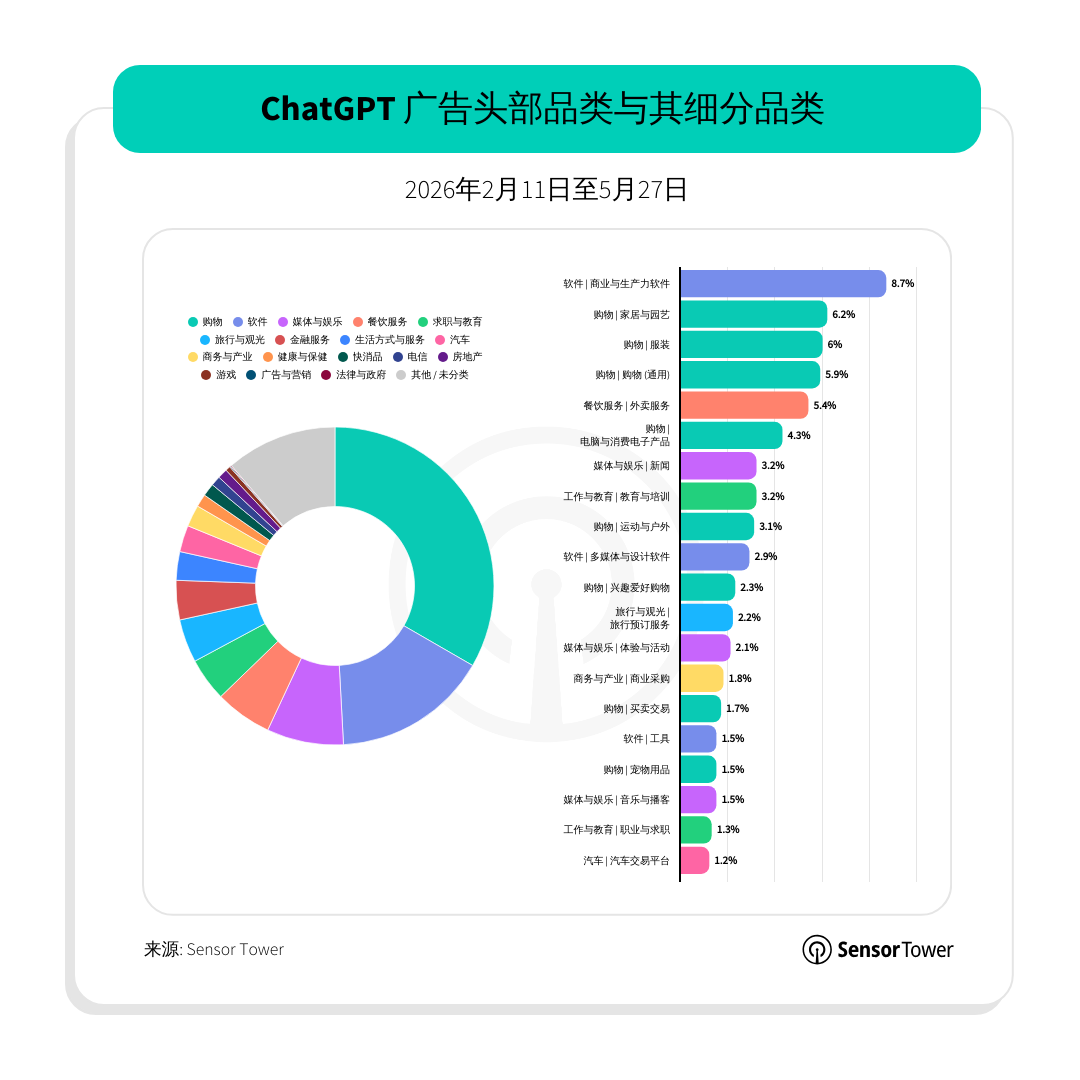
Early advertisers focused on shopping, software, travel, and financial services, which was highly compatible with the natural advantage of AI in helping users make complex decisions. However, compared to traditional social media platforms, AI platforms have imposed stricter restrictions on sensitive categories such as healthcare and gaming, thus creating a more detailed and compliant advertising ecosystem.
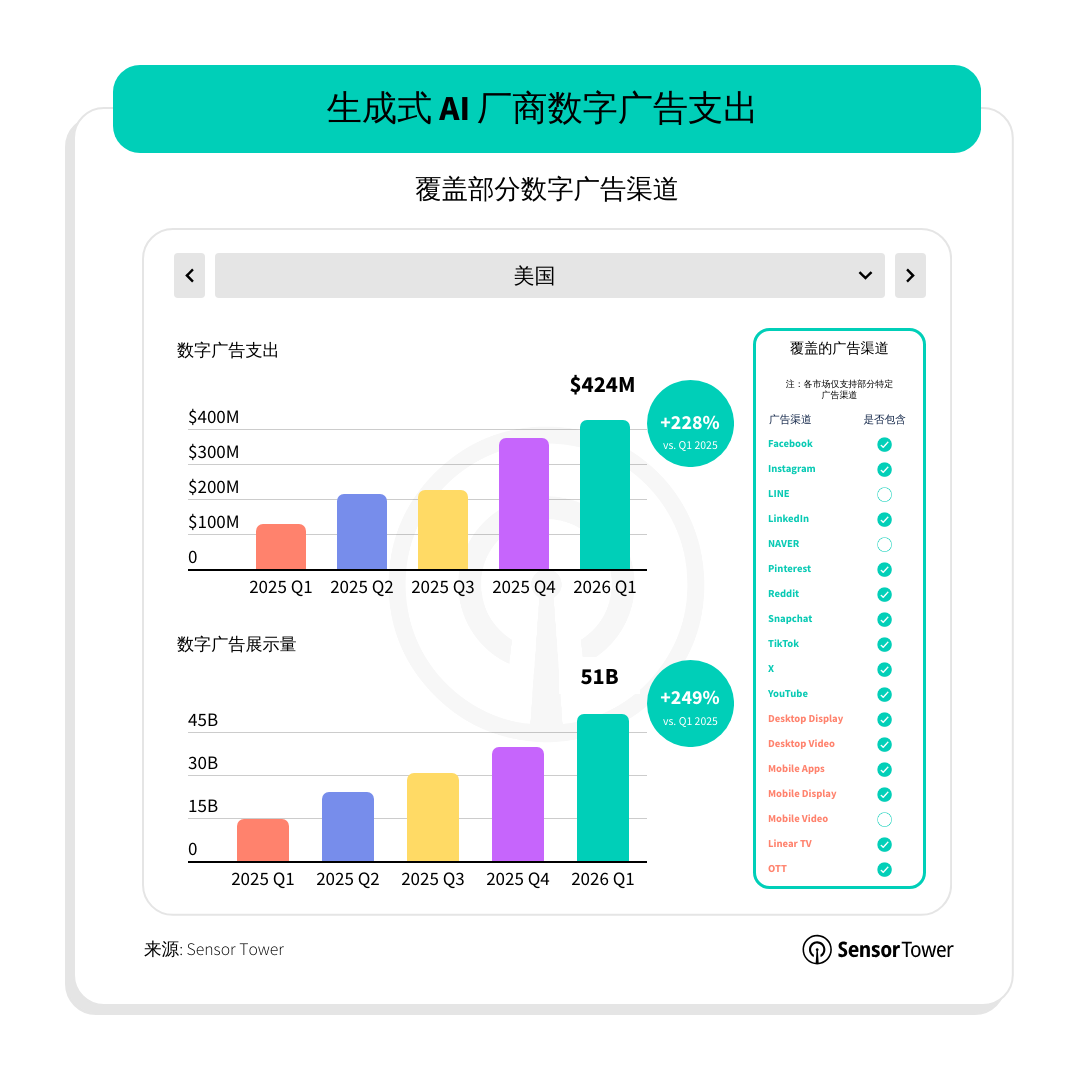
At the same time, AI brands themselves have become important advertisers in the market. In the first quarter of 2026, the US market spent more than three times as much on generative AI-related advertising as in the same period last year. As competition for user acquisition intensified, both OpenAI and Anthropic saw ad spend soar by more than 800% year over year.
Looking at the broader internet market, marketing methods using the AI concept have also gone mainstream. Currently, more than 200,000 apps have mentioned AI in store descriptions, and in the first quarter of 2026, the global investment in advertising materials containing AI-related keywords reached 1.3 billion US dollars.
Look at the big picture
Across the three fields of AI assistants, commercial retail, and advertising and marketing, a clear development pattern is gradually emerging: AI is no longer a separate application category, but is evolving into behavioral habits and business infrastructure throughout the Internet, profoundly reshaping the user experience, business model, and digital ecosystem.
On the AI assistant circuit, the market is moving from a single company to strong competition; in the commercial retail circuit, AI is reshaping consumers' content discovery and purchase conversion paths; in the advertising and marketing circuit, AI has simultaneously become a delivery medium and core selling point itself; in the mobile application ecosystem, AI is gradually evolving from an independent product to a standard capability for mobile applications.
Together, these changes show that 2026 will be a mature year for AI to cross the early stages of early access and fully structurally integrate into the digital economy.