
Deutsche Bank: Japan may shift its policy focus from supporting the yen to controlling treasury bond yields to support economic growth plans
The Zhitong Finance App learned that Deutsche Bank said that in order to achieve the Japanese government's ambitious economic growth goals, Japan may need to shift its policy focus from supporting the yen to controlling treasury bond yields in order to reduce financing costs and ensure fiscal sustainability.
Japanese Prime Minister Sanae Takaichi announced an economic growth plan of about 2.3 trillion US dollars at the end of last month. Deutsche Bank strategist Mallika Sachdeva pointed out in the latest report that the plan means that Japan is at a critical point in a major transformation of fiscal policy and industrial policy, and the government needs to maintain fiscal sustainability while expanding fiscal spending. According to this growth plan, the Japanese government hopes to provide a source of funding for large-scale fiscal expenditure by activating domestic savings and encouraging large institutional investors to increase the allocation of domestic assets. At the same time, Japan also needs to ensure that the nominal economic growth rate continues to exceed financing costs in order to maintain the sustainability of its debt burden.
Sachdeva believes that in order to achieve these two goals, the Japanese government may need to take steps to reduce treasury bond yields and control overall financing costs.
This means that the focus of Japan's policy may change. Over the past period, the Japanese government and the Bank of Japan have been working to contain the depreciation of the yen, including many large-scale foreign exchange interventions, but the results have been limited. The yen fell to its lowest level in about 40 years this week, then rebounded due to media reports that Bank of Japan officials were willing to raise interest rates faster than market expectations.
Sachdeva said that if improving fiscal capacity becomes the primary goal of the policy, Japan's future policy focus may shift from foreign exchange management to yield management, that is, from focusing on the USD/JPY exchange rate to controlling 10-year treasury bond yields and overall borrowing costs.
In fact, Japan implemented a yield curve control (YCC) policy from 2016 to 2024 to reduce financing costs. Countries such as the US have also adopted similar policies in history. For example, during World War II, the US funded wars by controlling treasury bond yields.
Deutsche Bank pointed out that Japan is not the only developed economy facing high debt pressure and hoping to revive economic growth, but since Japan's government debt accounts for more than 200% of GDP, its fiscal policy space is significantly less than that of other major economies.
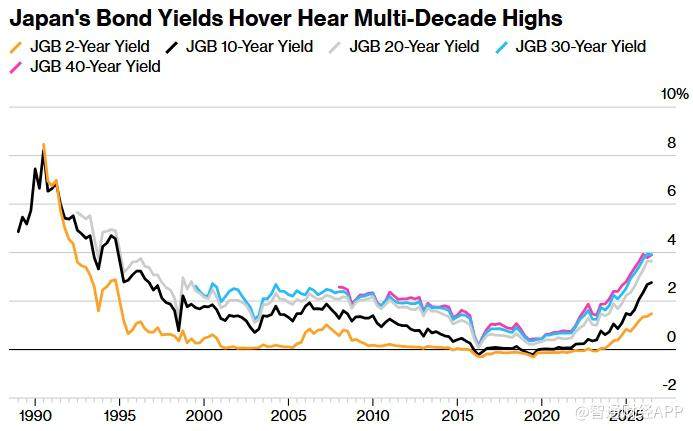
Debt sustainability concerns have begun to be reflected in the bond market. Since this year, the yield on Japanese long-term treasury bonds has continued to rise. Among them, the yield on 30-year Japanese treasury bonds has risen to the highest level in history.
Sachdeva predicts that Japan is more likely to manage long-term yields by influencing demand for bonds in the future. One method is to require the Japanese Government Pension Investment Fund (GPIF) of about 1.8 trillion US dollars to increase the domestic asset allocation ratio in order to increase demand for Japanese treasury bonds.
Another possibility is for the Bank of Japan to re-increase its support for the bond market, including resuming purchasing treasury bonds or continuing to maintain a loose monetary policy to help control yields.
However, she pointed out that if the Bank of Japan resumes debt purchases or maintains an easing policy, it may put pressure on the yen; conversely, if GPIF transfers some of its overseas assets back to Japan, it is expected to support the yen.
Sachdeva said that while Japan suppresses fluctuations in treasury bond yields in the future, fluctuations in the foreign exchange market may also increase further.