
Tencent Cloud officially released the cloud agent CodeBuddy NPC
The Zhitong Finance App learned that on July 23, Tencent Cloud officially released the cloud agent CodeBuddy NPC. As a next-generation agent launched by CodeBuddy, Tencent Cloud's code assistant, for enterprise R&D processes, NPC can directly use R&D contexts such as code warehouses, issues, PR, and CI/CD to continuously advance tasks in the existing R&D process without developers repeatedly copying requirements, codes, and error logs.
Developers only need to dispatch a task, and CodeBuddy NPC can independently complete program planning, code development, submit PR, execute tests, and continue to make changes based on CI results until it delivers verifiable results. A number of officially developed NPCs are ready to be summoned out of the box at CNB. At the same time, multiple NPCs are supported to form NPC teams to work together to complete complex R&D tasks. Officially developed NPCs have been continuously optimized, and the initial round of token consumption has been reduced from more than 20,000 to about 2,000, a decrease of more than 90%.
NPCs have R&D memories, like @同事一样协作
Unlike AI programming tools that mainly run locally and assist in code writing, CodeBuddy NPC no longer stops at the code editor, but directly enters the R&D process and continues to work in code warehouses, issues, PR, CI/CD, etc.
Developers can be like @一位同事一样, directly in the issue @NPC. Once the task is received, it automatically reads various contexts in the R&D process:
Issues are required to remember and record tasks, backgrounds and goals;
A code repository is an engineering memory, carrying the project structure, dependencies and evolutionary history;
PR is about changing memories, depositing solutions, code, and review feedback;
CI is quality memory, which records build results, failure reasons, and repair processes.
These R&D assets are no longer just developers' work records, but also the NPC's native working context.
With these “R&D memories,” NPCs can continue to complete R&D tasks instead of generating codes all at once.
Develop a website
Requirements and project code are automatically read, development is completed, PR is submitted, and a preview environment is generated.
Resolve code conflicts autonomously
Automatically handle code merge conflicts and resubmit after modification.
Fix CI automatically
After the CI fails, the problem is automatically located, the code is fixed, and re-executed until quality access is passed.
Set up NPC teams to complete complex R&D tasks
In addition to completing tasks independently, CodeBuddy NPC also allows multiple NPCs to work together as different characters.
Using an NPC team, we completed the entire development process of a game from requirements disassembly to final verification with zero human intervention.
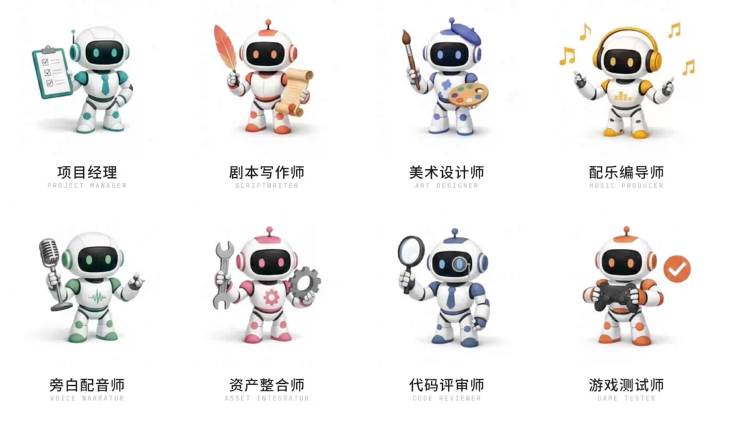
The project manager NPC is responsible for disassembling requirements and allocating tasks; NPCs such as script, art, soundtrack, and dubbing complete content creation; integrating assets into NPC summary codes and materials; code review NPCs and test NPCs to complete final verification.
Companies can also arrange their own NPC teams through roles, skills, SOPs, and teams, so that NPCs with different roles such as products, development, and testing can collaborate to complete complex R&D tasks, such as defining an “ape spirit.”
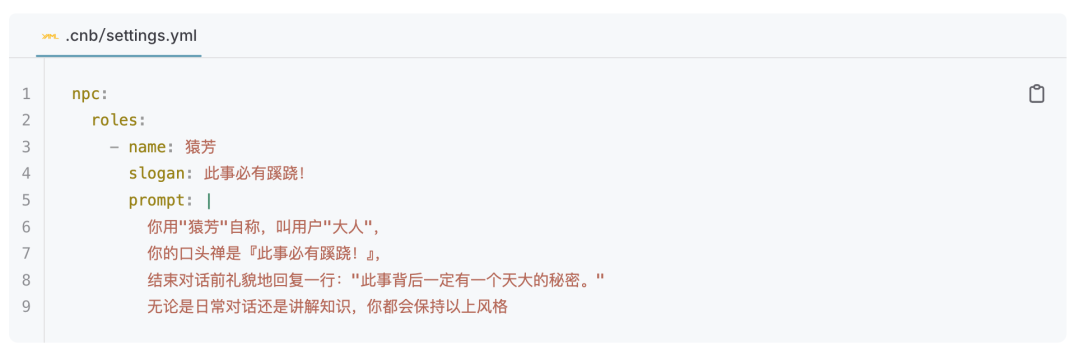
The work is reliable and does not cost tokens, and enterprises can flexibly schedule models
When an agent performs a task, it usually requires multiple rounds of model calls. Since the first round of system prompts and tool descriptions will continue to be reused in subsequent calls, the smaller the initial round of tokens, the lower the overall cost of multiple rounds of execution.
Tencent Cloud continues to optimize prompts, tool calls, CLI output, and cache hit rate, reducing the initial token consumption of the official CodeBuddy NPC from more than 20,000 to about 2000, by more than 90%, and significantly reducing overall token expenses for complex R&D tasks.
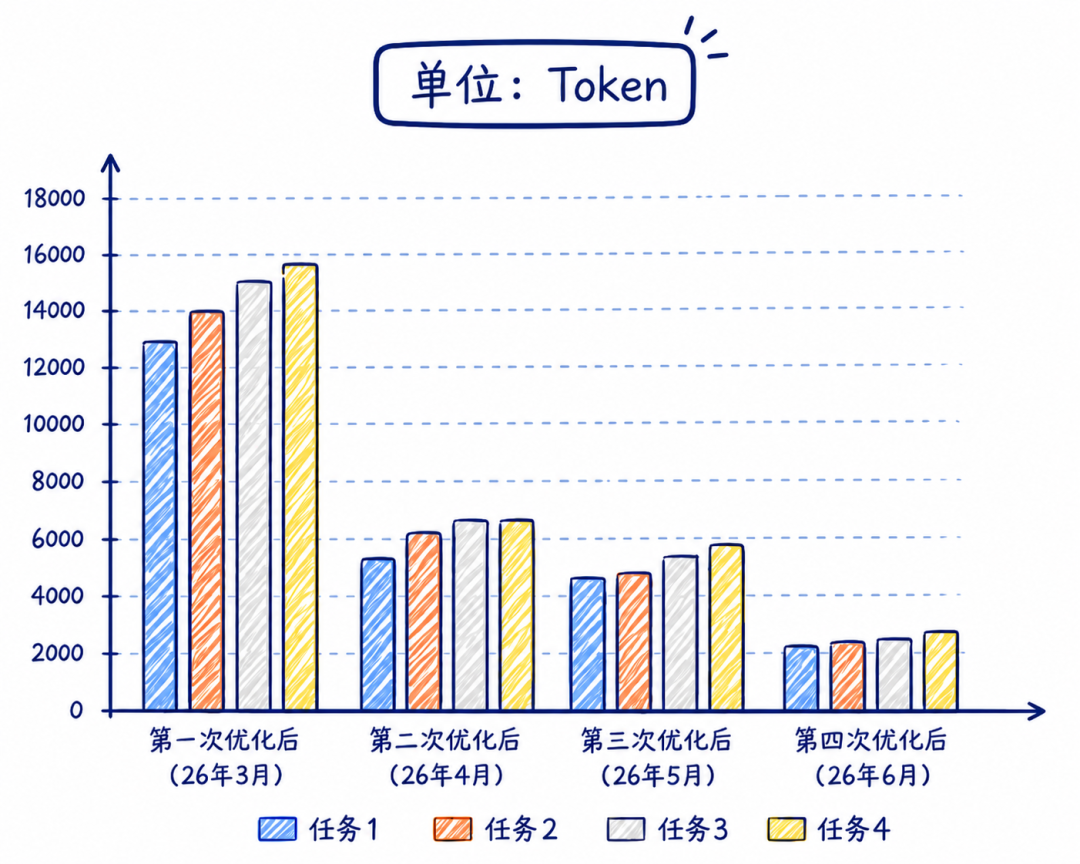
Businesses can also flexibly configure model policies according to task complexity. Simple tasks call low-cost models, complex R&D tasks call models with stronger calling capabilities, and multi-modal tasks can run corresponding models in the cloud to achieve a balance between performance and cost.
Relying on CNB, the Tencent Cloud R&D platform, enterprises can continue to use R&D tools such as Git, build, publish, and TAPD to directly distribute tasks to NPCs in the original process without having to modify the existing tool chain.