
3 U.S. Auto Parts Stocks Investors Are Watching As Tariffs Reshape Supply Chains
New U.S. tariffs on Canadian motor vehicles and related products are set to reshape costs across the auto supply chain, and that ripple effect is already on investors’ radar. While some companies may face higher input prices or trade friction, others could see fresh demand as buyers look for alternative suppliers or lean more on domestic aftermarket options. This article looks at 3 stocks from a U.S. Auto Parts and Aftermarket Suppliers screener that appear positively exposed to this news, helping you spot where the tariff story might translate into opportunity or added resilience in portfolios.
Dana (DAN)
Overview: Dana Incorporated is a Maumee based supplier of axles, driveshafts, transmissions, and energy management systems that help move power efficiently through light and commercial vehicles, including hybrid and electric platforms.
Operations: Dana generates about US$5.4b in revenue from Light Vehicle products and about US$2.4b from Commercial Vehicle products, partly offset by US$0.2b of inter segment eliminations.
Market Cap: US$3.0b
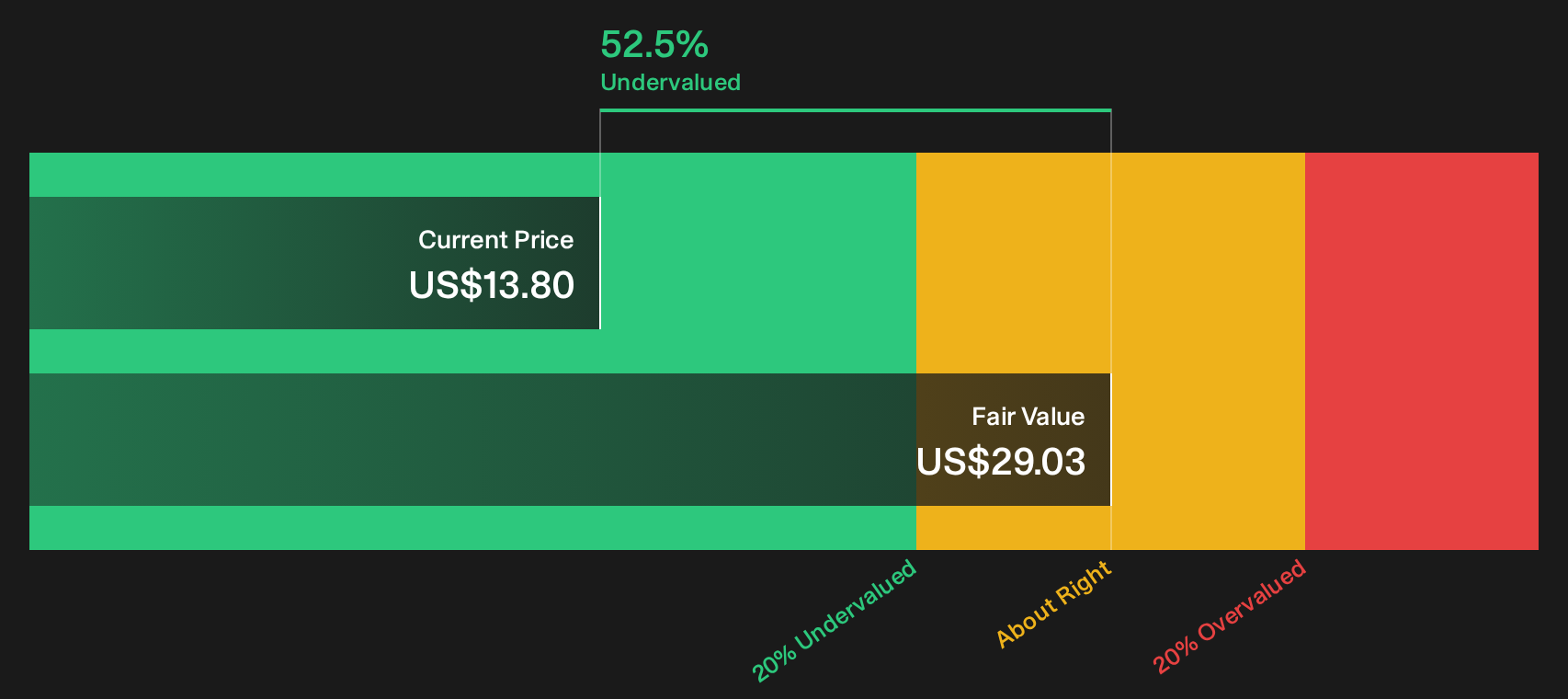
Investors watching the new U.S. tariffs on Canadian auto imports may find Dana interesting because it is a U.S. based drivetrain and power technology supplier that could pick up volume as manufacturers look for tariff friendly sources. The company is leaning into electrification with motors, inverters and e axles, while also targeting cost savings and higher free cash flow. However, it remains unprofitable for now and relies fully on external borrowing. Ongoing share buybacks and index changes may influence trading, but tariff related supply chain friction, concentrated customers and execution on efficiency plans still matter. The bigger question is how these moving parts stack up against what analysts and discounted cash flow work imply for Dana’s long term value.
Dana’s electrification push and tariff friendly footprint could be masking a very different long term story, and the trade off between growth plans, borrowing and cash flow only comes into focus in the DCF valuation analysis for Dana

Gentherm (THRM)
Overview: Gentherm is a Michigan based company that makes thermal management and comfort systems for cars and medical settings, from heated and cooled seats and steering wheels to patient temperature management devices used in operating rooms and intensive care.
Operations: Gentherm generates about US$1.49b in revenue from its Automotive segment and about US$49 million from its smaller Medical segment.
Market Cap: US$1.1b
Gentherm sits right in the slipstream of the new U.S. tariffs, as a domestic supplier of seat heating, climate control and comfort systems that automakers can use to reduce reliance on Canadian sourced components, with management already emphasizing in region production and tariff pass through mechanisms. Analysts expect earnings to grow faster than the broader auto components market, yet current net margins are thin at 1.5% and recent earnings have been under pressure, reflecting costs, footprint changes and tariff related timing effects. Add in concentrated exposure to a handful of big OEMs, a relatively new management team and generous CEO pay, and the picture is more complicated than a simple “tariff winner.” This is why the detailed valuation work and scenario analysis really matter here.
Gentherm’s thin 1.5% net margins and tariff exposed footprint could be hiding a very different earnings path, and the real story only comes into focus in the analyst forecasts for Gentherm

Monro (MNRO)
Overview: Monro is a long established U.S. tire and auto service chain that focuses on replacement tires, undercar repairs and routine maintenance for passenger vehicles, operating hundreds of branded service centers across the country.
Operations: Monro generates about US$1.16b in revenue from its Auto Repair Centers business, all from customers in the United States.
Market Cap: US$533.4m
Monro gives you pure exposure to U.S. auto maintenance at a time when tariffs could push more repair and tire spend toward domestic service chains, yet the story is more than a simple trade angle. Management has been pruning weaker stores, leaning into digital tools like online booking and inspection reports, and working with suppliers to blunt tariff driven cost pressures, while a shareholder review explores options that could reshape the business. At the same time, earnings only recently turned positive, the dividend is not well covered, and the company relies heavily on external borrowing. For investors, the key point is the interaction between turnaround efforts, activist involvement and tariff related demand, and how this could influence expectations for Monro over time.
Monro’s turnaround, activist pressure and tariff tailwinds could be setting up a very different story than its recent earnings suggest, and the missing context sits in the analysis report for Monro
The three stocks covered so far are only a starting point, as the full U.S. Auto Parts and Aftermarket Suppliers screener surfaces 23 more U.S. auto parts and aftermarket suppliers with equally compelling stories around tariffs, balance sheets and cash generation. Use Simply Wall St to identify and analyze the specific catalysts, risk profiles and business narratives that matter most to you so you can focus on the opportunities in this theme that align most closely with your own views.
Take Control of Your Investment Journey
If Gentherm or any of these companies sound like a great opportunity, register for FREE with Simply Wall St and add your companies to a Watchlist to monitor the share price against the fair value the ideal entry point. Once you've made your move, manage your holdings with our Portfolio Command Center that filters out the noise to deliver only the most critical, actionable updates. Throughout your journey, our Community allows you to filter the best ideas from thousands of investor perspectives. By uncovering hidden catalysts and risks early, you'll accelerate your decision-making and stay one step ahead of the market.
Seeking Fresh Alternatives Before Others Catch On?
New themes are breaking out, momentum is building and some of the most interesting ideas are still under the radar for now, so do not get caught dropping behind. Consider exploring these areas:
- Target cash generative businesses with strong balance sheets by scanning the curated list of solid balance sheet and fundamentals (49 results). This can help you focus on resilience while it still flies under most radars.
- Explore specialized miners by tracking the hand picked 33 elite gold producer stocks before interest spreads and the earliest opportunities become harder to access.
- Spot companies supplying critical hardware for automation by reviewing the focused 33 robotics and automation stocks while these stories are still forming and pricing has not fully reacted.
This article by Simply Wall St is general in nature. We provide commentary based on historical data and analyst forecasts only using an unbiased methodology and our articles are not intended to be financial advice. It does not constitute a recommendation to buy or sell any stock, and does not take account of your objectives, or your financial situation. We aim to bring you long-term focused analysis driven by fundamental data. Note that our analysis may not factor in the latest price-sensitive company announcements or qualitative material. Simply Wall St has no position in any stocks mentioned.
Have feedback on this article? Concerned about the content? Get in touch with us directly. Alternatively, email editorial-team@simplywallst.com