
Does Hancock Whitney (HWC) Still Look Cheap After One Florida Approval?
After a near doubled 96.2% return over the past five years, Hancock Whitney now sits at US$75.68 per share. Both the intrinsic value estimate from the Excess Returns model and earnings multiples currently point to the stock trading at a discount rather than a premium.
- Hancock Whitney has returned 96.2% over five years, which puts more focus on whether today’s price still leaves a margin between market value and the company’s underlying worth.
- Regulatory approval to acquire One Florida Bank can support expectations for a larger franchise and earnings base over time. However, the execution risk around integrating the acquisition may weigh on how much of that potential investors are willing to price in today.
- On Simply Wall St’s checks, Hancock Whitney screens as undervalued in 3 of 6 tests, a mixed picture that suggests some valuation indicators look appealing while others argue for more caution. You can see the breakdown in full at 3/6.
The issue now is whether Hancock Whitney’s current discount to intrinsic value and multiples is sufficient compensation for the risks around growth and the planned acquisition.
Is Hancock Whitney Still Cheap on Excess Returns?
The Excess Returns model looks at how efficiently Hancock Whitney can earn above its cost of equity on each dollar of shareholder capital. For Hancock Whitney, the inputs point to an earnings profile that is solid relative to its balance sheet, with book value at $55.23 per share and a stable earnings estimate of $7.11 per share based on forecasts from 8 analysts.
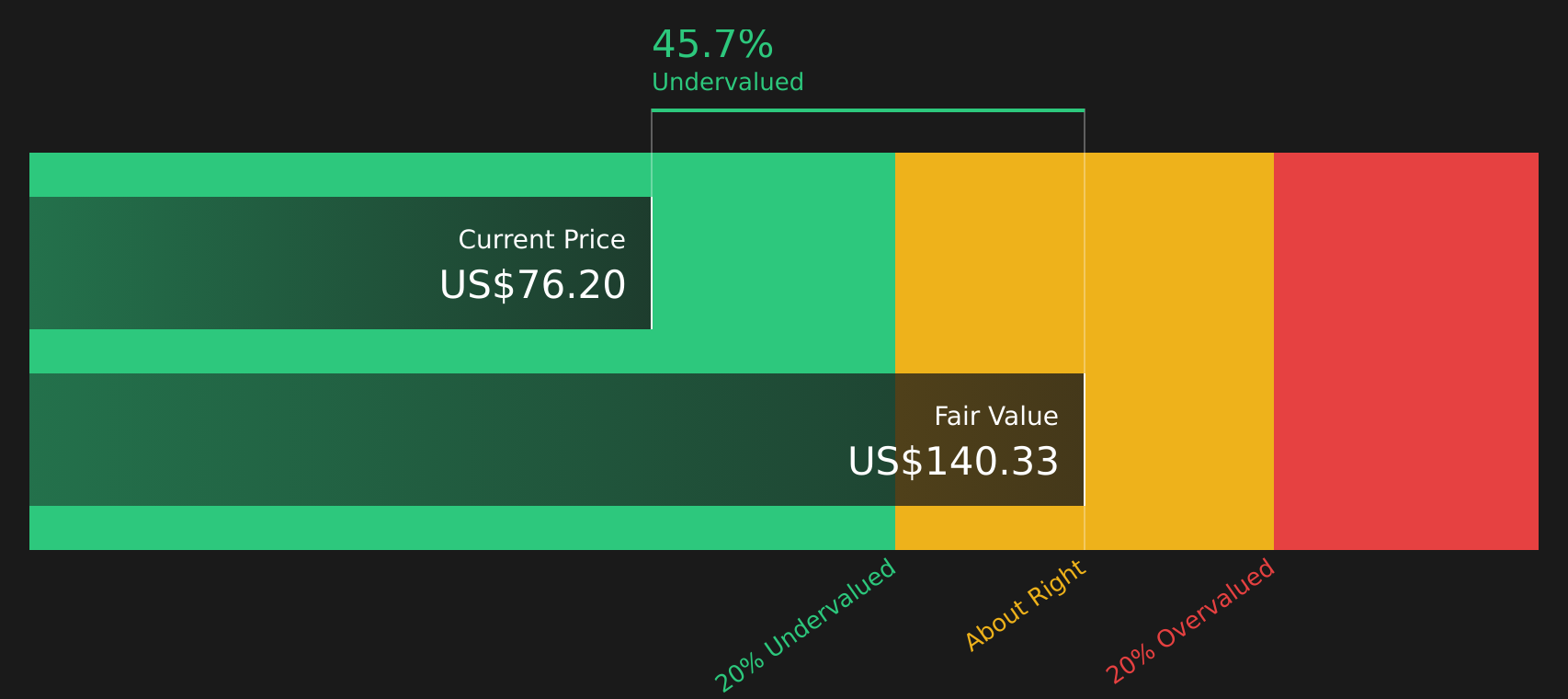
With an estimated cost of equity of $4.23 per share, the model calculates an excess return of $2.89 per share, supported by an average return on equity of 11.96% and a stable book value assumption of $59.47 per share. That stream of excess returns translates into an intrinsic value estimate of $140.33 per share, compared with the recent share price around $75.68, which implies the stock is 46.1% undervalued. Because the acquisition of One Florida Bank is already in view, part of this gap may reflect market caution around integration and future capital allocation.
On these Excess Returns assumptions, Hancock Whitney stock currently screens as undervalued relative to its estimated intrinsic value.
Our Excess Returns analysis suggests Hancock Whitney is undervalued by 46.1%. Track this in your watchlist or portfolio, or discover 38 more high quality undervalued stocks.
Does Hancock Whitney Look Undervalued on Earnings?
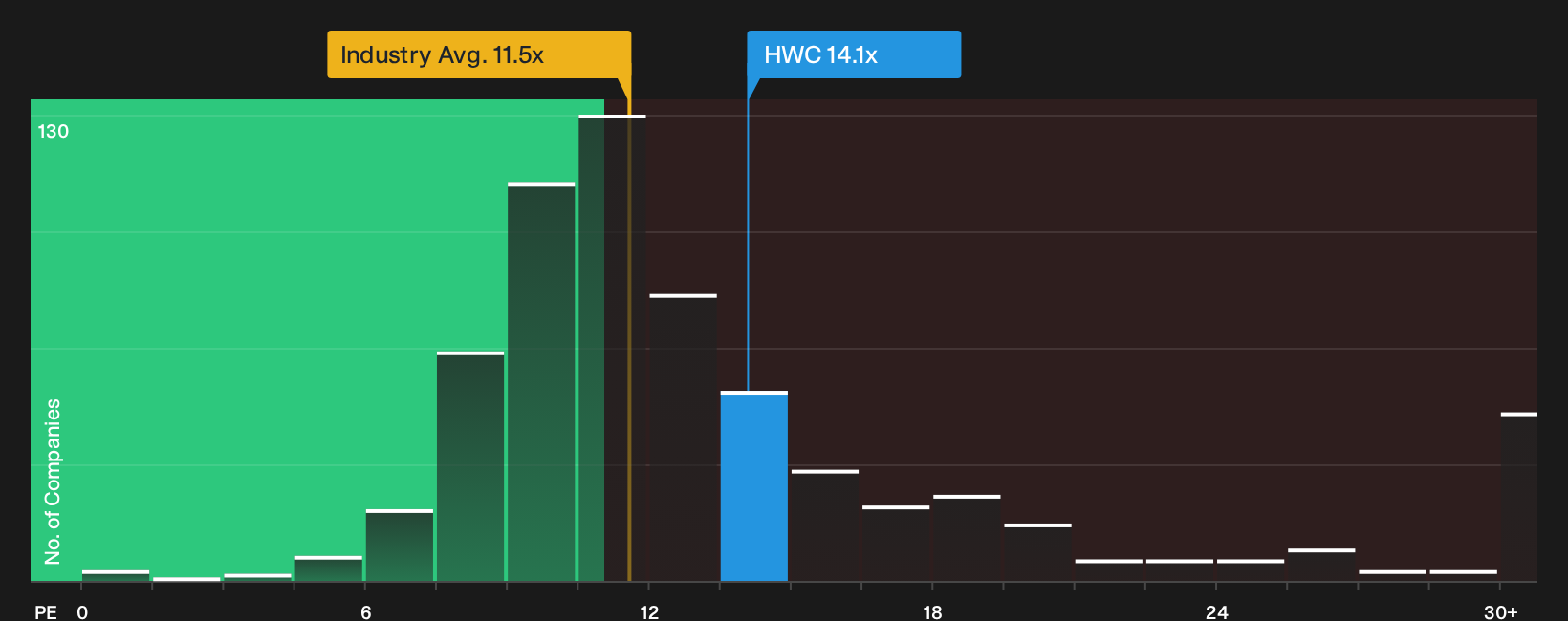
The P/E ratio is a straightforward way to see what you are paying for each dollar of Hancock Whitney’s earnings today. Hancock Whitney trades on a P/E of 14.3x, compared with an industry average of 12.1x and a peer average of 12.1x for banks. On simple comparisons, the stock sits at a modest premium to its sector.
However, the fair P/E ratio implied by Simply Wall St’s model is 16.3x, which is higher than where Hancock Whitney currently trades. That suggests the current 14.3x multiple is below what might be expected once factors such as the company’s profitability profile, size and risk are taken into account, even after considering the planned One Florida Bank acquisition and its integration risks.
On this P/E framework, Hancock Whitney appears undervalued relative to the earnings multiple the model suggests would be fair.
See what the numbers say about this price — find out in our valuation breakdown.
The Hancock Whitney Narrative: What Would Justify Today's Price?
Simply Wall St Narratives for Hancock Whitney pick up where the valuation work leaves off by explaining what kind of future earnings, margins and balance sheet outcomes would need to occur for Hancock Whitney’s stock to be worth significantly more or less than today’s price on the Community page. Instead of providing a single output from a ratio or model, Narratives set out the underlying assumptions so you can see what needs to happen and monitor whether that picture is holding up over time.
If you have a number driven view on whether Hancock Whitney's planned acquisition of One Florida Bank delivers on its potential, consider sharing a Narrative and laying out the assumptions behind your stance.
You can be one of the first voices in the Simply Wall St community to set out a clear case on Hancock Whitney and track how that thesis holds up as new results and updates arrive.
Do you think there's more to the story for Hancock Whitney? Head over to our Community to see what others are saying!
The Bottom Line
For Hancock Whitney, both the Excess Returns intrinsic value estimate and the earnings multiple work point in the same direction, suggesting the stock screens as undervalued rather than stretched. The key question is whether the current discount fairly reflects the execution risk around the One Florida Bank acquisition and how management allocates capital from here. The mixed broader check score argues for weighing that potential upside against the integration and balance sheet trade offs. The crux for investors is whether the market is overpricing those risks, or whether today’s gap to intrinsic value is simply the right price for that uncertainty.
This article by Simply Wall St is general in nature. We provide commentary based on historical data and analyst forecasts only using an unbiased methodology and our articles are not intended to be financial advice. It does not constitute a recommendation to buy or sell any stock, and does not take account of your objectives, or your financial situation. We aim to bring you long-term focused analysis driven by fundamental data. Note that our analysis may not factor in the latest price-sensitive company announcements or qualitative material. Simply Wall St has no position in any stocks mentioned.
Have feedback on this article? Concerned about the content? Get in touch with us directly. Alternatively, email editorial-team@simplywallst.com