
Nuclear Energy Stocks Retail Investors Are Watching For Uranium Growth
Nuclear energy stocks are back in focus as investors weigh stubborn inflation signals, rising government bond yields and renewed attention on reliable power sources. With oil prices influenced by geopolitical tensions and energy feeding directly into inflation worries, interest in long term, steady electricity supply is building. The Nuclear Energy Stocks screener highlights companies across uranium production, fuel enrichment and reactor operations that sit at the heart of this theme. In this article, you will see three stocks from the screener that offer different ways to gain exposure to nuclear energy as a potential part of a diversified portfolio.
Worley (ASX:WOR)
Overview: Worley is a Sydney based engineering and professional services company that helps energy, chemicals and resources clients worldwide design, build, operate and eventually decommission large projects, including growing work in low carbon energy, nuclear power, hydrogen and carbon capture.
Operations: Worley reports A$12.4b from segment adjustments and related items, with geographic exposure spread across the Americas (A$6.2b), Europe, the Middle East and Africa (A$4.0b) and Australia, Pacific, Asia and China (A$1.4b).
Market Cap: A$5.2b
Worley provides exposure to the energy transition through consulting and project work that already skews toward sustainability, with management indicating 60% of FY25 revenue is expected from areas like renewables, hydrogen and carbon capture. Analysts currently expect earnings to grow faster than revenue as the mix shifts toward higher margin advisory and digital services. At the same time, the stock trades on a modest P/E against peers and internal fair value estimates. The catch is that margins are thin, earnings fell over the past year and funding leans on higher risk borrowing, so execution on backlog quality and cost discipline will matter. The balance between transition exposure, valuation considerations and these risks may be a key focus for investors reviewing Worley.
Worley’s push into higher margin transition work may be masking a deeper shift in the business model, and the valuation gap to peers could matter less than what happens to margins next. It is therefore worth reading the 3 key rewards and 1 important warning sign
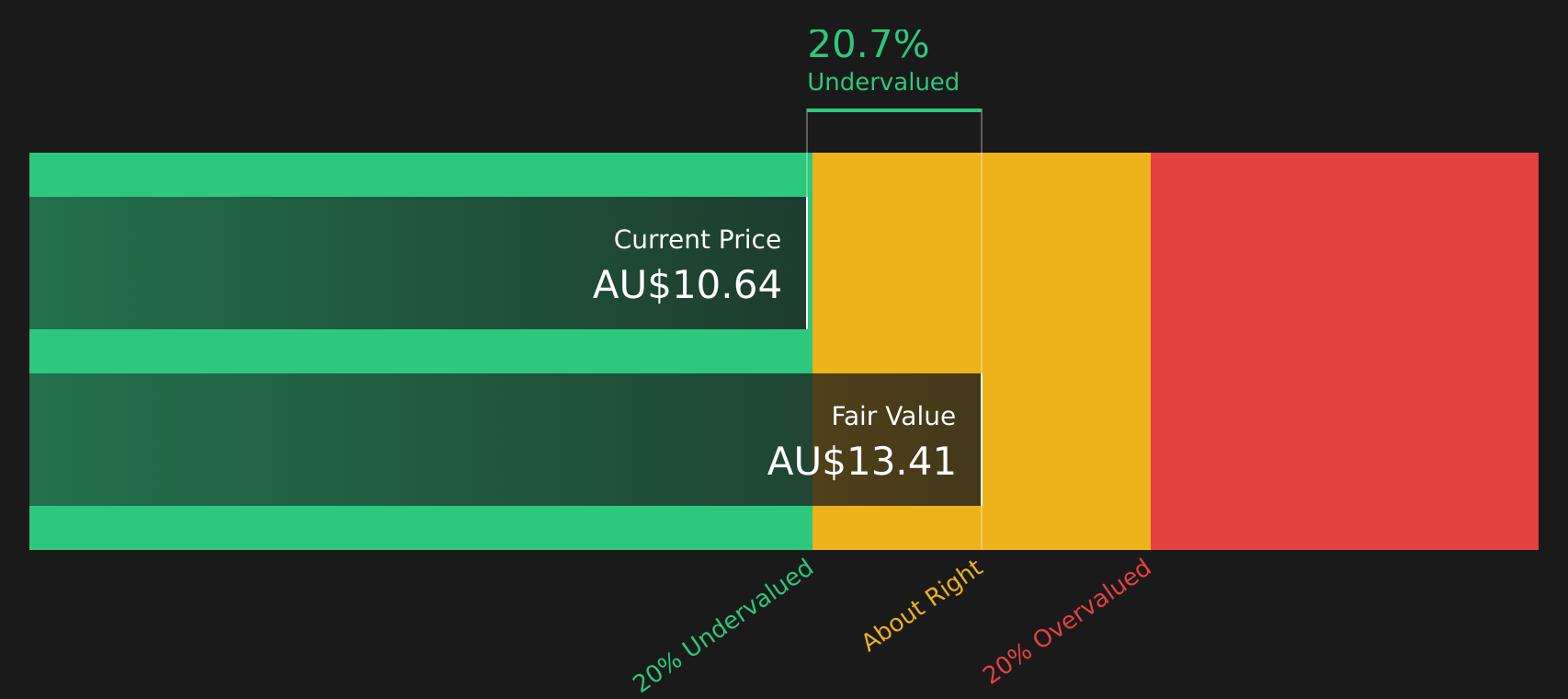
Boss Energy (ASX:BOE)
Overview: Boss Energy is an Australian uranium company focused on bringing its Honeymoon project in South Australia into production and growing output through a 30% stake in the Alta Mesa project in South Texas. This gives investors direct exposure to physical uranium production across two jurisdictions.
Market Cap: A$568.8m
Boss Energy attracts attention because it is working to lower operating costs at Honeymoon through a new wellfield design and process tweaks. The company holds 1.62 million pounds of drummed uranium inventory and a largely uncontracted future sales book that leaves revenue closely tied to uranium prices. Analysts currently expect strong growth in revenue and earnings as production scales and margins improve, although the company is not yet profitable and has historically reported losses. The balance sheet is cash rich and debt free, which can support drilling and feasibility work. Upcoming production decisions and project milestones mean this is a uranium producer where both upside and key risks are closely linked to how these projects and prices evolve.
Boss Energy’s accelerating uranium story, with cash on hand and projects gearing up, still leaves one big question about how the growth path and pricing risks really fit together. This is unpacked in the analyst forecasts for Boss Energy

Peninsula Energy (ASX:PEN)
Overview: Peninsula Energy is an Australian uranium company working to develop the Lance Project in Wyoming, a group of production, development and exploration areas that aim to supply uranium into the nuclear fuel chain for US and global utilities.
Market Cap: A$148.6m
Peninsula Energy catches attention because the stock is priced at a steep discount to some fair value estimates and trades at a low P/B multiple, yet the business is still small, loss making and reliant on higher risk borrowing. Forecasts indicate the possibility of higher revenue and earnings if Lance scales up. However, recent production guidance changes, rising losses over the last five years and fresh equity issuance highlight the challenges that remain. With a new but independent board and a volatile share price, this is a uranium developer where potential upside sits alongside funding pressure and execution risk, which makes understanding the full risk reward trade off critical before forming a view.
Peninsula Energy’s steep valuation gap and small, loss making profile suggest a story that could be accelerating faster than many realise, and the 2 key rewards and 3 important warning signs (2 are major!) might reveal the twist that really matters next.

The three nuclear energy stocks covered here are only a starting point, while the full Nuclear Energy Stocks screener surfaces 21 more companies with equally compelling nuclear fuel, infrastructure and reactor stories that you have not seen yet. Use Simply Wall St to identify and analyze the specific catalysts, risks and narratives that matter to you so you can focus on nuclear energy opportunities that align most closely with your highest conviction.
Take Control of Your Investment Journey
If Worley or any of these companies have caught your attention, register for FREE with Simply Wall St and add your companies to a Watchlist to monitor the share price against the fair value and track any new developments as they happen. Once you've made your move, manage your holdings with our Portfolio Command Center that filters out the noise to deliver only the most critical, actionable updates. Throughout your journey, our Community allows you to filter the best ideas from thousands of investor perspectives. By uncovering hidden catalysts and risks early, you'll accelerate your decision-making and stay one step ahead of the market.
Seeking Fresh Alternatives Beyond Nuclear?
Fresh opportunities often move from quiet to breakout before most investors react. Consider using this moment while it matters, before momentum is fully caught by the crowd.
- Spot high potential under the radar by scanning 12 high quality undiscovered gems that could be building momentum before the wider market catches on.
- Focus on resilient compounders using the curated 7 resilient stocks with low risk scores that keep risk scores in check while you look for opportunities with steadier profiles.
- Explore the next leg of digital infrastructure with a hand picked 54 AI infrastructure stocks intended for investors interested in companies tied to data demand.
This article by Simply Wall St is general in nature. We provide commentary based on historical data and analyst forecasts only using an unbiased methodology and our articles are not intended to be financial advice. It does not constitute a recommendation to buy or sell any stock, and does not take account of your objectives, or your financial situation. We aim to bring you long-term focused analysis driven by fundamental data. Note that our analysis may not factor in the latest price-sensitive company announcements or qualitative material. Simply Wall St has no position in any stocks mentioned.
Have feedback on this article? Concerned about the content? Get in touch with us directly. Alternatively, email editorial-team@simplywallst.com