CITIC Securities: Looking for clues about the allocation of Hong Kong stocks in the direction of foreign capital flows
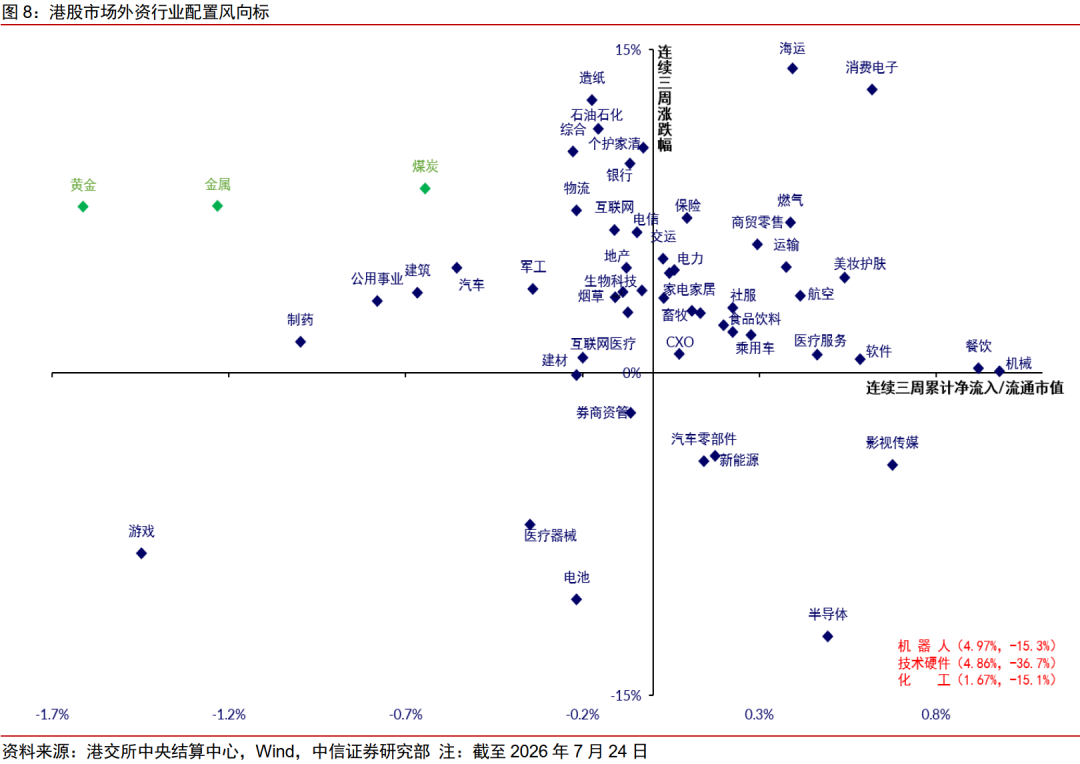
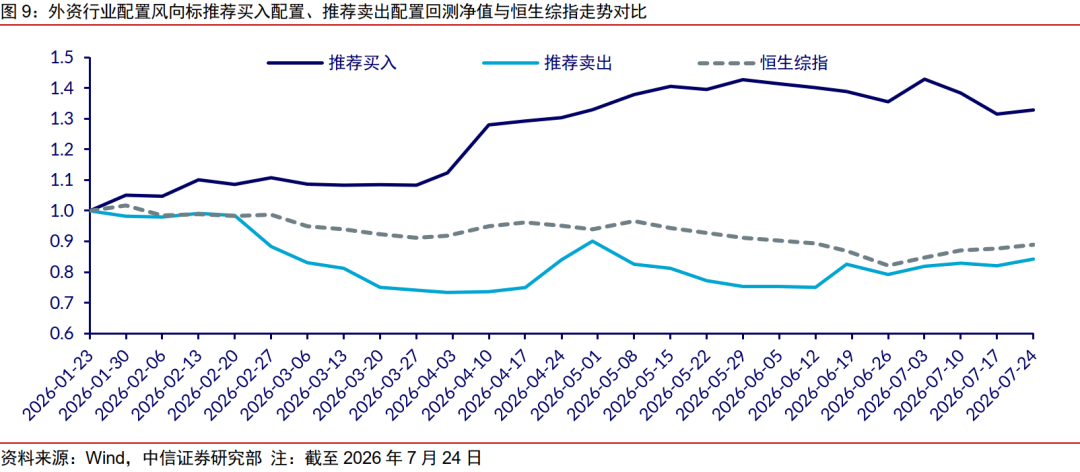
The Zhitong Finance App learned that CITIC Securities released a research report stating that the direction of foreign capital flows since 2026 has guided the investigation of the market pace and industry allocation to a certain extent. EPFR active capital flow has good guidance and verification value for the mid-term market inflection point of emerging market stock markets. For example, the Korean market recently clearly showed the “capital inflection point” — the verification rule of “market inflection point”. Foreign escrow capital flows can track short-term inflection points and industry allocations in the Hong Kong stock market. For example, the biotech and internet sectors of the Hong Kong stock market since May are also typical examples. CITIC Securities selected the cumulative inflow of foreign capital and the rise and fall rate of the industry as core variables, set up a trend vane for the foreign capital industry allocation in the Hong Kong stock market, and constructed a two-dimensional comprehensive scoring framework. Backtesting results from January 2026 to the present show that the net value of the recommended purchase portfolio has significantly outperformed the benchmark throughout the process. The model shows that short-term suggestions focus on industries such as robotics, technical hardware, and chemicals, while short-term suggestions avoid industries such as gold, metals, and coal.
EPFR active capital flows have significant guidance and verification value for the mid-term inflection point of emerging market stock markets
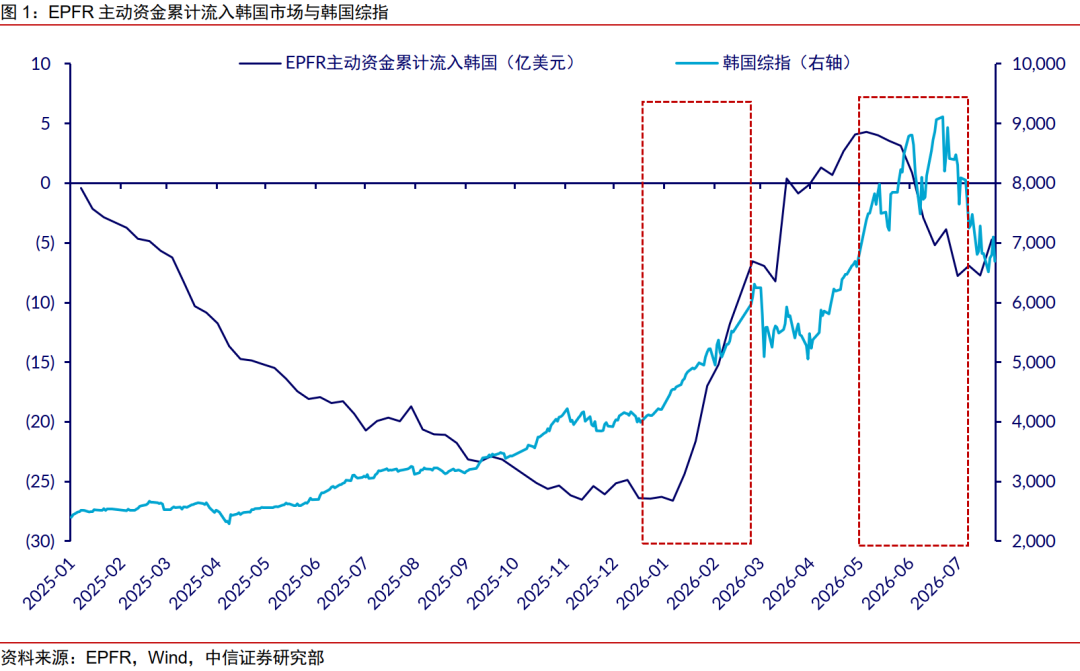
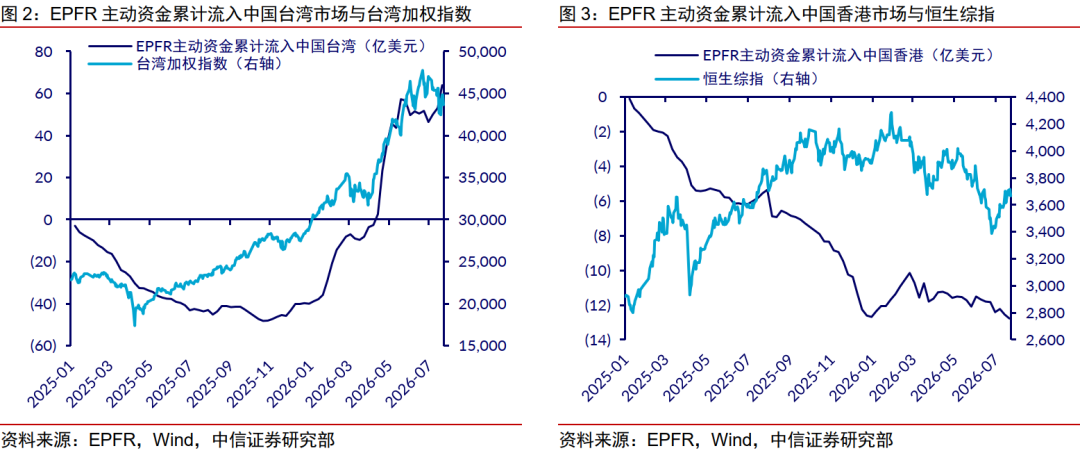
EPFR active capital is a direct reflection of the willingness of overseas professional institutions to allocate funds. The trend shift is a mid-term pricing correction made by institutional investors based on global macro-liquidity, industrial development cycle, and valuation cost ratio. Therefore, the inflection point of EPFR's active capital flow is usually synchronized with the mid-term shift in the emerging market market. It is an important financial observation indicator for judging the bottom layout window and identifying the top risk point. For example, starting in late December 2025, EPFR active capital reversed the trend of continuous outflows from the Korean market since 2023 and switched to continuous inflows. This shift also marked strong fundamentals in South Korea's main export sector, and the South Korean government's policies to boost the stock market continued to receive overseas capital pricing from January to April 2026; in early May 2026, EPFR active capital switched to a rapid outflow out of the Korean market, and the outflow trend expanded rapidly. The Korean composite index also entered a rapid decline channel in late June after high fluctuations. “Point” — The verification rule of “market inflection point” has once again been clearly implemented. For the Taiwan market and the Hong Kong market, the flow of EPFR's active capital also has guiding and verification significance.
The short-term inflection point and industry allocation of the Hong Kong stock market can be tracked through foreign-managed capital flows
Since 2026, foreign investment has better captured the inflection point of the industry. The overall increase in southbound capital has been weak since 2026, and inflection points in foreign capital flows often appear ahead of the inflection point of the index, and may be a key indicator for grasping the short-term pace of the market. Foreign escrow capital flows are also important in judging the Hong Kong stock market industry allocation. In the Hong Kong stock market that began at the end of June, sectors such as biotechnology and the Internet, where foreign capital has continued to flow in since May, have become a strong rebound direction leading the market. This shows that since 2026, foreign capital has been somewhat forward-looking in the allocation timing of Hong Kong stocks, which can guide the short-term inflection point and allocation direction of the industry.
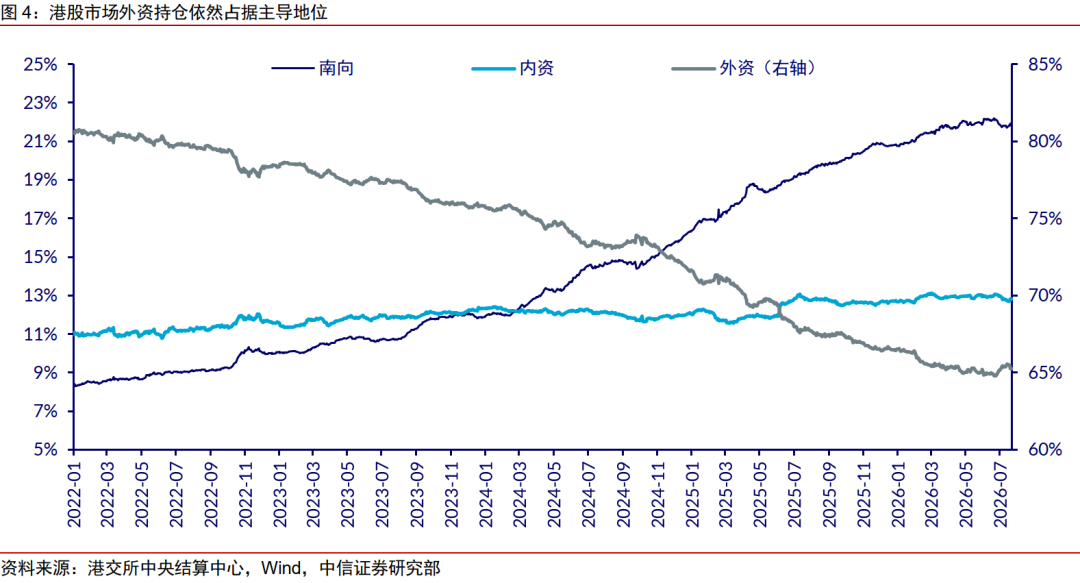
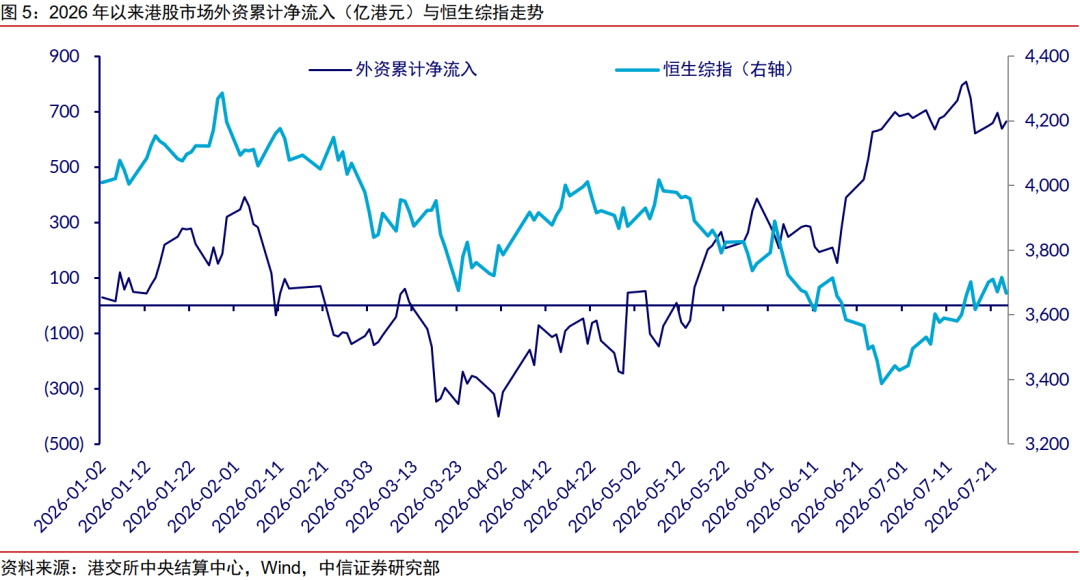
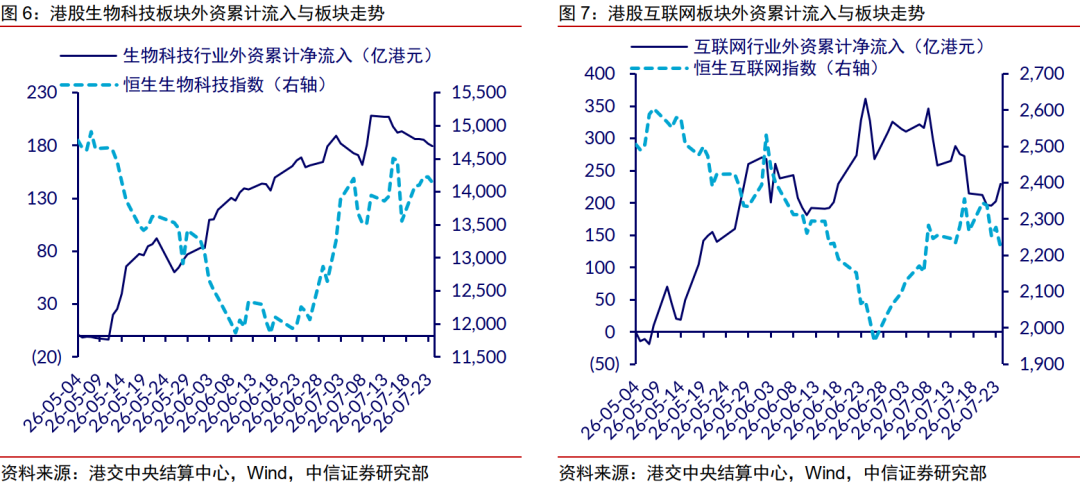
We selected the cumulative inflow of foreign capital and the rate of rise and fall of the industry in the early period as core variables to establish a trend vane for the allocation of foreign capital in the Hong Kong stock market. We use the ratio of the cumulative net inflow of foreign capital in the industry in the past three weeks to the market value in circulation of the industry (horizontal axis), use the industry's cumulative rise and fall rate in the past three weeks to describe its market performance (vertical axis), and divide it into four quadrants. The fourth quadrant mainly has a high cumulative net inflow of foreign capital but the cumulative increase is lagging behind, which means that foreign capital may have been deployed ahead of schedule; however, foreign capital continues to flow out, and there is a high degree of uncertainty about whether the subsequent market will continue to flow out.
We have further constructed a two-dimensional comprehensive scoring framework: in terms of capital, the stronger the cumulative net inflow index of foreign capital, the higher the ranking; in terms of price, the lower the cumulative rise and fall rate of the sector in the past three weeks, the better the ranking. By including the sector with the highest score in the recommended buying industry, and the sector with the last score being included in the recommended selling industry. Backtesting results from January 2026 to the present show that the net value of the recommended buying mix fluctuated upward, significantly outperforming the benchmark throughout the process; however, the net value of the recommended selling combination continued to weaken, and the overall performance of the benchmark was underperformed. The model shows that short-term suggestions focus on industries such as robotics, technical hardware, and chemicals, while short-term suggestions avoid industries such as gold, metals, and coal.