
The geographical conflict intensified, and long-term debt collapsed! Global capital sets off a “safe-haven flight”: seizing short-term bond yields
The Zhitong Finance App notes that investors are embracing shorter-term corporate bonds to lock in high levels of yield while limiting their risk exposure to interest rate fluctuations and sharp market shocks.
This strategy has paid off: over the past month, as longer-term bonds struggled, maturing within five years outperformed the broader Bloomberg Euro Investment-Grade Corporate Bond Index, and the situation in the US market was similar. Since short-term bonds can provide stable returns, chasing slightly higher yields on the yield curve almost outweighs the losses.
Jim Caron, chief investment officer of Morgan Stanley Investment Management, said, “Currently, what is putting pressure on returns is the survival period factor.” He is investing in high-quality short term bonds for a portfolio that “reduces some interest rate sensitivity without sacrificing yield.”
This month, the conflict between the US and Iran boosted concerns about inflation, which in turn suppressed the underlying US bond price and squeezed investment returns.
On Wednesday, the Federal Reserve suspended interest rate hikes, and the market once again fell into turmoil; as investors bet that this only delayed the inevitable rate hike, the price of 30-year US Treasury bonds plummeted. The ECB also kept interest rates unchanged last week, but policymakers have signalled that the policy may be tightened again as early as September.
By shifting to credit bonds with shorter terms, investors can limit the impact of a sharp shock in interest rate expectations. Long-term debt is particularly sensitive to rising interest rates because its price must drop even more to make up for lower interest rates charged by buyers.
Bank of America strategists wrote in a report citing EPFR data that funds focused on the short to medium term continued to attract new capital inflows last week in the face of capital outflows in the overall market.
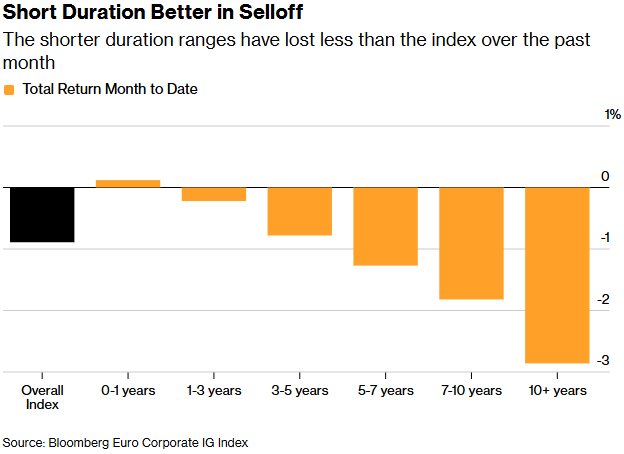
Short-term sell-offs are more beneficial
Short-term bonds also generally fluctuate less in price because they are closer to maturity. As the maturity date approaches, the price will naturally move closer to face value, thereby helping to protect the buffer mix from fluctuations in interest rates and credit spreads.
Over the past month, the total return on bonds maturing less than one year was close to flat, while the Bloomberg Index fell 0.9%; in contrast, bonds with a maturity of 10 years or more fell by more than 2.9%.
The curve is flat
Currently, investors have little incentive to take on the additional risk of holding for a longer period of time. For example, according to compiled data, the increase in yield from a 3-year period to a 9-year period was only 67 basis points.
Ruffalo Chiriselli, head of fixed income at RBC Wealth Management Europe, said, “Lasting too long doesn't bring much additional benefits, so you're actually better off choosing a shorter lifespan while still being able to get a decent return. We are quite comfortable with adopting a shorter lifespan, and are even willing to appropriately reduce credit quality within the investment grade.”
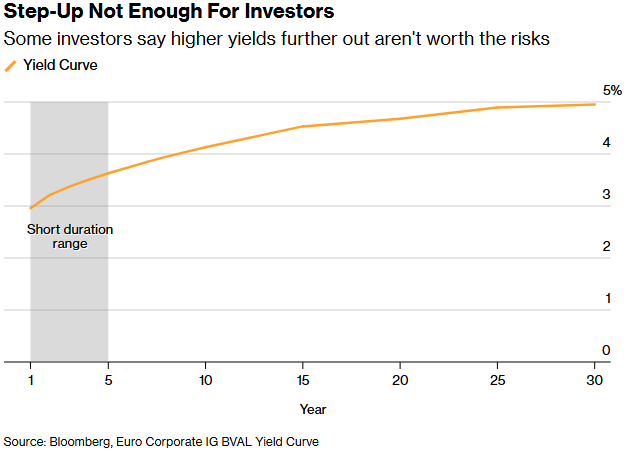
Some investors believe that higher forward returns are not worth the risk
By reducing lifetime risk exposure, investors can improve the so-called “credit breakeven (credit breakeven)” of their positions, giving them more room to cushion when credit spreads widen or interest rates fluctuate. Interest spreads are now close to their lowest level since 2008, and asset managers see little room for further narrowing.
For now, as the market continues to absorb expectations of further interest rate hikes from the central bank, the additional risk of buying longer-term bonds will expose investors to the risk of loss.
Mark Hafer, chief investment officer at UBS Global Wealth Management, said, “Although the central bank may be wary in the short term, we expect inflationary pressure to ease within the next 12 months, and recommend locking in current high yields, especially high-quality short- and medium-term bonds.”