
Meta Stock’s Free Cash Flow Just Sent Wall Street a Warning
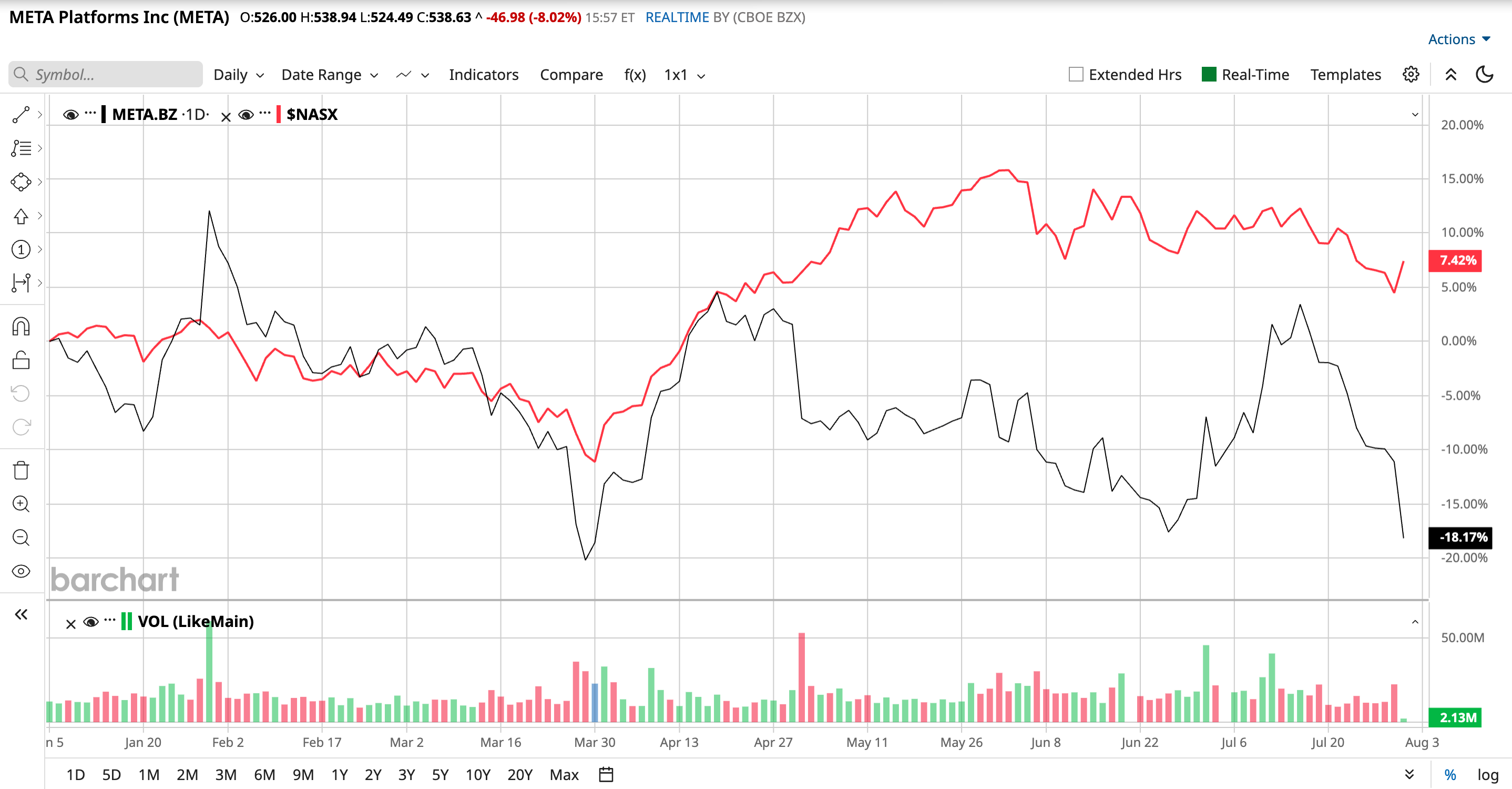
Meta Platforms (META) just reported the quarter that many investors had been worrying about for months. While the company’s AI strategies are making its advertising business boom, its relentless AI spending has started to overwhelm its earnings power. The market didn’t waste much time punishing the stock, which is down 11.62% over the past five trading days. META has fallen 18.85% year-to-date (YTD), trailing the tech-heavy Nasdaq Composite ($NASX). The concern seems to be that Meta is spreading itself thin by aggressively investing in too many businesses at once, without enough near-term earnings to justify the cost.
Is it time to buy, hold, or sell Meta stock?
Biting Off More Than It Can Chew
Many investors have always been bullish on Meta because its core advertising business consistently generated enough cash to comfortably fund its ambitious investments without hampering profitability.
In the second quarter, revenue grew 28% year-over-year (YOY) to $60.8 billion, while Family of Apps advertising revenue rose 27% to $59.4 billion. However, earnings per share plummeted 13% to $6.18 per share from the year-ago quarter, as soaring AI-related spending weighed heavily on profitability. In addition, Meta missed consensus forecast by $1.22 per share. After the second quarter, I'm not convinced the trade-off looks as attractive. Not because Meta's business is weakening, but because management appears to be stretching the business across too many capital-intensive ambitions all at once.
Despite spending heavily for years on the metaverse, the Realty Labs segment has hardly generated any profits in any quarter. The segment still reported an operating loss of $4.6 billion in the Q2. However, revenue increased by 16.4%, led by strong demand for its AI-powered smart glasses. Now, Meta is also investing aggressively in next-generation AI models to bring Meta AI into the market as a personal assistant. Its many more projects include launching Business Agents for enterprises, rolling out AI APIs for developers, and introducing Meta One subscriptions, along with continued investment in smart glasses. What’s more, it is also designing custom AI chips and continues building some of the world's largest AI data centers.
Meta is no longer just a social media platform generating revenue from advertising. Its vision of building an AI ecosystem is ambitious but incredibly expensive. Capital expenditures reached $31.08 billion in the quarter, shrinking free cash flow to $784 million, down from $12.4 billion in Q1. Meta now expects 2026 capital expenditures of $130 billion to $145 billion. Furthermore, total expenses also jumped 55% YOY to $42 billion, driven by higher infrastructure costs, AI talent hiring, cloud spending, and legal-related charges.
CEO Mark Zuckerberg repeatedly emphasized that AI infrastructure is becoming the foundation of every future product, and waiting for competitors to build that first is not an option for the company. Management is even willing to use debt and strategic partnerships to get ahead in this race. Each of these initiatives has the potential to become successful businesses eventually. However, for now, collectively, they are eating up a lot of capital.
At the end of the quarter, Meta had cash, cash equivalents, and marketable securities totaling $90.26 billion, along with long-term debt of $83.66 billion.
Market Has Entered a "Show Me" Mode
For the past few years, investors have applauded Big Tech’s AI spending. The belief was whomever spent more would eventually dominate the AI space. However, the market’s sharp reaction to Meta’s Q2 earnings suggests that the sentiment has shifted. Now, investors want solid evidence that these investments are translating into stronger earnings and healthier free cash flow. There’s no denying that Meta’s core advertising business remains exceptionally strong, user engagement continues to improve, and AI is already making its products more valuable. But its attempt to build multiple AI businesses simultaneously while pressuring profits and cash flows might not sit well with investors.
Meta has tremendous long-term potential, but until the company proves it can turn its AI spending into stronger earnings and free cash flow, investors may prefer watching from the sidelines than add to their positions.
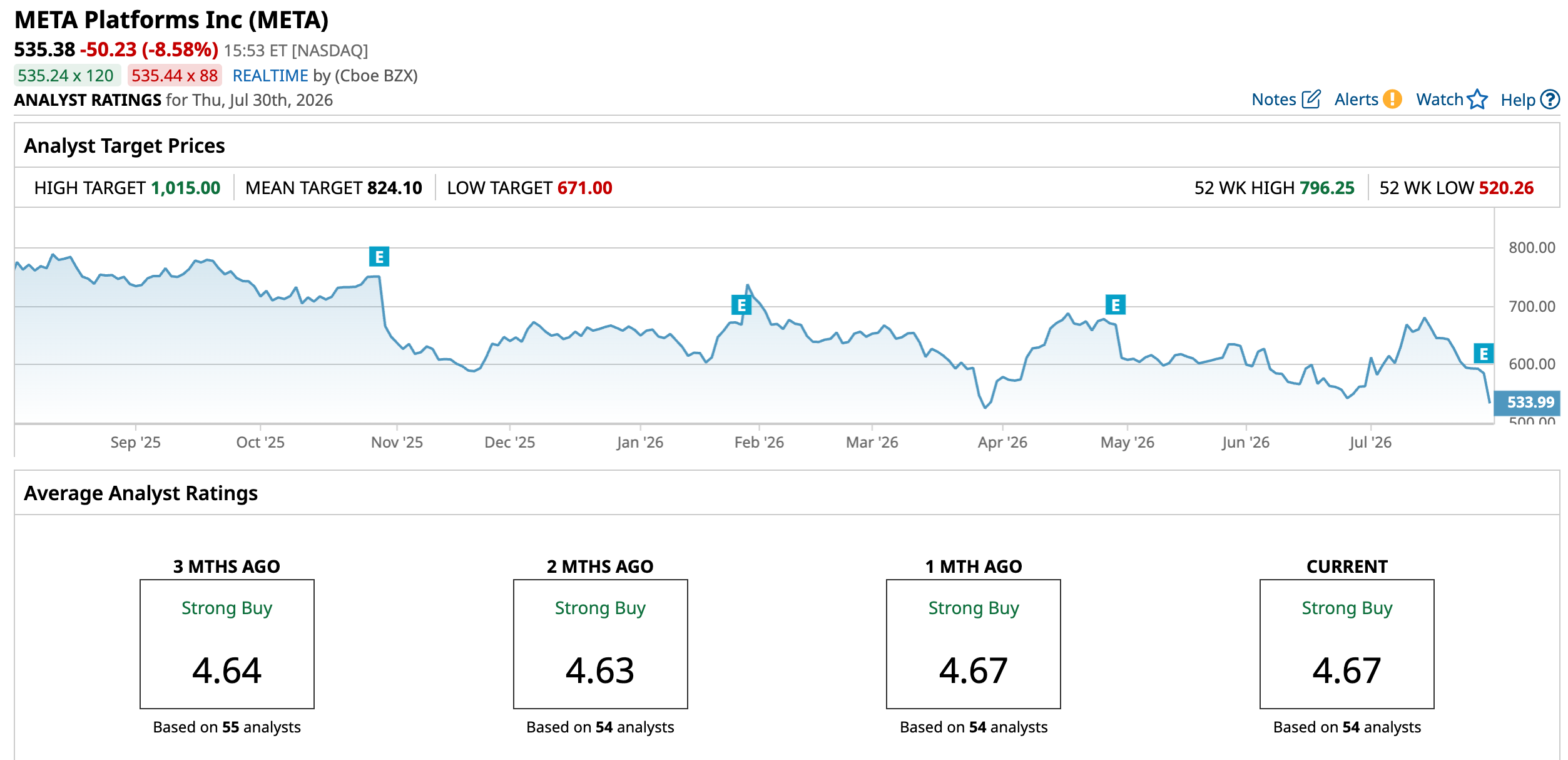
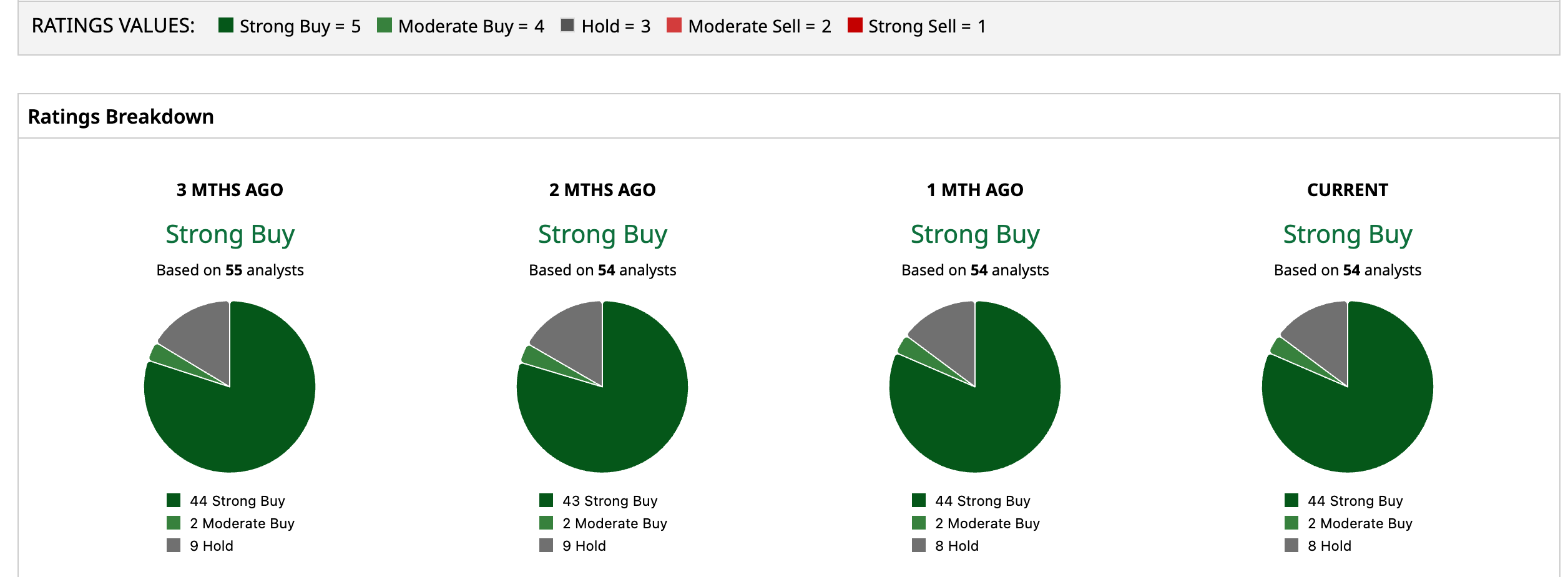
On Wall Street, META stock remains a “Strong Buy.” Among the 54 analysts covering the company, 44 give it a "Strong Buy" rating, two recommend a "Moderate Buy," and eight suggest holding. The average price target of $824.10 implies potential 53.9% upside from current levels. Meanwhile, the high price estimate of $1,015 suggests the stock could surge by as much as 89.6% over the next 12 months.
On the date of publication, Sushree Mohanty did not have (either directly or indirectly) positions in any of the securities mentioned in this article. All information and data in this article is solely for informational purposes. For more information please view the Barchart Disclosure Policy here.