
Ctrip (09961)'s “evil” is more than a monopoly: how a “dragon slayer” teenager transformed into an “evil dragon”
Domestic platform technology companies generally profit by charging fees and drawing commissions from the B-side to create a relatively clean usage environment for consumers as much as possible. Ctrip (09961) is the best way to use the advantages of the platform to make money directly from consumers, especially in the ticketing process. There are pitfalls at almost every step, and if you are a little careless, you will have to spend more money.
As isolated individuals, it is difficult for consumers to defend their rights like big hotel suppliers. Their complaints are often overlooked, flew by the wind, and sometimes it is difficult to defend their rights at a high cost for 1 or 200 yuan. Ctrip itself must not avoid taking matters lightly, pretending that this has not happened, and the relevant departments of the country must never sit idly by and ignore it.
First, we need to objectively analyze the huge social value that Ctrip once generated by the company Ctrip. The advent of Ctrip not only made it convenient for us to book tickets and rooms, but also made the prices of wine travel sellers transparent, avoiding starting prices on the spot. For example, in the past, we bought a full-screen ticket at the ticket agency price, and stayed in a small place, and let the boss sit down to start the price. Since we got Ctrip, our travel costs have indeed dropped quite a bit.
However, once they have market monopoly power, “dragon slayers eventually become evil dragons,” which is in line with the general law of humans. Companies that can grow stronger and bigger (especially consumer service enterprises) will definitely gain a monopoly position through a new mechanism that is more beneficial to consumers and the “justice” of commercial innovation and new rules. However, once they have obtained a monopoly position, they will inevitably make every effort to strengthen their position and increase profits, thereby abusing and deteriorating the power they have obtained, and the opposite of consumers or the entire business.
Some people say this is due to the nature of capital; I say it is due to human nature. This pattern of change exists not only in commerce, but also in various fields such as culture and politics. For example, some cultural artists are grassroots and appear as disruptors of the old literary and artistic model. After gaining a large amount of audience resources and popularity, they also become “Liyuan drama bullies,” using their own models to become dispossessed, and innovate to exclude others.
Going back to the bottom of the story, it is said that Ctrip was severely punished this time. Yesterday, the State Administration of Market Supervision and Administration announced that, in accordance with the relevant provisions of the “Anti-Monopoly Law of the People's Republic of China”, Ctrip Group Co., Ltd. has imposed administrative penalties on misuse of its dominant position in the market to carry out a monopoly act, confiscate 1,658 billion yuan of illegal proceeds, and impose a fine of 3,521 billion yuan. At the same time, it was ordered to fully refund 122 million yuan of mandatory deducted order reserves from hotel operators, and enterprises were required to comprehensively rectify and disclose the rectification measures.
Everyone noticed that the reason for the punishment was “abuse of a dominant position in the market to carry out monopoly acts”. Immediately, Ctrip issued an announcement stating that it “sincerely accepted and resolutely complied with” and that 19 corrective measures were taken.
As can be seen, the state punishes Ctrip for illegal acts committed by Ctrip against merchants that have joined the platform. Ctrip also proposed improvement measures, and they are basically all in this area. However, as loyal consumers of Ctrip (of course, there are no other platforms to choose from), in terms of years of experience, Ctrip's problems are by no means limited to this; Ctrip's foolish, fraudulent sales to hundreds of millions of consumers, or even worse.
Because consumers are isolated individuals, it is difficult for them to defend their rights like big hotel suppliers. Their complaints are often overlooked, flew by the wind, and sometimes it is difficult to defend their rights at a high cost for 1 or 200 yuan. Ctrip itself must not avoid taking matters lightly, pretending that nothing has happened, and the relevant departments of the country must never sit idly by and ignore it.
The author, let me list a few:
First, kill maturity. As a V5 Diamond member, I sometimes book a room, but it's actually more expensive than my parents' account, which I almost never use. In June 2025, when booking a ticket for the same flight from Shanghai to Beijing, Wang Weiwei discovered that the price for Diamond members was 815 yuan, while higher grade gold diamonds required 849 yuan. Black diamonds were actually as high as 1,018 yuan, with a price difference of 203 yuan. The platform is suspected of imposing higher pricing for highly loyal or price-insensitive users.
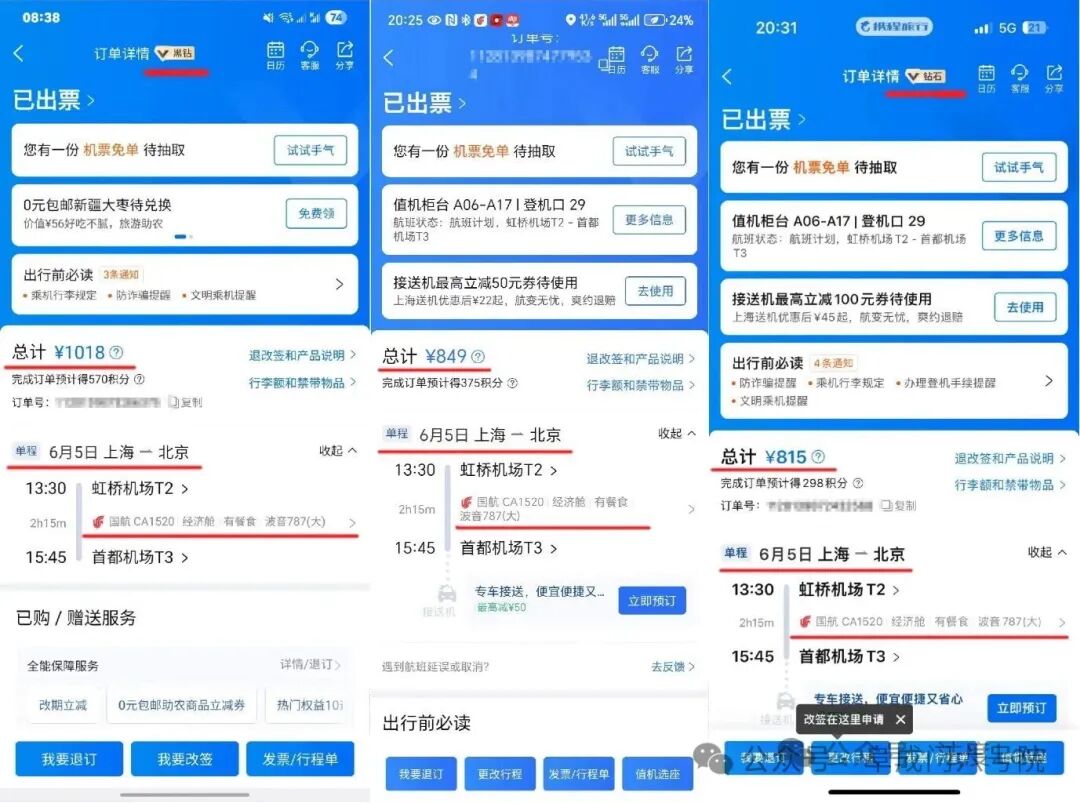
(The platform shows different prices for different membership levels)
This kind of use of big data to extract wool from regular customers is unique among big platforms. Platforms such as Taobao won't set a floating price for you just because you are a high-level member.
Second, various additional ticketing service traps. Every step of booking an air ticket or train ticket has a large number of service packages, such as insurance and refunds. Some are preferences, some are default options, and only use oversized fonts to show the price of various additional packages. Consumers are slightly careless and spend the wrong amount of money. Every time they book a ticket, it's like walking through a minefield; if you're a little careless, you have to step on the thunder.
For example, if you're careless when you're on a plane, they'll give you 38 yuan personal accident insurance, or a business travel package you don't need at all. If you buy one, they may push it over with delay insurance.
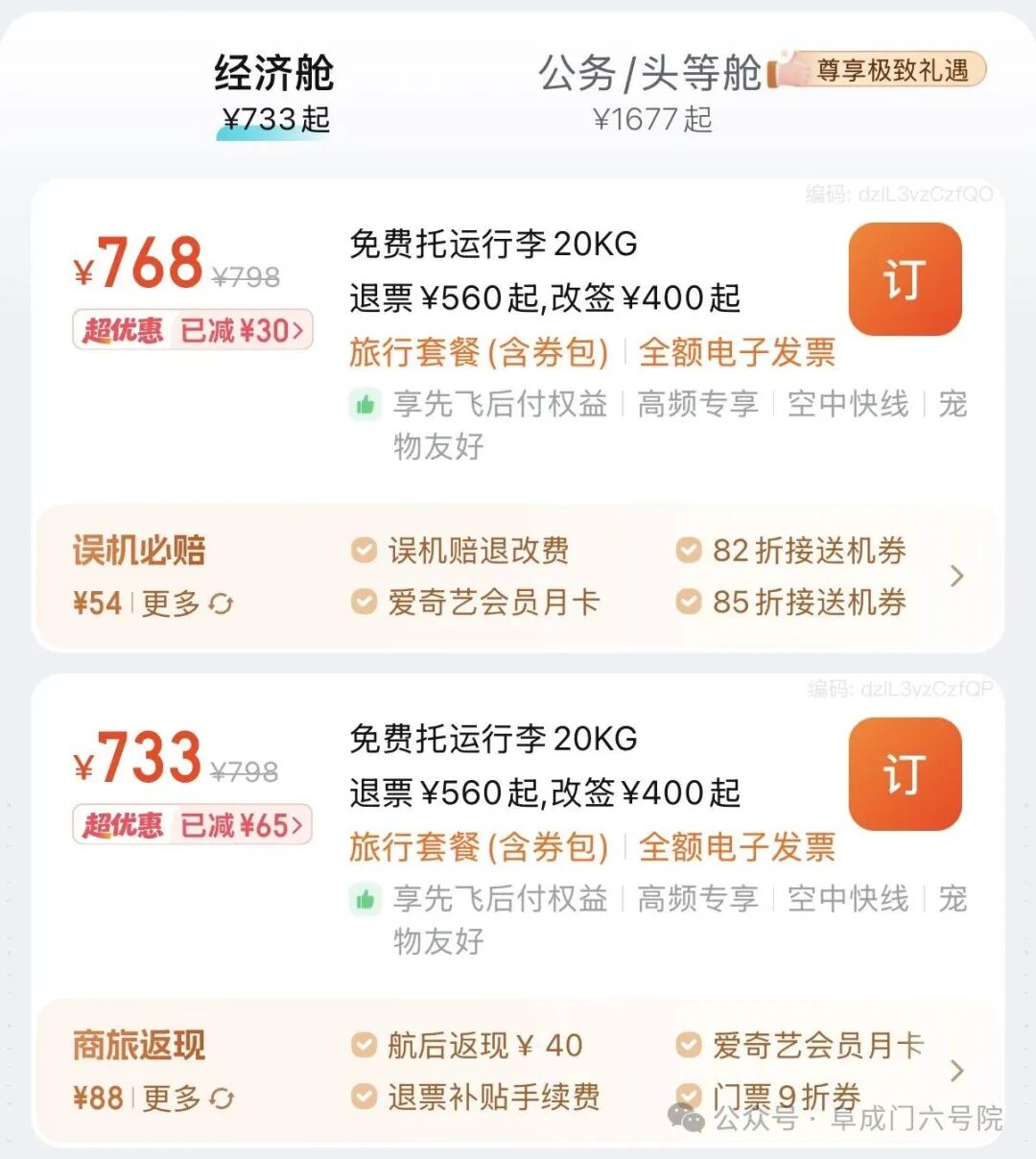
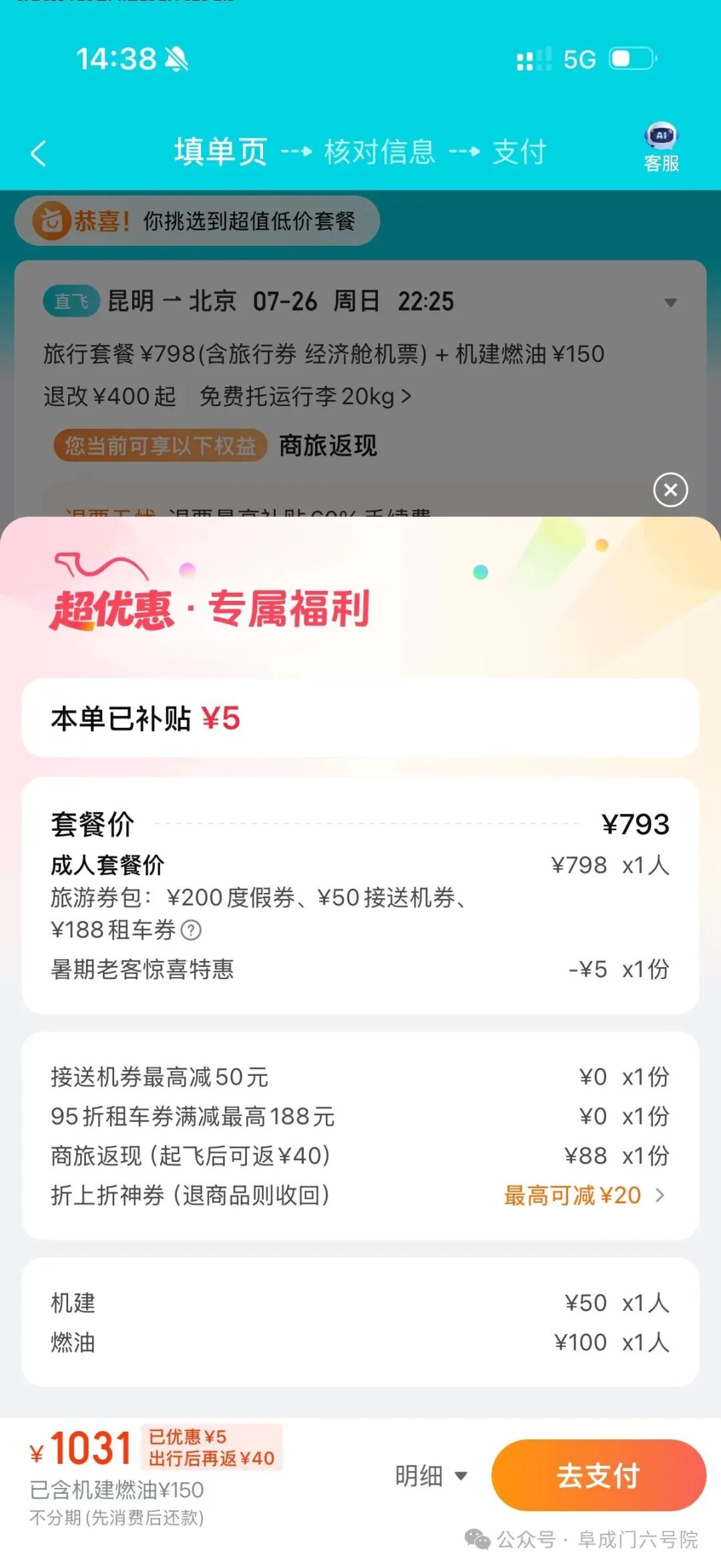
(The first ticket ranking must have various fee traps. For example, if you click on the cheapest ticket that costs 733 yuan, you click in and find out that the actual price is 793 yuan, and you also need to buy an 88 yuan gift package)
If you take a train from Beijing to Shijiazhuang, you are given an accident insurance of 20 yuan by default. If the customer takes the train for 1 hour, is it necessary to buy this insurance?
Ctrip has made quite a bit of money based on this kind of black technology (“dark technology”, to be exact). According to Ctrip's 2025 financial report, “In 2023, 2024 and 2025, our ticketing revenue was RMB 18.4 billion, RMB 20.3 billion, and RMB 22.5 billion (US$3.2 billion), respectively, accounting for 41%, 38% and 36% of our total revenue”. This ratio is almost close to the hotel business, and ticketing revenue has become one of the two main components of its business.
Regarding these revenue streams, the financial report explains: “We mainly operate the ticketing business through our wholly-owned subsidiaries, variable interest entities and their subsidiaries and ecosystem partners. The commission for the ticket reservation provided is confirmed at the time of ticketing, as this is the time when the obligation to fulfill the contract is met. Revenue from other related services is recognized when services are provided”.
Describe all kinds of hidden additional revenue as “ecosystem partners,” and misleading sales as “confirmation at the time of service delivery,” and I have to say it's a “language art” where shame is packaged as normal behavior.
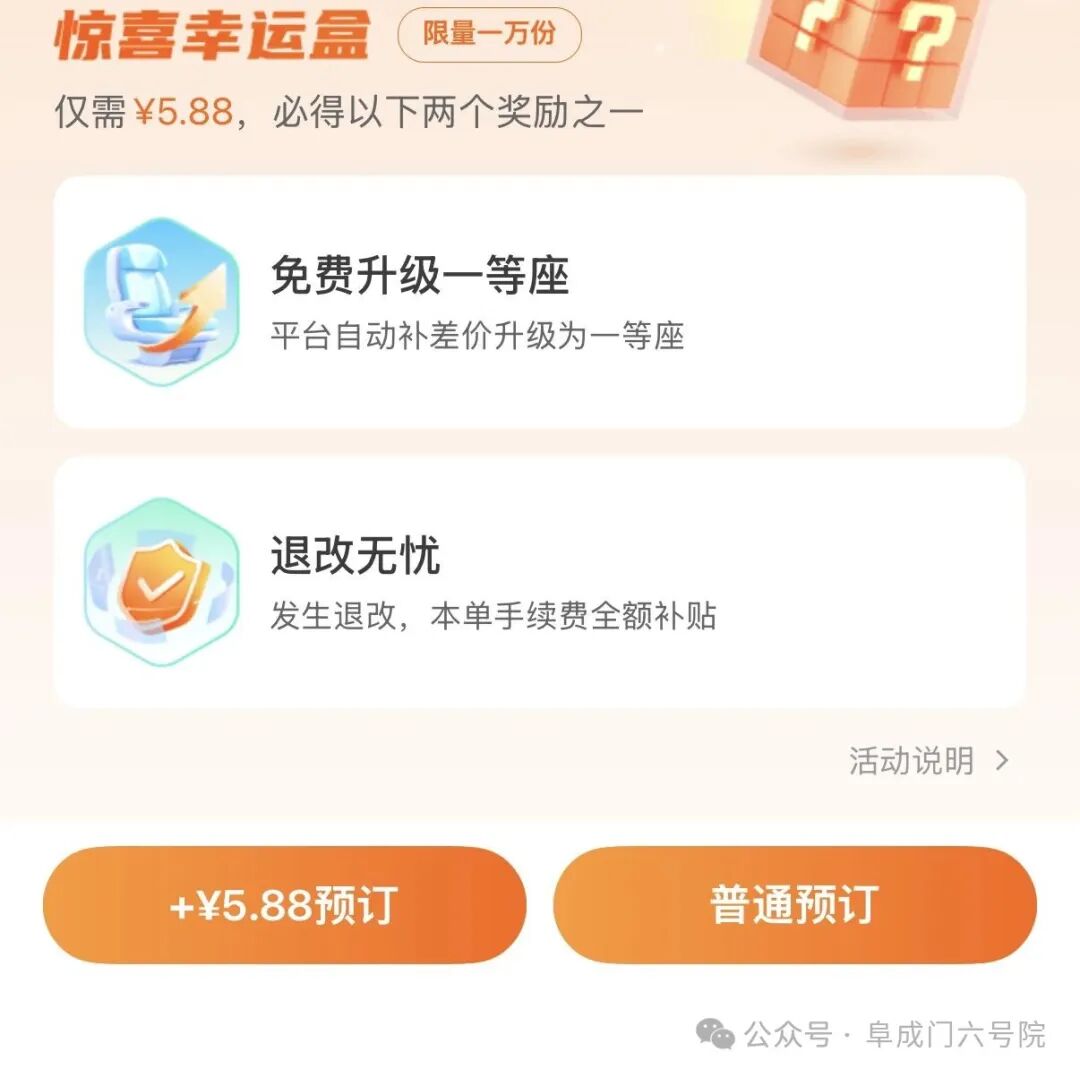
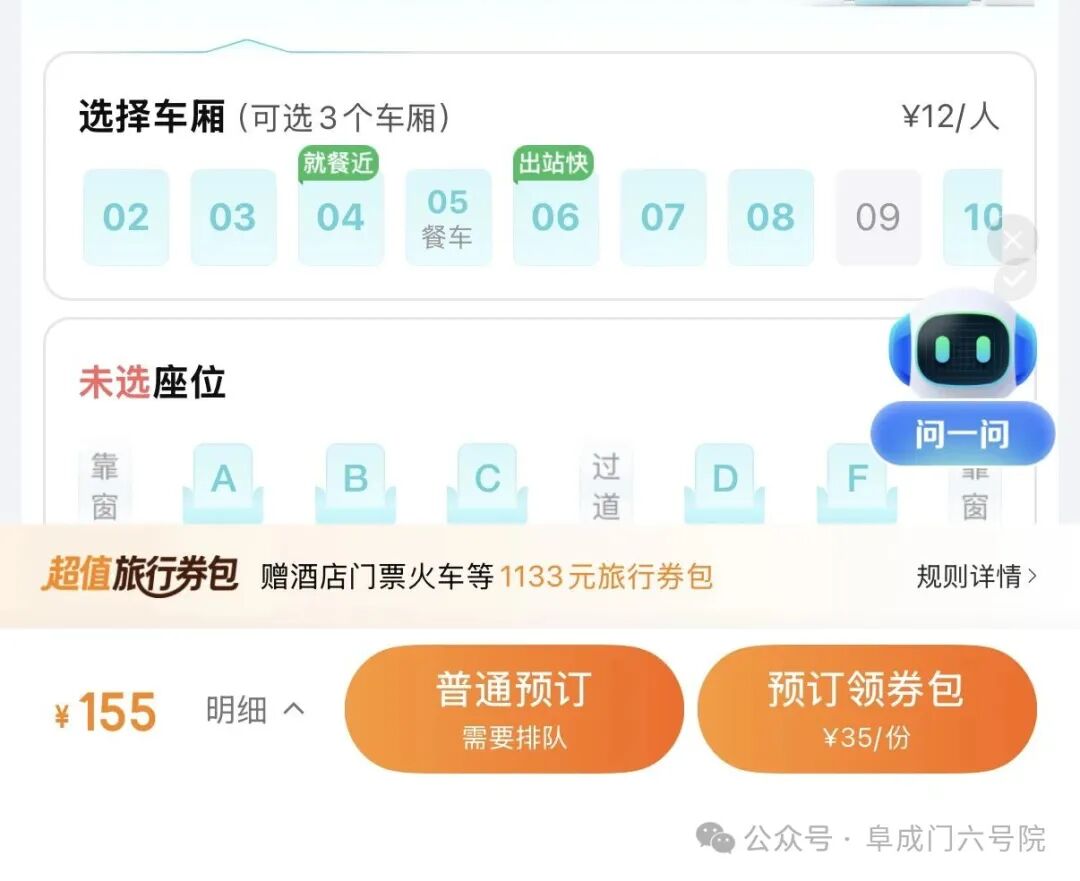
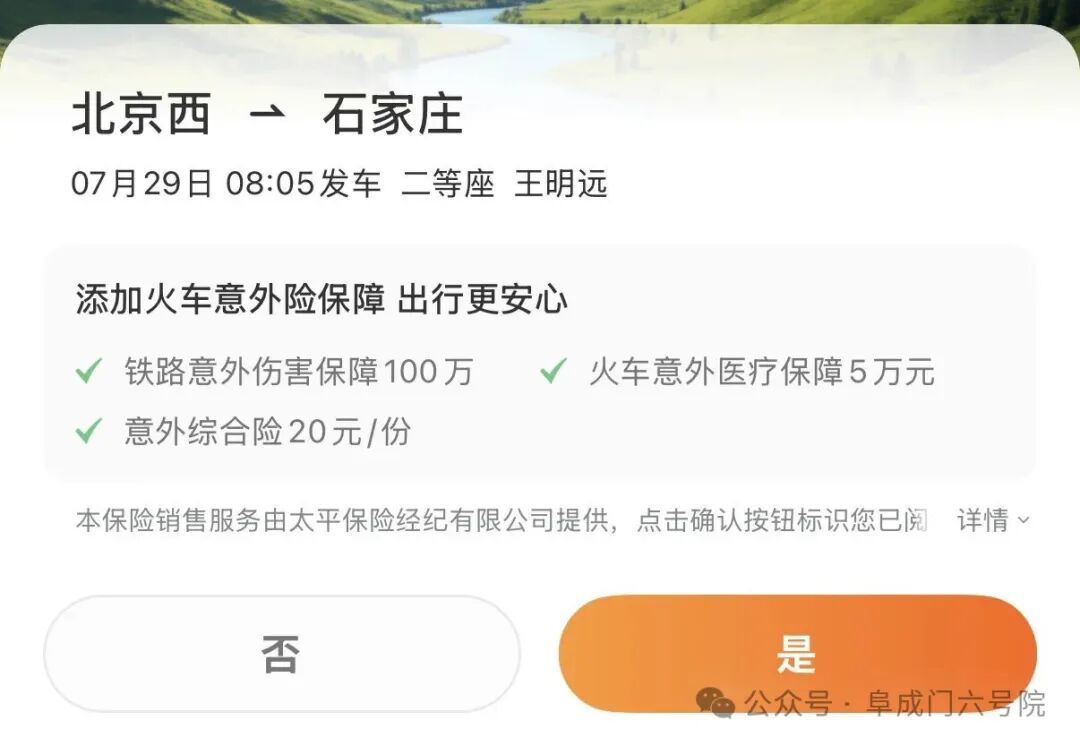
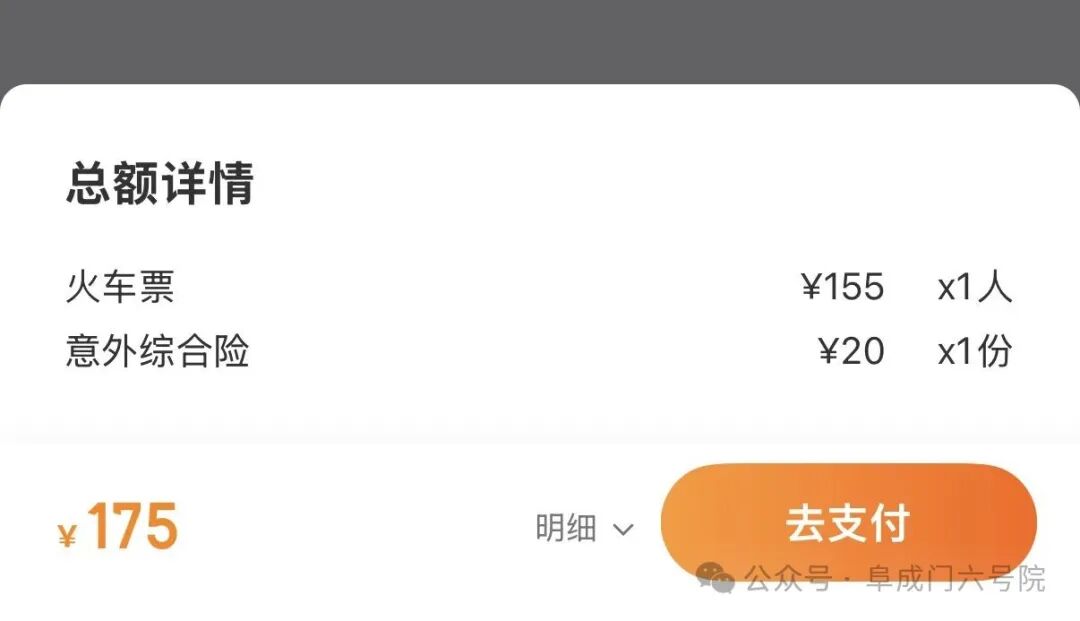
(When you buy a train ticket from Beijing to Shijiazhuang, there are various spending routines at every step, and at the end, you will be given an insurance of 20 yuan by default)
Therefore, the author suggests that relevant national departments stipulate that when selling air tickets and tickets on various platforms, bare prices must be used as the preferred or default option. It is even stipulated that passenger insurance cannot be sold on the platform for short-haul high-speed trains or flights (very rare consumers who always need insurance can buy their own through insurance platforms).
Third, the various pitfalls of train ticket reservations. In addition to bundled insurance services, the Ctrip train ticket business also has various pitfalls. For example, if you buy two tickets, it will charge you a service fee for the seat ticket for a period of time, and the 12306 platform clearly issues a joint ticket for you by default.
Another example is that buying a ticket at night automatically binds you 8 yuan to buy a manual ticket running fee. In fact, they don't buy it manually; instead, they use an online technology that allows you to get tickets right away. Once you choose this service, not only does it cost more money, but you also have to go to the manual counter in person to process the refund.
There are more black holes in so-called ticket grabbing services. For example, once, I bought tickets for my family to return from Beijing to Tianjin for the weekend. Ticket sources were very scarce. At the same time, I added a standby service and used a high price to buy a ticket grabbing service on Ctrip. As a result, one minute after receiving the 12306 standby notification, I also received a call from Ctrip saying congratulations for successfully grabbing tickets for you. In fact, it didn't grab tickets for you; instead, it enjoyed the successful results of 12,306 candidates, but it received a service fee of at least 230 yuan for one.
Sometimes, when you use Ctrip to grab tickets, you can only get tickets an hour before you drive. This is simply too late to get to the station; it makes no sense for it to charge a high service fee. After the last ticket grabbing incident, the author also learned that Ctrip's so-called ticket grabbing technology is basically false. You only got the ticket after driving for an hour because some people refunded the ticket, not the one they grabbed for you.
Since the Spring Festival travel season last year, various official media have repeatedly argued that the ticket-grabbing black technology on platforms is deceptive. Since they are all deceptive, why is it still allowed to exist. It can earn at least a few billion dollars a year from consumers, so can't it be prohibited to launch such a feature? Of course, our 12306 also needs to improve itself to make the operation and use process more consumer-friendly.
Fourth, the false number of tickets and the number of rooms are displayed. For example, according to Sina's “Black Cat Complaints” platform, a consumer complained: “On March 12, '25, I saw that the required ticket showed that there were only 4 tickets left. The round-trip price was 5,743 yuan per person. They were worried that they couldn't buy tickets, so they placed an order nearly half a year in advance to buy a round-trip ticket for two people. However, a week later, when the air ticket was reviewed, not only were there few reminders left, but the ticket price was also reduced by nearly 200 yuan. If you ask the airline, you can get a refund if you buy an expensive ticket, but Ctrip's answer is no”.
This kind of complaint information is very common on this platform. Not only does it misreport ticket balance information, but it also misreports information on how many rooms are left in the hotel. The common number of steps is to create anxiety and panic, causing consumers to place orders at a high price.
Fifth, financial traps. Ctrip has a “take the flower” credit financial service. The advantage is that it is convenient for you to book tickets. It's not as easy as bypassing a bank card and placing an order directly. The downside is that once you forget to repay, you are transferred to an installment loan by default. The annual interest rate is several times the bank interest, and there is a so-called “service fee” for early repayment.
Of course, this isn't Ctrip's “unique trick.” From time to time, Mudong's customer service persuades you to convert the “white bars” you haven't paid back into installment bills. If you can't handle it, they'll also help you do the work for you.
The author suggests that the state must force credit accounts operated by platform companies to cancel the default conversion to installment payments. These platforms all have customer bank accounts, so why can't they directly deduct money from bank accounts?
In short, among domestic platform companies, Ctrip is probably the one that makes the most thorough use of the data and algorithms it has mastered to use consumer routines, especially in the ticketing process. There are pitfalls in almost every step. If you are a little careless, you will have to spend more money.
Domestic platforms generally try to provide friendly services to consumers, charge the B-side and profit from commissions, rather than directly using routine money from consumers. If they were all like Ctrip, we accidentally charged a Douyin video. If you use WeChat, from emoji packs to everyday life, it can also give you tens of thousands of charges. Taobao uses big data to tailor floating prices for you, what would our technology look like!
Therefore, Ctrip is the platform company with the highest profit margin. In addition to its market share, it is also related to making money and generating income by doing everything, which is really irrelevant. The founder of Ctrip is the founder of a Chinese technology company with the highest degree of education, and usually has a great sense of social and public responsibility. We expect Ctrip to match its founders and improve its sense of moral responsibility. If the 30% net profit margin is insufficient, it will go to the next level, which will eventually reverse itself.
If there are any untrue or excessive points, Ctrip is welcome to point them out. Readers are also welcome to add what is not right.
This article is reprinted from the official account of “Fuchengmen No. 6”, Zhitong Finance Editor: Jiang Yuanhua.