
MRNA Stock Gets a Shot in the Arm as FDA Approves Moderna Flu Vaccine
Moderna (MRNA) shares opened in the green this morning after the U.S. Food and Drug Administration (FDA) approved mFLUSIVA (mRNA-1010), the company’s seasonal influenza vaccine for adults aged 50 and older.
The regulatory announcement makes mFLUSIVA the world’s very first market-cleared mRNA flu vaccine. In total, the pharmaceutical giant now has four FDA-approved products in its portfolio.
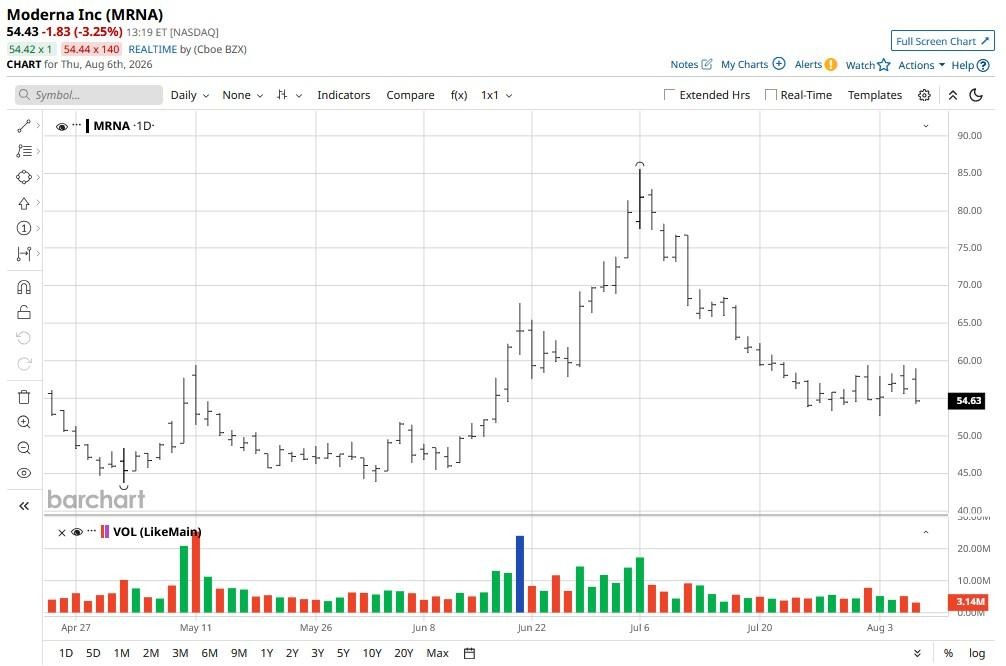
The FDA news arrives at a time when Moderna stock is struggling with momentum, having lost roughly 35% since early July.
What the FDA Approval Means for Moderna Stock
The FDA decision follows Moderna’s late-stage trial data that demonstrated mFLUSIVA achieved 26.6% higher relative vaccine efficacy against influenza-like illness compared to standard flu shots.
For MRNA shares, this regulatory approval is largely positive because it proves the firm’s mRNA platform extends far beyond COVID-19 and RSV, reinforcing that it’s strongly positioned for the post-pandemic era.
Securing FDA’s nod ahead of the 2026-2027 flu season would enable Moderna to tap into a rather lucrative multi-billion-dollar seasonal market.
All in all, expanding its commercial portfolio to four FDA-approved vaccines diversifies revenue streams, improves cash flow predictability, and cements the company’s technological edge over traditional vaccine manufacturers.
Should You Load Up on MRNA Shares Today?
While Moderna shares’ explosive year-to-date gains reflect growing market optimism, prospective buyers should weigh both catalysts and risks.
On the bullish front, mFLUSIVA unlocks immediate commercial revenue and paves the way for combination flu-COVID shots, cementing the firm’s leadership in mRNA therapeutics.
However, cautious investors must note that Moderna remains unprofitable — and its price-to-sales (P/S) multiple at nearly 12x makes it significantly more expensive to own than Pfizer (PFE).
Importantly, with pharmaceutical behemoths, including Pfizer, AstraZeneca (AZN), and Roche (RHHBY), you often get a healthy dividend yield as well, which is not the case with Moderna.
Wall Street’s View on Moderna
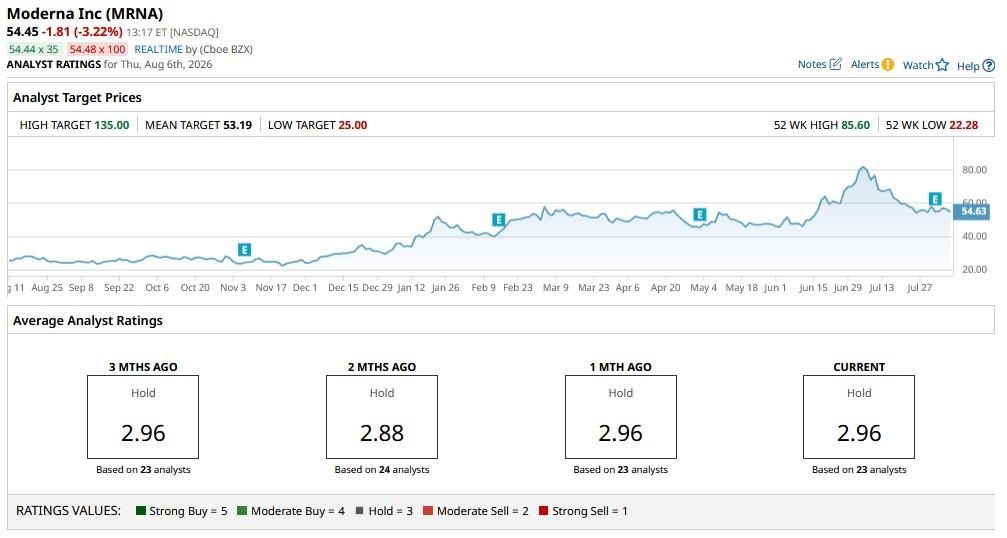
Investors should also note that Wall Street analysts are no longer bullish on Moderna either, after its meteoric run in the first half of 2026.
According to Barchart, the consensus rating on MRNA stock sits at “Hold” only, with the mean price target of about $53 indicating potential downside of about 2% from current levels.
On the date of publication, Wajeeh Khan did not have (either directly or indirectly) positions in any of the securities mentioned in this article. All information and data in this article is solely for informational purposes. For more information please view the Barchart Disclosure Policy here.