
IPO Forecast | Submitted to the Hong Kong Stock Exchange for the second time. What did Xinji Pharmaceutical, which is in a hurry with cash, support its 1.5 billion valuation?
Recently, Guangzhou Xinji Pharmaceutical Co., Ltd. (abbreviation: Xinji Pharmaceutical) submitted a listing application to the main board of the Hong Kong Stock Exchange. This submission is only two months since the previous application expired.
Since its establishment, the company has completed six rounds of financing, totaling about RMB 291 million. Investors include institutions such as Guangzhou Pharmaceutical Venture Capital, Yuexiu Danlu, Zhejiang Venture Capital, Zhuhai Fund Phase III, and Shaoguan Limited Partnership. After completing Series C financing in November 2025, the company's implied valuation reached RMB 1.53 billion.
However, unlike general innovative pharmaceutical companies that focus on molecular discovery, Xinji Pharmaceutical mainly focuses on improved new drugs, seeking differentiated breakthroughs in administration methods and alternative formulations. However, the company's two core products are currently in clinical phase II, and clinical efficacy data has not been disclosed. In a situation where many uncertainties still remain, can the company truly impress market investors with only room for imagination?
The core product, which lost more than 400 million yuan, has not yet been commercialized
According to the prospectus, Xinji Pharmaceutical was founded in 2007 and is a clinical-stage pharmaceutical company. The company is committed to the development and commercialization of improved new drugs using alternative formulations and drug delivery technology based on previously approved active pharmaceutical ingredients (APIs).
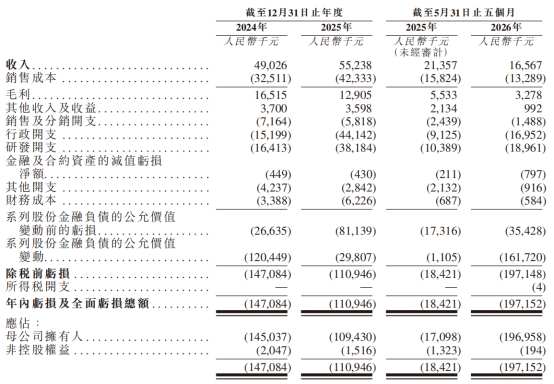
Up to now, the company has no commercial products, and its revenue mainly comes from CRO services and MAH business. In terms of MAH business, the company terminated sales of propofol emulsion injections in 2024. Currently, it only relies on esomeprazole magnesium sustained-release capsule as a single product (sold in the US; the marketing rights for this product come from a third party, and CMO production and distribution are not related to the core product).
In terms of financial performance, in 2024, 2025, and the five months ending May 31, the company achieved revenue of 49.026 million yuan, 55,238,000 yuan, and 165.67 million yuan (RMB, same below), respectively, with corresponding gross margins of 33.7%, 23.4%, and 19.8%.
The company recorded net losses of approximately 147.1 million yuan, 1110.9 million yuan and 197.2 million yuan respectively during this period. The cumulative loss during the reporting period reached 455.2 million yuan, and is expected to continue to generate net losses in the foreseeable future. Operating losses were mainly due to expenses arising from R&D plans and administrative costs related to operation. R&D expenses during the reporting period were 16.41 million yuan, 38.18 million yuan, and 18.96 million yuan respectively, mostly invested in the two core products.
In terms of cash flow, the net cash flow used in operating activities during the reporting period was approximately 15.29 million yuan, 66.52 million yuan, and 30.8 million yuan, respectively. As of May 31, 2026, the company's cash and cash equivalents were only about $103 million, net current liabilities reached $573 million, and net debt was $533 million. Based on the current cash consumption rate, the existing capital could only maintain operation for about 8 months without additional financing.
Soluble microneedle formulations: innovative dosage methods to achieve painless and minimally invasive administration
Unlike general innovative pharmaceutical companies that focus on molecular discovery, Xinji Pharmaceutical's pipeline strategy focuses on selecting limited indications of existing traditional formulations (such as trauma, poor patient adherence, or poor pharmacokinetic characteristics), and applying pharmaceutical formulation technology to solve these challenges in order to break through the limitations of traditional administration routes and improve treatment efficacy, patient compliance, and clinical practicality.
The Zhitong Finance App learned that the company has two major pharmaceutical formulation technology platforms, the soluble microneedle preparation technology platform and the nasal inhalation preparation technology platform, and has independently developed various products such as dexmedetomidine hydrochloride microneedle patch (DHMP) and nasal inhalation preparation XJN010 based on this.
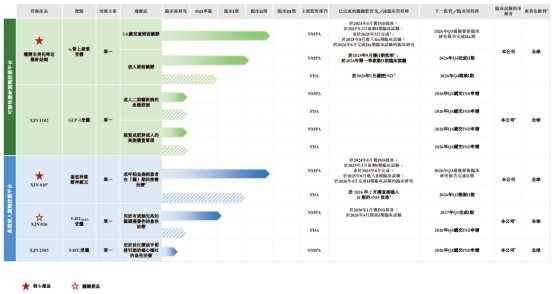
Among them, soluble microneedling technology uses a micron-scale needle tip array to penetrate the stratum corneum of the skin, and the drug is released after the needle dissolves to achieve painless and minimally invasive transdermal administration, aiming to replace traditional injection protocols.
Xinji Pharmaceutical's core product, dexmedetomidine hydrochloride microneedle patch (DHMP), is suitable for pre-operative sedation for children and adults. The company initiated phase IIa clinical trial for pediatric indications in August 2025 and completed related research in June 2026; the phase II clinical trial for adult indications began in March 2026. This product is the first soluble microneedle transdermal drug patch approved for clinical trials in China.
In terms of commercial positioning, DHMP is designed as a more comfortable non-venous sedation option during perioperative and invasive surgeries. It initially targets in-hospital channels, including anesthesiology, pain, endoscopy centers, and pediatrics, focusing on scenarios where non-intravenous administration is more advantageous. However, it should be noted that due to its innovative dosage method, the final effects and clinical benefits of DHMP are still unclear, and there is still uncertainty about the safety, efficacy, and regulatory approval of its subsequent clinical trials.
In addition to DHMP, the company is also expanding into the field of endocrine treatment, promoting the microneedle patch XJN1102 for diabetes and weight control, and plans to submit IND applications to the NMPA and FDA in the fourth quarter of 2026.
According to the Zhitong Finance App, in recent years, microneedling has attracted much attention in the pharmaceutical industry and academia as a key formulation technology for original innovative drugs, but its development involves multidisciplinary integration, high technical threshold, and faces multiple challenges such as drug and delivery system compatibility, stability, drug delivery efficiency, release kinetics, and intradermal absorption characteristics. It is not suitable for all drugs or indications, and requires targeted development according to the physicalization of the drug, dosage frequency, and clinical needs.
In terms of dosage, microneedles only load the drug on the tip of the needle shell, making it difficult to meet the therapeutic dosage requirements of some drugs; in terms of production, the small size of microneedles greatly improves the accuracy requirements of industrial processes. Although medical and aesthetic microneedling products are already on the market, large-scale production and sterile packaging of drug microneedle patches still present great challenges; in addition, microneedling requires piercing the stratum corneum of the skin, and there is currently no targeted quality standards and policies and regulations. All of the above will become difficult challenges that need to be addressed when commercializing Xinji Pharmaceutical's products.
Nasal inhalation preparations: suitable for Parkinson's and other blue ocean markets
Nasal inhalation preparations are another important technical direction in Xinji Pharmaceutical's layout. In particular, they have shown unique advantages in the treatment of central nervous system diseases.
The nasal cavity has a special anatomical structure, connecting the central nervous system upward and the respiratory tract downward. It not only serves as the first barrier against pathogenic microorganisms, but also provides a convenient channel for drugs to enter the brain. The nasal mucosa is rich in blood vessels and is highly permeable, creating favorable conditions for drug absorption. Drugs absorbed through the nasal cavity can bypass the blood-brain barrier and usually have a stronger central nervous system pharmacological effect. Therefore, nasal administration is increasingly used in treatment fields such as central analgesia, sedation and hypnosis, antiemetics, antidepression, and anti-seizure.
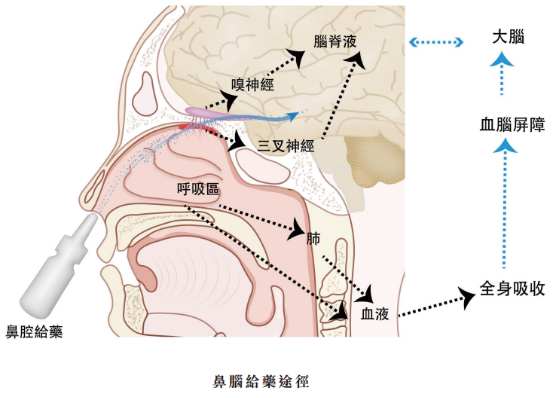
Currently, the application of nasal administration formulations in the field of central nervous system disease treatment has become a hot topic of research and development in the industry, but currently only a few related products are on the market in China, such as diazepam nasal spray for treating epilepsy and sumaptan nasal spray for migraine, which has a broad market space.
XJN010, the second core product of Xinji Pharmaceutical, is a nasal inhalation preparation for on-demand treatment of “off” seizures in patients with Parkinson's disease. The characteristics of “off” seizures are the recurrence or worsening of motor symptoms originally controlled by medication. Currently, there is no approved treatment for this symptom in China, and the clinical requirements are clear.
XJN010 completed phase II clinical trials in China in April 2026. According to Frost & Sullivan data, this product is the only product under development in China that has been approved for clinical trials and is used in the “closing” phase of Parkinson's disease; in the US, the product obtained IND approval in February 2026 and can directly enter phase II clinical trials, and related research is scheduled to begin in the third quarter of 2026.
In addition, the company has also established a clear pipeline layout in the field of indications requiring rapid relief of symptoms, such as the pre-clinical vasoconstrictor nasal inhalation preparation XJN026, intended to treat acute attacks of migraine in adults and pediatric patients aged 6 to 17. Phase I clinical trials began in China in April 2026, and is preparing to submit an IND application to the FDA; XJN2503, a nasal preparation for chemotherapy and vomiting, is scheduled to submit an application to NMPAIND in the fourth quarter of 2026.
However, intranasal administration also has inherent limitations. The Zhitong Finance App learned that nasal mucosal absorption is affected by various factors such as the nature of the drug and nasal state, and absorption is not stable enough; some drugs may irritate the mucous membranes, and there is a risk of damage during long-term use; the nasal cavity is susceptible to contamination, and the risk of infection increases during administration. At the same time, not all drugs are suitable for this route. Some drugs are limited because they are easily degraded by enzymes, difficult to pass through mucous membranes, or are highly irritating; the nasal administration area is small, single dose is limited, and enzymes in the mucous layer and mucous membranes also hinder absorption, which may cause systemic side effects, and the nasal anatomy is complicated, and long-term administration may affect patient compliance.
The company's prospectus also admits that clinical trials of nasal administration for the central nervous system have been interrupted or terminated in some cases due to insufficient efficacy, and the curative effects and clinical benefits of XJN010 are still unknown.
Generally speaking, phase I studies are mainly designed to evaluate safety, tolerability, and pharmacokinetics, and generally not to establish efficacy. Although DHMP and xjn010 have completed phase IIa or phase II clinical studies respectively, the relevant clinical study reports have not yet been completed. Currently, there is no efficacy data, and there is no guarantee that the safety and pharmacokinetic data observed so far can predict the results of subsequent trials.
Summarize
Overall, Xinji Pharmaceutical sprinted to the Hong Kong Stock Exchange with two major innovative formulation platforms, targeting two major blue ocean markets with clear clinical needs: percutaneous administration and central nervous system delivery. Its core product, DHMP, is the first soluble microneedle patch to enter clinical practice in China, and XJN010 is being promoted simultaneously in China and the US to seize the subdivision of Parkinson's disease where there is no competition yet.
However, the company has yet to commercialize its products, and its financial situation is becoming increasingly strained. The cumulative loss during the reporting period was over 450 million yuan. The current capital can only support about 8 months of operation. Subsequent clinical promotion is highly dependent on IPO financing or a new round of external blood transfusions. At the same time, both core products are in the early stages of clinical development, efficacy data has not yet been disclosed, and there is uncertainty about subsequent verification; at the commercial level, they still face multiple challenges such as large-scale production, quality control, and lack of regulatory standards. As far as the capital market is concerned, the prospects for commercialization are uncertain, and it is probably too early to discuss valuations at the moment.