
Fortis Stock Faces A Wildfire Test Investors Should Not Ignore
Wildfires across British Columbia have turned familiar summer headlines into a real time stress test for utilities, agriculture, and infrastructure stocks with direct exposure to the region. For investors, that kind of shock can quickly separate resilient business models from fragile ones, and missing that shift can be costly. This article walks through three stocks tied to the current emergency, outlining where wildfire risk may now be too hard to ignore.
Fortis (TSX:FTS)
Fortis is a large regulated utility that supplies electricity and natural gas across Canada, the US, and the Caribbean, including a major footprint in British Columbia. It generates most of its revenue from regulated operations such as UNS Energy at about CA$2.8b, ITC at about CA$2.6b, Central Hudson at about CA$1.8b, FortisBC Energy at about CA$1.9b and other electric and gas segments in Alberta and BC. The company is sizeable, with a market cap of roughly CA$39.8b.
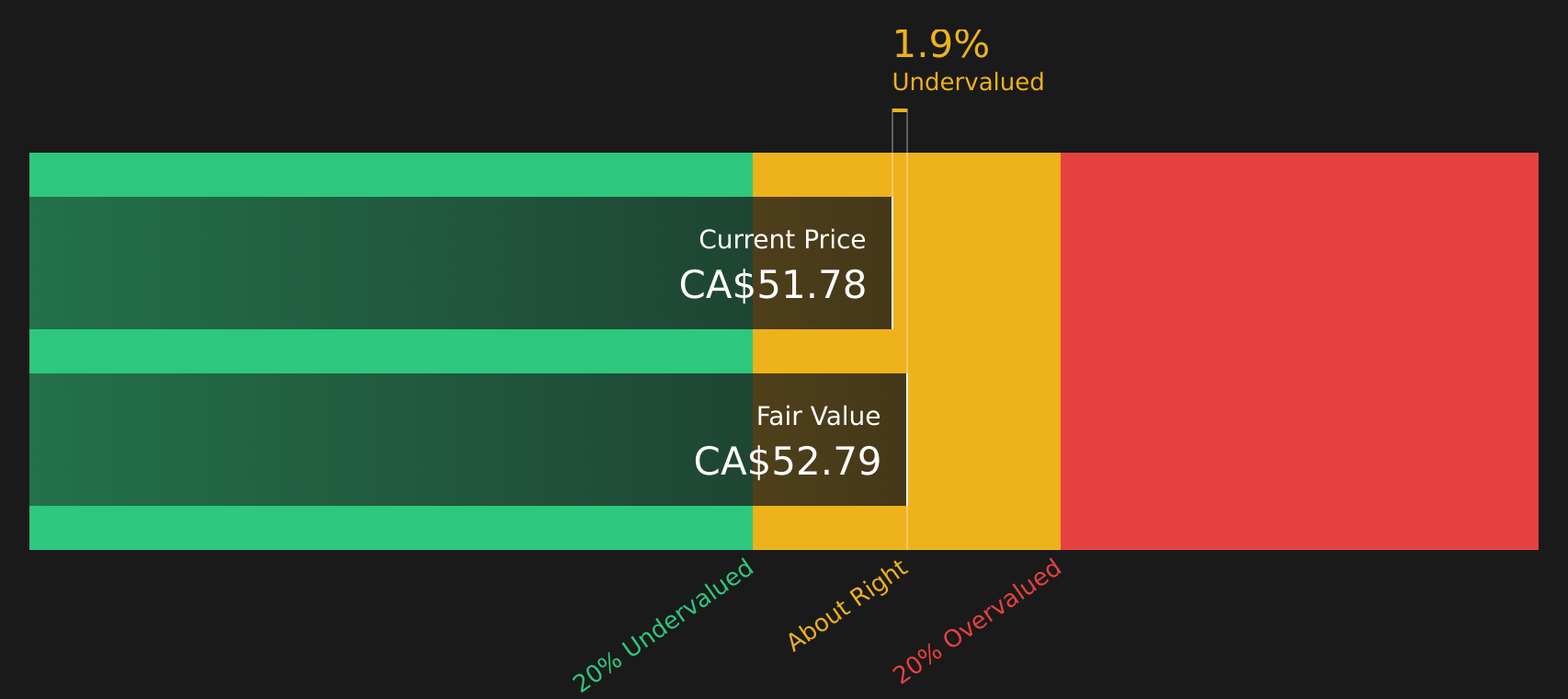
Investors looking at Fortis today are weighing an apparently solid utility profile against some areas of concern. Forecast earnings growth near 9% and a long list of approved capital projects, including the Tilbury LNG expansion in BC, are set against weak free cash flow coverage of the dividend and a heavy reliance on external borrowing. The BC wildfire emergency now provides a direct test of that funding model, as damaged assets and outages can increase costs at a time when regulators are sensitive to customer bills. Valuation screens may flag the stock as deeply discounted, but that potential upside is closely related to how Fortis addresses affordability pressures, wildfire exposure in its BC network, and rising capital intensity that could further strain its balance sheet.
Fortis’ regulated profile can make the stock look insulated, yet wildfire exposure, heavy borrowing and weak free cash flow raise harder questions about resilience. Before assuming the dividend and capital plan are safe, read the 3 key rewards and 2 important warning signs (1 is major!)

Build your own resilience focused shortlist around Fortis
Fortis and the other two stocks in this wildfire exposed group all came out of a single Simply Wall St screen, but the real value is in setting your own rules. Use our customisable Screener to mix filters like valuation, dividends, balance sheet strength and risk, or lean on any of our ready made Investing Ideas for a head start.
Andrew Peller (TSX:ADW.A)
Andrew Peller is a Canadian wine and craft beverage producer behind brands like Peller Estates, Trius and Wayne Gretzky, selling through its own retail stores, import agencies and wholesale channels. Practically all of its CA$393 million revenue comes from producing and marketing wine, spirits, craft beer and related products, with Canada accounting for the vast majority of sales. The company is relatively small on the market, with a market cap of about CA$381 million.
Investors are paying attention to Andrew Peller because the story is more fragile than a simple value screen suggests. On paper, the stock looks cheap relative to an internal cash flow estimate, earnings have recently improved and the company pays a 3.09% dividend. In reality, heavy reliance on debt funding, a relatively inexperienced board and insider selling raise questions about how well the business can handle shocks. The BC state of emergency is a sharp reminder that Okanagan vineyards are exposed to wildfire and weather damage at the same time as the company is already working through freeze related crop losses and a complex takeover proposal from Fairfax. For anyone tempted by the discount, the key question is how much risk is being picked up in return for that apparent value.
Andrew Peller’s low valuation and recent earnings improvement could be masking deeper balance sheet pressure. Debt funding, crop losses and takeover noise all collide in one fragile story. Read the 3 key rewards and 3 important warning signs (1 is major!)

Canadian Utilities (TSX:CU)
Canadian Utilities is a regulated utility group that owns electricity and natural gas networks, power generation, and related infrastructure in Canada and overseas, with ATCO Ltd as its parent. Most of its revenue comes from ATCO Energy Systems, split between about CA$1.7b from natural gas and CA$1.5b from electricity, with smaller contributions from ATCO EnPower at about CA$334 million, ATCO Australia at about CA$263 million, and Financing & Other at about CA$26 million. The company is sizeable, with a market cap of roughly CA$14.4b.
Canadian Utilities might look like a steady utility anchored by a CA$12b capital plan and fully contracted projects such as the CA$2.9b Yellowhead Pipeline. Yet the picture is less comfortable once you examine the pressure points. Profit margins have dropped sharply, recent earnings include a CA$538 million one off loss and the dividend around 3.5% is not well covered by earnings, all while the company leans heavily on external borrowing. With British Columbia wildfires highlighting how quickly maintenance costs and service disruption can spike for utilities, investors need to decide whether current pricing fairly reflects thin profitability, regulatory disputes and climate risk, or whether they are taking on more risk than the recent earnings rebound suggests.
Canadian Utilities’ thin margins and heavy borrowing might be masking more pressure than recent earnings suggest. Before assuming the CA$12b capital plan pays off, read the full 1 key reward and 4 important warning signs (1 is major!)
Seeking Alternatives Beyond These Wildfire Exposed Stocks
Fresh opportunities can move from under the radar to fully priced quickly. Scan focused stock lists now to spot potential breakout momentum before the crowd and act now.
- Spot potential breakout quality in companies with steady finances by scanning a curated list of solid balance sheet and fundamentals (12 results) before that stability gets fully priced in.
- Ride early momentum in potential high yield payers by tracking a hand picked set of 5 dividend fortresses while dividend coverage still looks workable.
- Get ahead of the next wave in automation by reviewing carefully filtered 37 robotics and automation stocks before interest in this theme starts flying among broader investors.
This article by Simply Wall St is general in nature. We provide commentary based on historical data and analyst forecasts only using an unbiased methodology and our articles are not intended to be financial advice. It does not constitute a recommendation to buy or sell any stock, and does not take account of your objectives, or your financial situation. We aim to bring you long-term focused analysis driven by fundamental data. Note that our analysis may not factor in the latest price-sensitive company announcements or qualitative material. Simply Wall St has no position in any stocks mentioned.
Have feedback on this article? Concerned about the content? Get in touch with us directly. Alternatively, email editorial-team@simplywallst.com