
The effects of the intervention have dissipated and the yen has once again sunk to G-10. The “vacuum period” of liquidity may force the Japanese authorities to pull the trigger twice?
The Zhitong Finance App learned that as the boosting effect brought about by recent intervention measures gradually subsided, the yen had the weakest performance among the Group of Ten (G-10) currencies this month, making the market highly wary that the Japanese authorities may take action again.
Since August, the yen has accumulated a cumulative decline of about 0.5% against the US dollar, taking back some of the results of the 3.2% increase in July. On Friday, the US non-farm payrolls data fell short of expectations. At one point, the dollar was suppressed, and the yen rebounded briefly, but then quickly regained its decline.
As Japan closed on Tuesday to coincide with a holiday, market participants are concerned that reduced liquidity may create conditions for a new round of intervention. Despite this, even if Japan and the US take historic joint intervention, the pattern of weakening yen will probably continue, mainly due to continued market pressure on major negative factors such as concerns about Japan's possible expansion of fiscal spending.
The Nomura Securities strategist team, including Yujiro Goto, stated in the report: “Japan is in the Obon holiday season, market participants may be limited, and the domestic economic data schedule is relatively light. Market attention will continue to focus on the intervention positions of the Japanese and US authorities, and investors will pay close attention to the statements made by officials.”
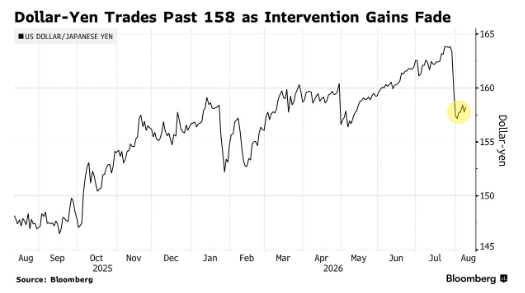
At the beginning of this month, the yen fell to a 40-year low of around 164 yen per dollar, then Japan and the US implemented the first joint intervention since 1998 to buy yen. This operation once pushed the yen to around 155, but then the gains gradually subsided. Currently, the yen has fallen below the 158 mark.
This reversal highlights the fact that while the core factors leading to the weakening of the yen remain unchanged, it is difficult to reverse the overall downward trend of the yen by intervention alone. Despite warnings from both Japan and the US that they are ready to act again if necessary, factors such as huge interest spreads with the US, market concerns about Japan's fiscal outlook, and geopolitical uncertainty continue to weigh on the yen.
Goldman Sachs Group's strategist team, including Kamaksha Trivedi, said in the report: “We believe the market's response to the intervention was relatively lackluster, reflecting the deep fundamental reasons behind the weakening yen.” They expect that “unless there is a shift in the global macro environment or a policy surprise occurs, the pressure to depreciate the yen will resurface over time.”
Meanwhile, the Bank of Japan warned in its summary of opinions from the July meeting that the upward risk of inflation will increase. A policy committee member mentioned the possibility of increasing the pace of interest rate hikes. Overnight index swap data shows that the market believes the probability of a rate hike in September is about 66%, while the October action is almost completely priced.
According to an analysis of central bank accounts, the Japanese authorities may have used about 34 billion US dollars to interfere in the foreign exchange market to support the yen on July 31. The day before, the authorities are estimated to have invested about 53 billion US dollars. If the data is confirmed, this will be the largest single-day intervention in history.