
March of Dimes report reveals persistent gaps in access to maternity care as recent healthcare changes threaten an already fragile system
New report finds one in three U.S. counties remain maternity care deserts; nearly 100 hospital labor and delivery unit closures recorded since 2024
ARLINGTON, Va., Aug. 11, 2026 /PRNewswire/ -- Today, March of Dimes, the nation's leading nonprofit fighting for the health of all moms and babies, released "Nowhere to Go: Maternity Care Deserts Across the U.S." (2026 report), highlighting how millions of Americans continue to struggle with access to care. The report also analyzes recent hospital closures, noting how these closures and policy changes further threaten an already fragile system that is failing too many women and babies.
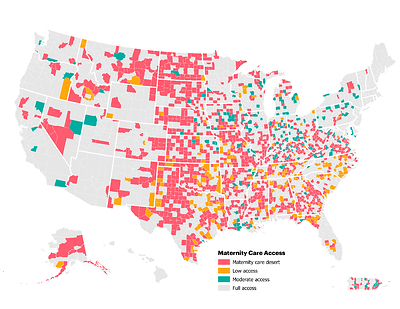
Maternity care deserts are counties with no obstetric clinicians or birthing facilities, requiring women to travel farther for maternal care. In fact, women living in maternity care deserts travel about three times farther, on average, to access labor and delivery services than those in counties with full access. These increased travel distances are associated with delayed entry into prenatal care, a greater likelihood of unplanned out-of-hospital deliveries, higher rates of maternal morbidity, and increased neonatal intensive care unit (NICU) admissions. Longer travel time also create significant indirect costs for families, including transportation, childcare, missed work, and temporary lodging.
"Across the country, families continue to face unnecessary barriers to maternity care with shifting healthcare and policy decisions threatening to widen gaps and weaken essential services," said Cindy Rahman, President and CEO, March of Dimes. "Now is the time to reimagine what maternity care can and should be by building a system that creates healthier beginnings, stronger communities, and better outcomes for generations to come. March of Dimes remains committed to that transformation, and by working together, we can build a future where every family has access to the care they need."
Key findings from the 2026 report:
- Similar to the 2024 report, 34.6% of U.S. counties are maternity care deserts, home to 2.4 million women of reproductive age and where 149,000 infants are born each year.
- An additional 3.4 million women and 209,000 infants live in counties with low or moderate access to maternity care.
- More than half of U.S. counties lack a hospital with labor and delivery services, affecting nearly 370,000 births annually.
- Obstetric clinician shortages are more severe in rural areas, where nearly 58% of counties lack obstetric clinicians, compared with about 19% of urban counties.
- From January 2024 to May 2026, at least 96 publicly reported labor and delivery unit closures were identified across 35 states
- In nearly 60% of affected counties, the closed unit was the only local birthing facility.
- Recent closures increased travel times by an average of 25 minutes in affected communities.
- In nearly 60% of affected counties, the closed unit was the only local birthing facility.
- About 1 in 9 women of reproductive age are uninsured nationally, with the highest rates in the South, rural areas, and maternity care deserts.
- Since the passing of the Affordable Care Act in 2010, uninsured rates among women ages 19 to 54 decreased 45% nationally, but to a lesser extent (just 35%) in states that have not expanded Medicaid.
"This year's report is a stark reminder that maternity care deserts don't happen by chance but are the result of deliberate policy choices that have left too many families without access to essential care," said Dr. Michael Warren, Chief Medical and Health Officer, March of Dimes. "The health of moms and babies depends on the strength of the systems that support them, and that system is currently failing us. However, the solutions are within reach, and they require coordinated action from healthcare providers, policymakers, employers, and communities. We cannot solve this crisis alone."
Solutions that can drive progress:
Improving access to maternity care requires coordinated action to advance evidence-based solutions that help ensure every family has access to the care they need, regardless of where they live. March of Dimes will continue to lead this work, pursuing a coordinated strategy across advocacy, education, innovation, and community collaborations, including:
- Fighting for federal and state legislation that protects and expands access
It is imperative to address how recent and proposed policy changes threaten to reverse progress made by policies that have expanded insurance coverage, such as Medicaid expansion and postpartum Medicaid extension. Another key opportunity to improve access for rural communities, often the most affected by limited access to care, is through the Rural Obstetrics Readiness Act, which was recently reintroduced in Congress. This bill would support training for healthcare providers to provide care during obstetric emergencies during pregnancy, labor and delivery, and in the postpartum period. - Bridging care for moms through mobile health centers
March of Dimes Mom & Baby Mobile Health Centers® bring maternity care directly into communities with limited or no local access. Seven units are currently operating across the U.S., including Columbus and Southeast Ohio; Houston, Texas; New York, New York; Phoenix and Tucson, Arizona; and Washington, D.C., with four additional units coming soon to Central Alabama; Chicago, Illinois; Cleveland, Ohio, and Northern Arizona. - Expanding access to doulas for community birth support
March of Dimes is also working to increase equitable access to doula services through a five-year initiative with CVS Health Foundation, growing and diversifying the doula workforce, strengthening partnerships between community-based doulas and health systems, and providing educational resources for consumers and providers. March of Dimes also has local community programs, such as the March of Dimes Collective Impact Initiative in Greater Houston, which offers multi-day training, professional development, and a compensated practicum providing hands-on birth experience for doulas. - Bringing innovation to communities through efforts like guaranteed income programs
March of Dimes recognizes that social determinants of health, including food security, housing stability, transportation, and interpersonal safety, directly shape outcomes for mothers and babies. Guaranteed basic income pilot programs in New Orleans, Atlanta, and Michigan are demonstrating that direct financial support improves access to prenatal and postpartum care and strengthens the financial and emotional well-being of participating families.
Learn more about the findings, explore county-level data, and take action to improve maternity care access at marchofdimes.org/mcdr. This year's report was sponsored by Ob Hospitalist Group (OBHG), the nation's largest employer of maternal health clinicians, including OB-GYNs and certified-nurse midwives (CNMs), working closely with hospitals and community clinicians to provide comprehensive maternal health solutions.
About March of Dimes
March of Dimes leads the fight for the health of all moms and babies. We support research, education, and advocacy, and provide programs and services so that every family can get the best possible start. Since 1938, we've built a successful legacy to support every pregnant person and every family. Visit marchofdimes.org or nacersano.org for more information.
About Nowhere to Go: Maternity Care Deserts Across the U.S.
March of Dimes publishes "Nowhere to Go: Maternity Care Deserts Across the U.S." every two years as the organization's most comprehensive and current assessment of maternity care access in the United States. Using county-level analyses of obstetric clinicians, birthing facilities, insurance coverage, and travel burden, the report highlights national trends, identifies the populations most affected, and examines how workforce shortages, hospital closures, and policy changes are reshaping the maternity care landscape. Its findings can inform program planning, resource allocation, advocacy, and future research.

 View original content to download multimedia:https://www.prnewswire.com/news-releases/march-of-dimes-report-reveals-persistent-gaps-in-access-to-maternity-care-as-recent-healthcare-changes-threaten-an-already-fragile-system-302846629.html
SOURCE March of Dimes
