
Core inflation in the US tied for more than five years in July, and the Federal Reserve's interest rate hike warning was temporarily lifted, but the war on oil prices and shrinking wages are preparing for the next storm?
The Zhitong Finance App learned that data released by the US Department of Labor on Wednesday showed that the overall performance of the consumer price index (CPI) in July was moderate, and the core inflation rate fell back to a low of more than five years, which to a certain extent mitigated the urgency of the Federal Reserve raising interest rates at the September meeting. However, it is worth noting that wage data released during the same period showed that the actual purchasing power of workers continued to decline, compounded by the geographical conflict in the Middle East repeatedly driving up energy prices. The outlook for US inflation is still full of variables.
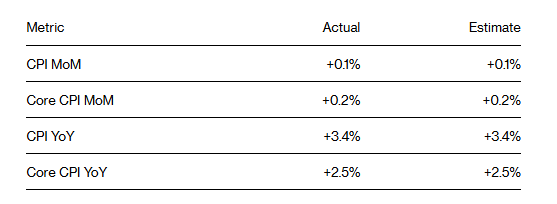
Specifically, CPI rose 0.1% month-on-month in July, rebounding from the 0.4% drop in June (the first monthly decline in six years); the year-on-year increase slowed slightly to 3.4%, down from 3.5% in June. Excluding volatile food and energy prices, the core CPI rose 0.2% month-on-month, rebounding from the flat level in June; the year-on-year increase was 2.5%, not only lower than 2.6% in June, but also leveled the lowest growth rate since March 2021. Both figures are in line with economists' median expectations.
Judging from the weight of influence, the cost of living was still the most important force driving up prices during the month. The housing price index rose 0.1% month-on-month in July, contributing nearly two-thirds of the overall price increase. Overall food prices rose slightly by 0.1%, but internal segmentation was obvious: the eating out index rose 0.3%; while household food prices declined for the first time since March. Among them, due to the impact of the cyclosporiasis epidemic, lettuce prices recorded the biggest drop in history, contributing significantly to the decline in food prices.
On the other hand, the trend in energy prices in July showed obvious “contradictions”. Gasoline prices fell 2.9% month-on-month during the month, while electricity prices remained almost flat and rose only slightly by 0.1%, helping to lower overall inflation readings. However, this decline is probably just a sight in the “rearview mirror.” In July, the cease-fire agreement between the US and Iran broke down, and hostilities resumed, pushing the average price of gasoline across the US to once again break through the $4 per gallon mark, even though it is still below the June level in terms of the overall monthly average.
Entering August, the energy market is heating up even more clearly. On the day the CPI report was released, the Brent crude oil futures price hit 90 US dollars per barrel, and US WTI crude oil also approached 84 US dollars.
Economists warn that although the US, as a net exporter of oil, buffered the price shock brought about by the Middle East conflict to a certain extent by releasing strategic oil reserves, it is difficult for this buffer to last indefinitely. The US and other countries will have to replenish oil inventories in the future, which may keep oil prices high for a longer period of time, thus driving up consumer energy costs again in subsequent months.
In the commodity sector, prices of core commodities excluding food and energy rebounded in July after falling for two consecutive months. Among them, the unusual sharp rise in the prices of computers and related products is particularly prominent.
Prices of computer software and accessories soared 21.2% year over year, the biggest increase on record; the price increase for computers, peripherals, and smart home assistants also reached the highest increase in more than four years. Economists blame this on the widespread shortage of memory chips caused by a wave of data center construction around the world. The impact of Apple (AAPL.US) price increases announced in June for popular consumer technology products such as Mac computers and iPads is showing in the data.
In terms of service prices, the segmented indicators excluding energy and rent rose slightly by 0.2% month-on-month, reversing the previous month's decline. Prices in categories such as air tickets, healthcare, communications, education, and entertainment all increased in July. However, motor vehicle insurance prices became one of the few major indices to decline during the month.
The future of the Federal Reserve's policy: a wait-and-see game between hawks and dovish
This modest inflation report, combined with unexpectedly weak employment data released earlier, significantly affected the market's pricing of the monetary policy path.
After the report was released, US stock index futures rose, US bond yields fell, and investors' bets on the Federal Reserve's interest rate hike at the September 15-16 meeting clearly subsided. According to CME's “Federal Reserve Watch” tool, the probability of an interest rate hike in September as reflected by the market was about 46% before the data was released, but after the CPI was announced, this figure fell further to 36%.
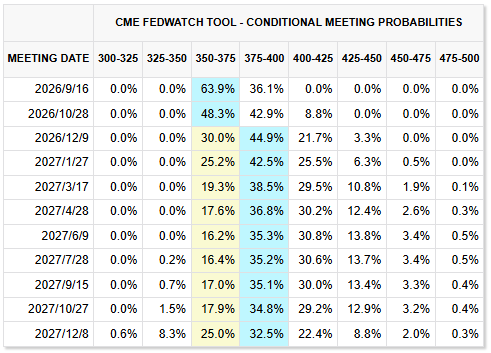
Currently, the Federal Reserve's benchmark interest rate remains in the range of 3.50% to 3.75%. Since the US launched military action against Iran, the Federal Reserve has kept interest rates unchanged, even though major central banks such as Europe and Japan have initiated interest rate hikes during the same period. Federal Reserve Chairman Kevin Walsh is expected to speak at the Jackson Hole annual seminar later this month, and investors are expected to carefully seek policy signals from it. And before the September interest rate meeting, policymakers will also see the August employment and inflation report.
However, it is not without different voices within the Federal Reserve. Cleveland Federal Reserve Bank Governor Beth Hamack was already outspoken on social media calling for action on Tuesday. “Now is the time to act,” she wrote. “The longer we wait to pull inflation back to the 2% target, the more challenging the task of curbing inflation will be, and the more costly it will be for the American people.” This hawkish stance contrasts with the views of some colleagues who think it is necessary to further balance the risk of inflation and a slowdown in employment, leaving the final decision of the September meeting still in doubt.
Also, it is worth noting that the subsequent statistical caliber of various price indicators is about to be adjusted. The US Department of Commerce's Bureau of Economic Analysis will implement changes in the calculation method for categories involving legal services, computer software, and investment consulting in the personal consumption expenditure (PCE) price index in September. The Federal Reserve is more fond of PCE-based inflation indicators, and core PCE has generally risen faster than core CPI since this year.
Real wage contraction dampens consumer confidence
Despite the apparent slowdown in July's CPI data, it is still difficult for the average American consumer to bring real relief to the report.
Another report released by the US Department of Labor on the same day showed that price increases continued to outperform wage growth. After accounting for inflation, the actual average hourly wage fell 0.2% year on year in July. Since the outbreak of war in Iran, this measure of residents' actual purchasing power has continued a series of weak readings. The average hourly wage growth rate for the month without price adjustments was 3.2% year on year, clearly lagging behind the 3.4% increase in consumer prices.
The high cost of living is actually eroding public satisfaction with the current state of the economy. This discontent is already reflected in the political field, and may affect the prospects for the Republican Party to compete for control of Congress in November of this year's midterm elections.
US President Trump won the 2024 election with promises to reduce inflation, but now the pressure on voters whose real income continues to shrink is increasing day by day. In an interview published Monday night, Trump accused Iran of being a “cunning negotiator,” and described his current options for dealing with the war — “either wait and see,” wait for Iran's economy to collapse, or carry out a “very, very severe” attack on Iran. The trend of the war, linked to oil prices, is constituting a key uncertain factor affecting the US economic and political agenda in the coming months.