
BlackRock Stock And 2 Cash Yield Plays As Higher Treasury Rates Reshape Investor Flows
With long dated U.S. Treasury yields hovering near multi year highs and questions swirling around the Fed’s resolve on inflation, cash and short term fixed income are back in the spotlight. This kind of rate shock can punish some corners of the market and open doors in others, especially around liquidity and capital preservation. This article walks through 3 stocks exposed to these forces and what their stories might mean for your portfolio.
The stocks in the article below are just a starting sample. The full screen surfaced 10 more U.S. money market and short term fixed income asset managers with equally compelling narratives that are not covered here. To identify and analyze the highest conviction opportunities in this space, head straight to the U.S. Money Market and Short-Term Fixed-Income Asset Managers screener.
Bank of New York Mellon (BNY)
Bank of New York Mellon is a large custody and asset servicing bank that also provides investment management, wealth management, and a wide range of cash and payments services to institutional and high net worth clients worldwide. It generates most of its revenue from Securities Services at about US$10.5b, followed by Market and Wealth Services at about US$7.4b and Investment and Wealth Management at about US$3.4b, with only a small contribution from Other activities. The company has a market cap of about US$108.2b, which puts it firmly in the global mega cap financial group.
Bank of New York Mellon sits at the intersection of higher-for-longer yields and rising demand for safe, interest-bearing cash solutions, which is a key focus for many investors today. Its scale in custody, fund administration, and money market services is being paired with new digital asset and AI platforms. Management expects these to support margins and fee resilience. At the same time, the business still faces questions around fee pressure, deposit stickiness, and whether early efficiency gains and digital asset projects will meet expectations. That combination of a strong franchise, an income-focused profile, and execution risk makes the coming years for this stock important to watch.
Bank of New York Mellon looks like a cash era winner, yet the real story sits in the detail. Before leaning too hard on yield and fee resilience, scan the 4 key rewards and 1 important warning sign.

Build your own cash era shortlist
Bank of New York Mellon and the other two stocks in this article all came from the same screener, but the real edge is in building filters that match how you think about risk, yield, and quality. Use our flexible Screener to mix valuation, growth, dividends, and balance sheet metrics into your own watchlist, or jump straight into our curated Investing Ideas.
State Street (STT)
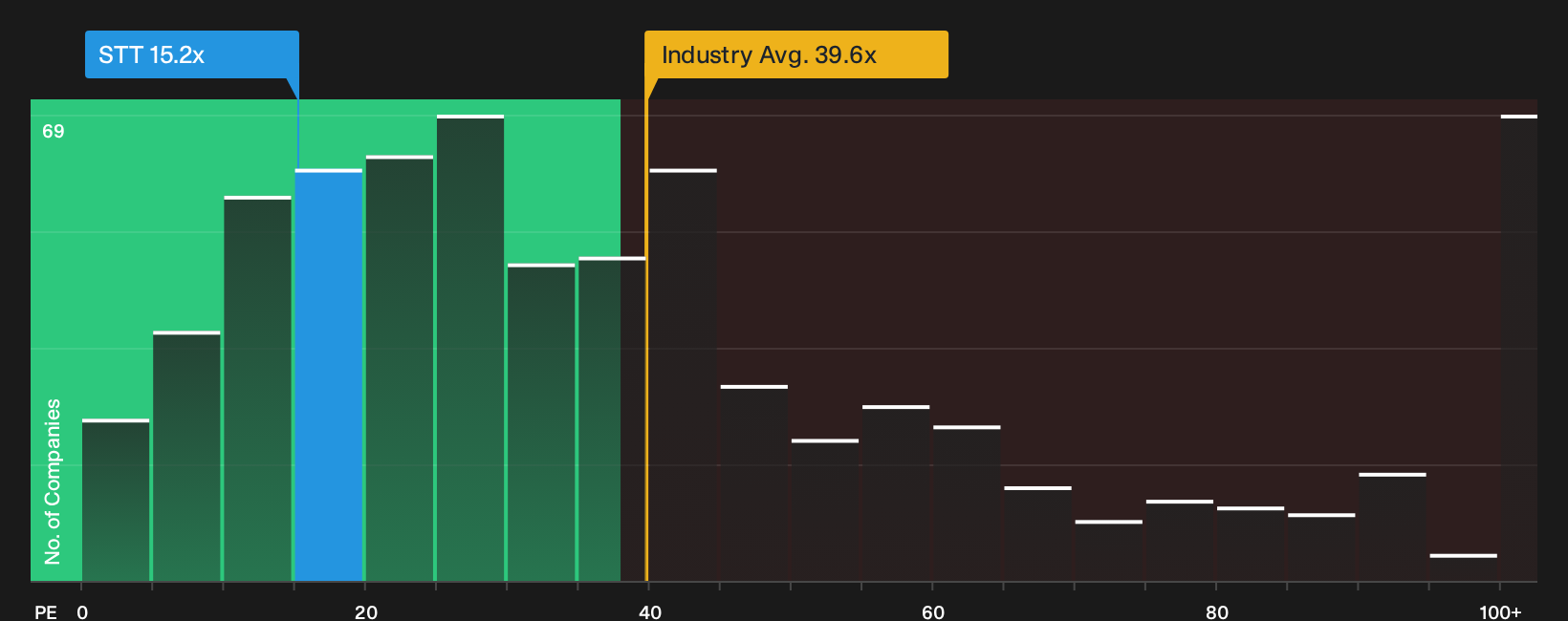
State Street is a global custodian and asset manager that runs the plumbing behind mutual funds, ETFs, pension plans, and other institutional portfolios, from recordkeeping and fund accounting to trading, securities lending, and the State Street Alpha front to back platform. Most of its revenue comes from Investment Servicing at about US$12.1b, with Investment Management contributing about US$3.0b, supported by cash and ETF products that are closely tied to money market and short term fixed income flows. The company has a market cap of about US$51.3b, placing it among the larger U.S. financial institutions.
State Street sits right in the slipstream of today’s higher long term yields, since institutions often respond by moving more cash into money market funds, short duration bond strategies, and ETF wrappers that State Street services or manages. Record fee and net interest income, a growing Alpha platform, and expansion into areas like Latin America and digital custody all support this story. At the same time, fee pressure, tech disruption, and regulatory capital demands remain important watchpoints. For investors who care about income, efficiency, and where institutional cash is being parked next, the real question is how far this fee and technology flywheel can run before the next rate and regulation reset.
State Street’s fee and technology flywheel often looks like a simple scale story, yet the real twist sits in the details. See how the 5 key rewards and 1 important warning sign could reshape your view of its cash era upside, as well as the one pressure point many investors are glossing over.
BlackRock (BLK)
BlackRock is a global investment manager that runs everything from index and active funds to iShares ETFs, alternatives, and advisory and risk management services for institutions, intermediaries, and individuals. It generates about US$27.3b in revenue entirely from its Asset Management business, spread across equity, fixed income, multi asset, alternatives, and cash products. The company has a market cap of about US$183.8b, putting it firmly in global large cap territory.
Investors watching the surge in long term U.S. Treasury yields and the renewed appeal of cash like assets may want to pay close attention to BlackRock. Its scale in money market and short duration bond funds, along with the iShares and institutional liquidity platforms, gives it meaningful exposure to investor flows as investors seek higher yields without taking large duration risk. At the same time, fee pressure, heavier spending on technology such as Aladdin and digital asset platforms, and higher funding risk from relying on external liabilities create a demanding backdrop for profitability. In addition, its role in AI and digital infrastructure financing alongside firms such as Nvidia and Meta highlights a combination of income, growth, and structural change that may justify closer research by investors.
BlackRock sits at the crossroads of cash yields, ETFs, and AI infrastructure, yet many investors still treat it as a simple asset manager. Get the full story with the analysis report for BlackRock

Seeking Alternatives Before The Crowd Moves
Fresh ideas move first. By the time momentum is obvious, the best entry points can be gone. Scan these under the radar shortlists while the data still matters and act now.
- Spot resilient cash generators early and sort by balance sheet strength with the curated list of solid balance sheet and fundamentals (50 results) waiting for closer inspection.
- Ride dividend momentum instead of getting caught chasing yield late by checking out the hand picked 8 dividend fortresses.
- Catch early waves in AI infrastructure before they start flying by tracking companies screened through the focused 57 AI infrastructure stocks.
This article by Simply Wall St is general in nature. We provide commentary based on historical data and analyst forecasts only using an unbiased methodology and our articles are not intended to be financial advice. It does not constitute a recommendation to buy or sell any stock, and does not take account of your objectives, or your financial situation. We aim to bring you long-term focused analysis driven by fundamental data. Note that our analysis may not factor in the latest price-sensitive company announcements or qualitative material. Simply Wall St has no position in any stocks mentioned.
Have feedback on this article? Concerned about the content? Get in touch with us directly. Alternatively, email editorial-team@simplywallst.com