
IPO News | Zejing Pharmaceutical (688266.SH) once again submitted the Hong Kong Stock Exchange to own four marketed drugs including Zepsen®
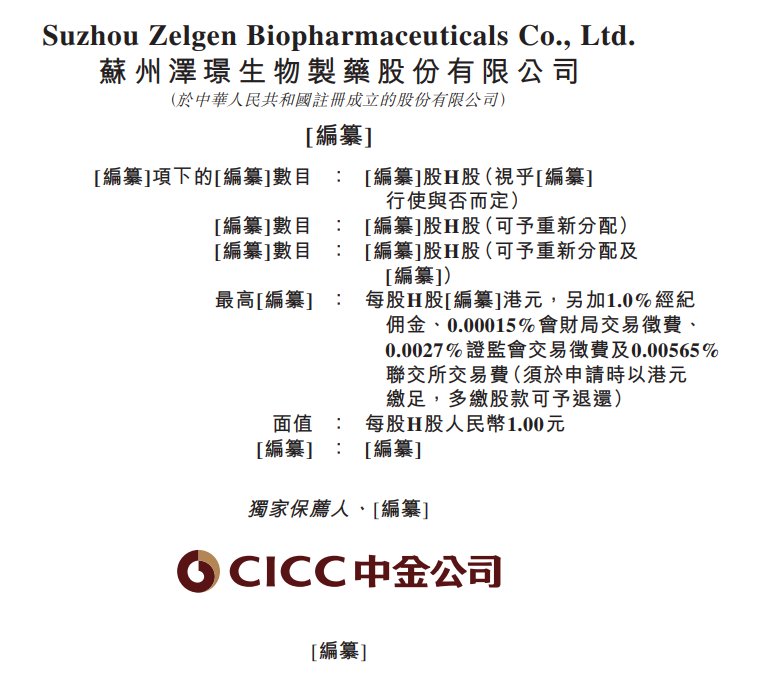
The Zhitong Finance App learned that according to the Hong Kong Stock Exchange's disclosure on August 12, Suzhou Zejing Biopharmaceutical Co., Ltd. (688266.SH)) submitted a listing application to the main board of the Hong Kong Stock Exchange, with CICC as the sole sponsor. The company submitted its listing to the Hong Kong Stock Exchange on December 19, 2025.
Company profile
According to the prospectus, Zejing Pharmaceutical is a comprehensive biopharmaceutical company focusing on the discovery, development and commercialization of innovative small molecule and biologic therapeutics. The strategy focuses on the fields of oncology, autoimmune diseases, and hemostasis/hematologic diseases. As of the last practical date, the company has four marketed drugs: Zepson® (donafinil toluene sulfonate tablets), the first locally developed small-molecule multi-target drug for first-line treatment of advanced liver cancer in China; zeppine® (dicaxitinib hydrochloride tablets), the first locally developed innovative JAK inhibitor for treating bone marrow fibrosis in China; and zeptinin® (recombinant human thrombin), the only recombinant human thrombin developed and successfully commercialized using DNA technology; and zepunin® (injectable human thyrotropin) beta), the only type approved for differentiation in China Recombinant human thyrotropin for diagnostic use in post-operative follow-up of patients with thyroid cancer is used for radioiodine whole-body imaging and serum thyroglobulin monitoring.
As of the last practical date, the company's strategic hierarchical drug candidate pipeline included 10 drug candidates for 29 major clinical projects. Among them, 8 indications for 4 drug candidates have entered the BLA/NDA or critical/phase III registration clinical trial stage, including gikaxitinib hydrochloride tablets, whose indications for ankylosing spondylitis and atopic dermatitis are in the NDA stage; the indications for injecting human thyrotropin beta for post-operative treatment of thyroid cancer are in the BLA stage.
The company continues to invest in research and development of new targets and breakthrough technologies. Key projects include ZG006 (Alveltamig) (the world's first tri-specific antibody targeting DLL3/DLL3/CD3) and ZG005 (Nilvanstomig) (PD-1/TIGIT bispecific antibody, which is one of the most advanced projects in the world). In addition, the company is also building a cutting-edge portfolio of early-stage projects, including ZGGS18, ZGGS34, ZGGS15, ZG2001, ZG0895 and ZG2273, covering T-cell connectors, bispecific and multi-specific antibodies, and small molecule therapeutics for traditional “untreatable” targets.
Relying on the small molecule drug development platform, the company has launched a variety of marketed drugs and drug candidates with good clinical and commercial potential, including Zepson®, Zeppine®, ZG2001, ZG0895 and ZG2273. At the same time, relying on research platforms for bispecific/trispecific antibodies and complex recombinant proteins, the company achieved technologically difficult breakthroughs such as zeptinin® and zesunin®, and built a patent-protected bispecific/tri-specific antibody pipeline, including ZG006, ZG005, ZGGS18, ZGGS34 and ZGGS15.
The Company has reached cooperation with industry-renowned contract sales organizations (“CSO”) to promote some of the Company's products. As of June 30, 2026, the company had three CSOs, two of which were exclusively appointed, namely Yuanda Life Sciences as the exclusive commercial service provider for Zepning® in mainland China, Hong Kong, Macau, and Taiwan Province of China (collectively, the “Greater China Region”), and Merck's Swiss subsidiary ATSA, which the company granted exclusive rights to commercialize Zesuning® in China.
On December 30, 2025, the Company entered into a cooperation and licensing option agreement with AbbVie Group Holdings Limited (“AbbVie”) (as amended from time to time, the “AbbVie Agreement”), according to which the Company granted AbbVie the exclusive option of obtaining an exclusive license to develop, manufacture, commercialize or otherwise explore ZG006 and any product containing ZG006 in all countries or jurisdictions around the world other than Mainland China, Hong Kong, and Macau.
Financial data
Revenue:
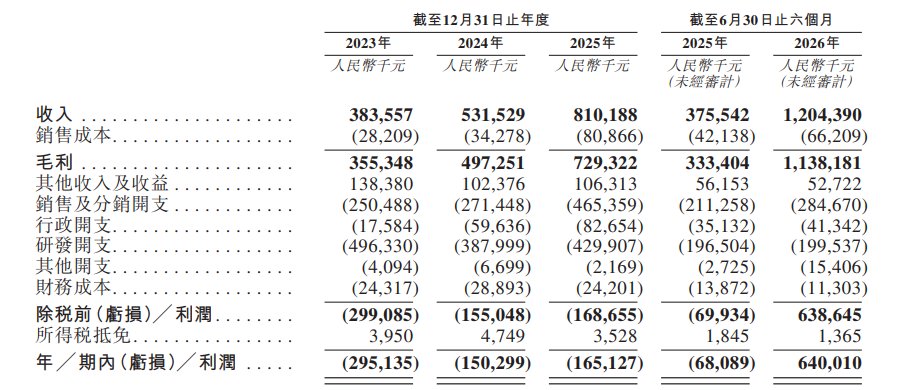
For the six months ended June 30 in 2023, 2024, 2025, 2025, and 2026, the company's revenue was approximately 384 million yuan, 532 million yuan, 810 million yuan, 376 million yuan, and 1.24 billion yuan, respectively.
Net profit:
For the six months ended June 30 in 2023, 2024, 2025, 2025 and 2026, net profit was approximately -295 million yuan, -150 million yuan, -165 million yuan, -68.89 million yuan, and 640 million yuan, respectively.
Gross profit margin:
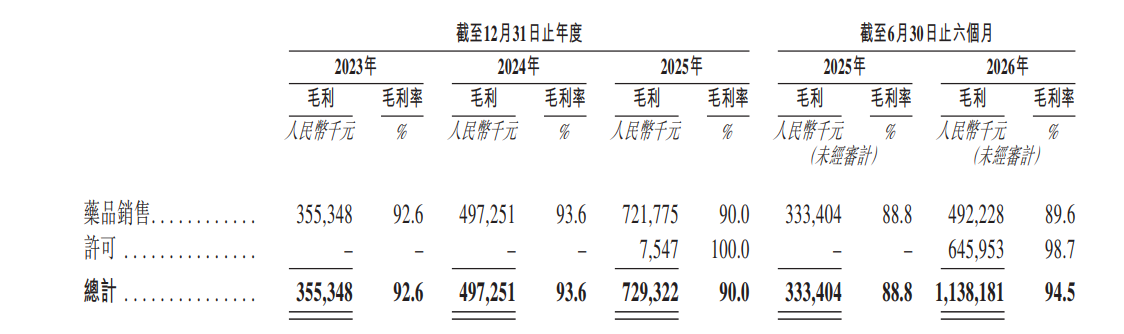
For the six months ended June 30 in 2023, 2024, 2025, 2025, and 2026, gross margins were 92.6%, 93.6%, 90%, 88.8%, and 94.5%, respectively.
Industry Overview
The global pharmaceutical market (including chemical drugs and biologics) is expected to reach US$1,691.4 billion by 2026, and is expected to grow further to US$2,6307 billion by 2035, with a compound annual growth rate of 5.0% from 2026 to 2035. With economic growth and increased demand for medical care, the size of China's pharmaceutical market increased from RMB 1,447.9 billion in 2020 to RMB 1,654.6 billion in 2025, with a CAGR of 2.7%. The size of China's pharmaceutical market is expected to further increase to RMB 3017.6 billion in 2035, with a compound annual growth rate of 7.7% from 2030 to 2035.
From 2020 to 2025, the global oncology drug market grew from US$150.3 billion to US$278.2 billion, with a compound annual growth rate of 13.1%, and is expected to reach US$435.6 billion in 2030. The compound annual growth rate is 9.4% from 2025 to 2030, then to US$683 billion by 2035, and the compound annual growth rate from 2030 to 2035 is 9.4%. From 2020 to 2025, the size of the Chinese market increased from RMB 197.5 billion to RMB 279.1 billion, at a CAGR of 7.2%, and is expected to reach RMB 504 billion by 2030, a CAGR of 12.5% from 2025 to 2030, then to RMB 980 billion in 2035, and a CAGR of 14.2% from 2030 to 2035.
HCC is the most common primary liver cancer (about 90%) and the most common cause of death in patients with cirrhosis. According to the CSCO guidelines, treatment options for HCC vary according to the stage of the disease: early HCC patients mainly use surgical resection and local area treatment, while systemic treatment is recommended for advanced patients. In 2025, the number of new cases of liver cancer in China increased to 389,600. The compound annual growth rate from 2020 to 2025 is 2.1%. It is expected to reach 436,000 cases in 2030 and 481,000 cases in 2035. The HCC drug market in China increased from RMB 7.2 billion in 2020 to RMB 16.7 billion in 2025, with a compound annual growth rate of 18.4%. The market is expected to expand further to RMB 29.1 billion in 2030 and RMB 43.9 billion in 2035, with compound annual growth rates of 11.8% and 8.5% from 2025 to 2030 and 2030 to 2035, respectively.
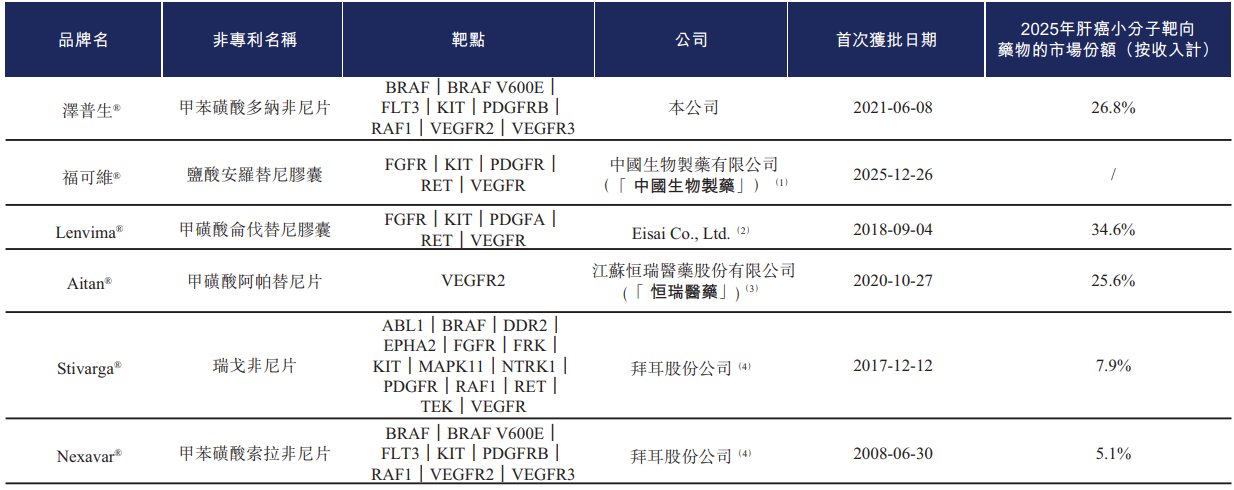
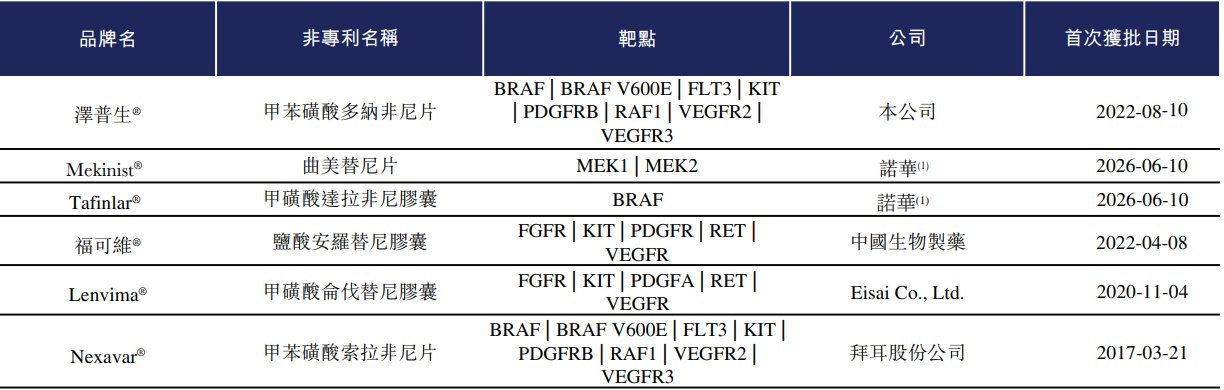
As of the last practical date, the competitive pattern for small-molecule targeted drugs approved for the treatment of liver cancer in China is as follows:
Thyroid cancer is a malignant tumor originating in thyroid tissue. There is a potential risk of distal metastasis. Common symptoms include swelling or a hard mass in the neck. Thyroid cancer is mainly divided into differentiated thyroid cancer “(DTC”), medullary thyroid cancer, and undifferentiated thyroid cancer. In 2025, the number of new cases of thyroid cancer in China increased to 481,500. The compound annual growth rate from 2020 is 1.6%, and it is expected to reach 474,600 cases by 2030. From 2020 to 2025, the size of China's thyroid cancer drug market increased from RMB 1.4 billion to RMB 1.8 billion, with a CAGR of 4.8%. It is expected to further expand to RMB 3.5 billion and RMB 5.6 billion in 2030 and RMB 5.6 billion respectively. The compound annual growth rate from 2025 to 2030 is 14.7%, and the compound annual growth rate from 2030 to 2035 is 9.8%.
As of the last practical date, the competitive landscape for small-molecule targeted drugs approved for differentiated thyroid cancer in China is as follows:
MF is a clonal hematopoietic stem cell disease, a Philadelphia chromosome-negative myeloproliferative tumor. MF is caused by abnormal activation of the JAK-STAT signaling pathway. The most common mutations occur in the JAK2, CALR, or MPL genes. In 2025, China's myelofibrosis drug market reached RMB 2.1 billion, with a compound annual growth rate of 3.6% from 2020 to 2025. The market size is expected to reach RMB 2.5 billion in 2030 and RMB 3.3 billion in 2035. The compound annual growth rates from 2025 to 2030 and 2030 to 2035 are 4.1% and 5.4%, respectively. In 2025, the number of myelofibrosis patients in China increased to 62,400, with a compound annual growth rate of 0.4% from 2020 to 2025. It is expected to reach 63,500 and 64,600 in 2030 and 2035, respectively.
As of the last practical date, China has the following four small molecule targeted drugs approved for the treatment of MF:

From 2020 to 2025, the global autoimmune disease drug market grew from US$120.6 billion to US$154.9 billion, with a compound annual growth rate of 5.1%. It is expected to reach US$218.8 billion and US$272.8 billion in 2030 and US$272.8 billion respectively. The compound annual growth rate from 2025 to 2030 is 7.2%, and the compound annual growth rate from 2030 to 2035 is 4.5%. From 2020 to 2025, the size of China's autoimmune disease drug market increased from RMB 17.4 billion to RMB 38 billion, with a compound annual growth rate of 16.9%. It is expected to reach RMB 123.7 billion and RMB 313.4 billion in 2030 and RMB 313.4 billion respectively. The compound annual growth rate from 2025 to 2030 is 26.6%, and the compound annual growth rate from 2030 to 2035 is 20.4%.
Thyroid stimulating hormone (TSH) is a glycoprotein hormone produced by basophils in the anterior pituitary gland. It plays a central role in regulating thyroid growth, hormone synthesis, and secretion, thereby controlling metabolism and maintaining a stable internal environment. Recombinant human thyroid-stimulating hormone “(rhTSH”) is a biotechnologically produced human thyroid-stimulating hormone. Its amino acid sequence is the same as endogenous pituitary TSH. Clinically, it is used to provide exogenous TSH stimulation for patients with differentiated thyroid cancer without discontinuing thyroid hormone. In 2025, China's rHTSH drug market will reach RMB 31.7 million. It is expected that in 2030 and 2035, the market size will reach approximately RMB 12.28 and RMB 2,606 billion, respectively. The compound annual growth rate from 2025 to 2030 is 107.8%, and the compound annual growth rate from 2030 to 2035 is 16.2%.
Board Information
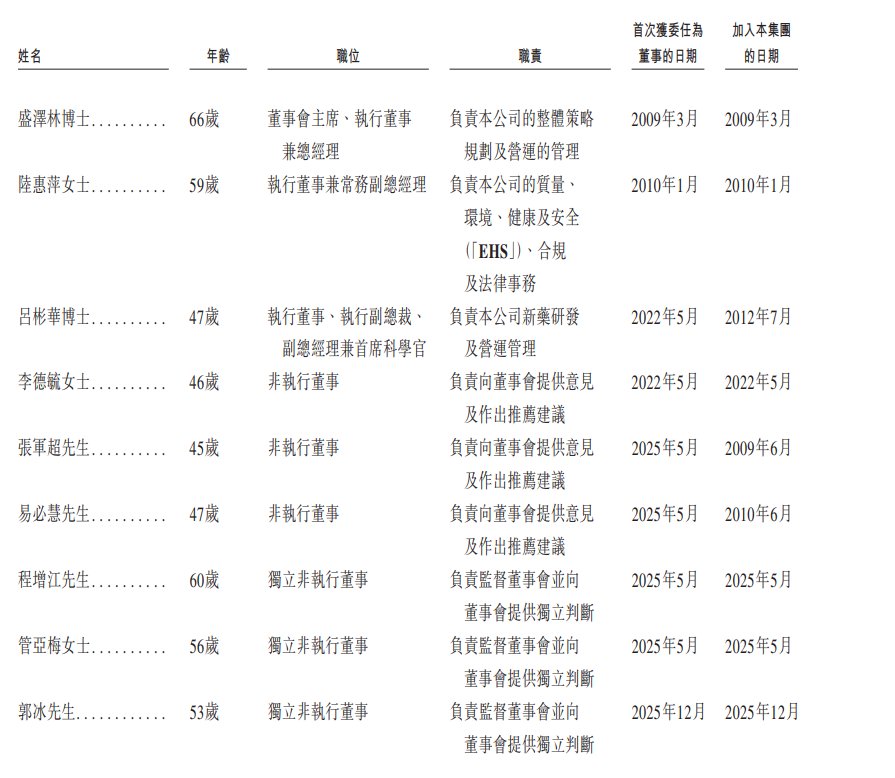
The board of directors will be composed of nine directors, including three executive directors, three non-executive directors and three independent non-executive directors. The term of office of directors is three years, and they must be re-elected upon retirement.
Shareholding structure
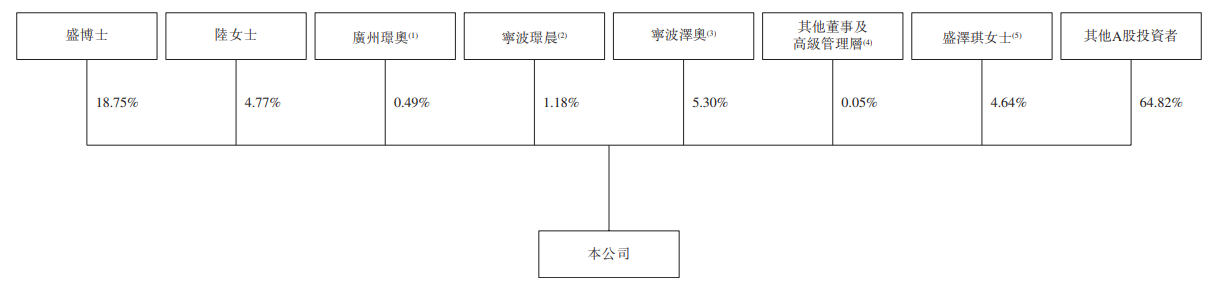
As of the last practical date, Guangzhou Jingao was managed by its general partner Dr. Lu Binhua (one of the company's executive directors). Guangzhou Jingao has three limited partners. Among them, Mr. Wu Jisheng, Ms. Gao Qingping, and Dr. Sheng (all directors or senior management members) hold approximately 55.07%, 19.26% and 6.42% partnership interests respectively;
As of the last practical date, Ningbo Jingchen was managed by its general partner Mr. Lin Long (the company's executive manager). Ningbo Jingchen has 47 limited partners. Among them, Ms. Gao Qingping, Mr. Zhang Junchao, and Ms. Lu (all directors or senior management members) hold about 32.29%, 2.16% and 0.10% partnership interests respectively. Among the remaining limited partners, Ding Wei, a current employee of the Company, holds about 31.10% of the partnership interests. Other than the above disclosure, none of Ningbo Jingchen's limited partners holds 30% or more of the partnership interests. The remaining limited partners of Ningbo Jingchen were all major employees of the Group at the time of incentive distribution, including core personnel in R&D, clinical and administrative functions, and were all independent third parties.
As of the last practical date, Ningbo Zeao was managed by its general partner, Ms. Gao Qingping (one of the company's senior management). Ningbo Zeao has 11 limited partners, including Dr. Lu Binhua, Ms. Lu, Mr. Huang Gang, and Mr. Yi Bihui (all directors or senior management members) hold approximately 22.40%, 8.94%, 5.44% and 0.51% partnership interests respectively. Among Ningbo Zeao's limited partners, no one holds 30% or more of the partnership interests. The remaining limited partners of Ningbo Zeao were all key employees of the Group at the time of incentive distribution, including core personnel in R&D, clinical and administrative functions, and were all independent third parties.
Intermediary team
Sole sponsor: China International Finance Hong Kong Securities Limited
Company Legal Advisors: Clu Hong Kong Law Firm, Jun He Law Firm
Sole sponsor legal advisors: Beck McKenzie International Law Firm, Jia Yuan Law Firm
Reporting Accountant: Xinyong Zhonghe (Hong Kong) Certified Public Accountants Limited
Industry Advisor: Frost & Sullivan (Beijing) Consulting Co., Ltd. Shanghai Branch