
Adaptive Biotechnologies (ADPT) Stock Looks Fair On Cash Flow Yet Rich On Sales
Adaptive Biotechnologies stock has seen very strong share price gains over the past few years, yet valuation checks now suggest it is no longer an obvious bargain. The intrinsic value estimate from a Discounted Cash Flow (DCF) model is close to the current price, while market multiples appear expensive.
- Adaptive Biotechnologies has returned about 305.9% over the past 3 years, which puts extra focus on whether recent enthusiasm already reflects much of the potential.
- Expectations for future revenue growth from its immune-driven technologies can support the current share price, while uncertainty around the timing and scale of cash flows remains a key risk for valuation.
- The company does not pass any of Simply Wall St's six valuation checks, which indicates that on the broader measures it leans expensive rather than screening as a clear bargain, as shown in the 0 out of 6 score.
The stock's next move may depend on whether Adaptive Biotechnologies' current share price already reflects its intrinsic value or still leaves room for further upside.
Does Adaptive Biotechnologies Look Fairly Valued on Cash Flow?
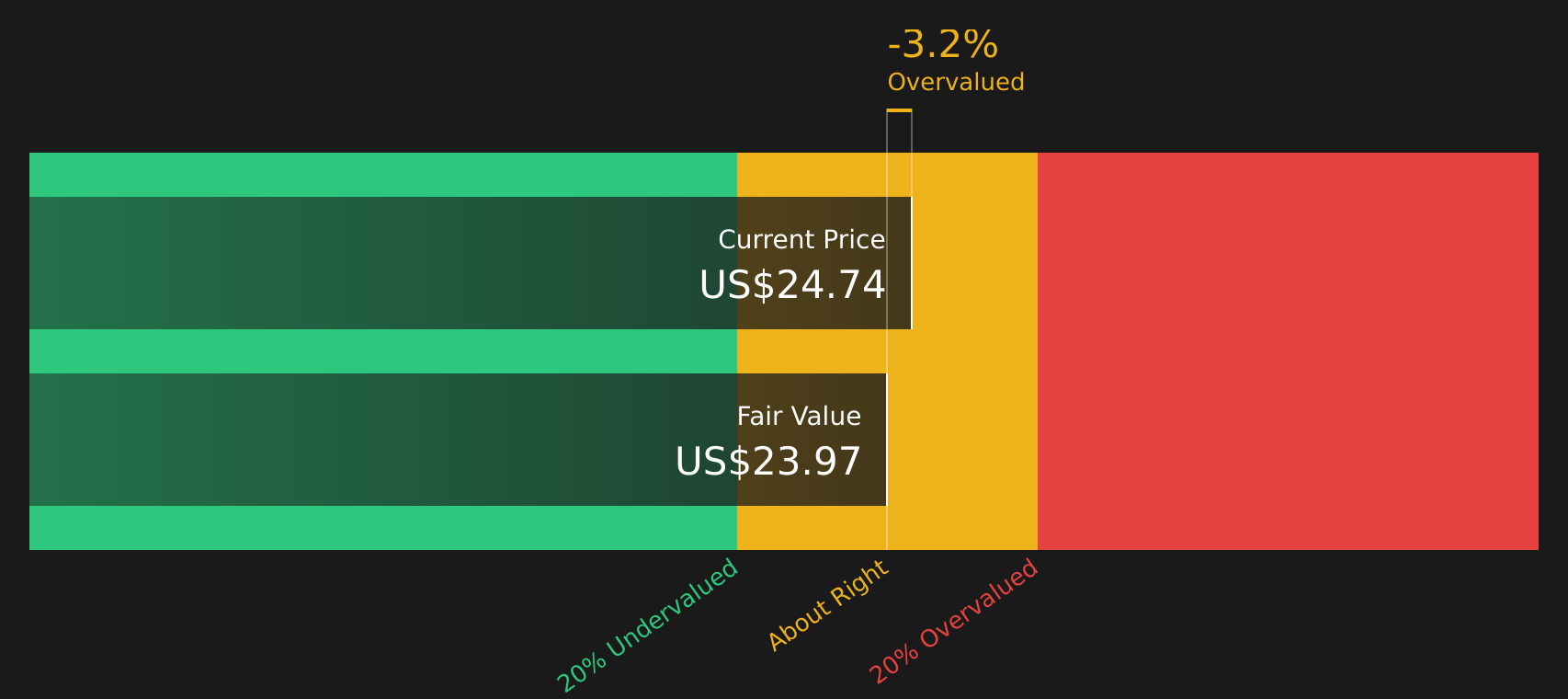
The Discounted Cash Flow model values Adaptive Biotechnologies based on projected future cash flows to shareholders. For the latest twelve months, the company reported a free cash flow loss of about $26.7 million, so the model assumes that cash generation recovers and grows over time rather than staying at current levels.
On these assumptions, the Discounted Cash Flow model points to an estimated intrinsic value of about $24 per share. That sits close to the current share price, with the model implying the stock is around 5.2% overvalued. The gap is small, so the conclusion is that Adaptive Biotechnologies does not screen as obviously cheap or stretched on this cash flow view.
Overall, the Discounted Cash Flow work suggests Adaptive Biotechnologies stock is about fairly valued at today’s price.
Adaptive Biotechnologies is fairly valued according to our Discounted Cash Flow (DCF), but this can change at a moment's notice. Track the value in your watchlist or portfolio and be alerted on when to act.
Has Adaptive Biotechnologies Run Too Far on Sales?
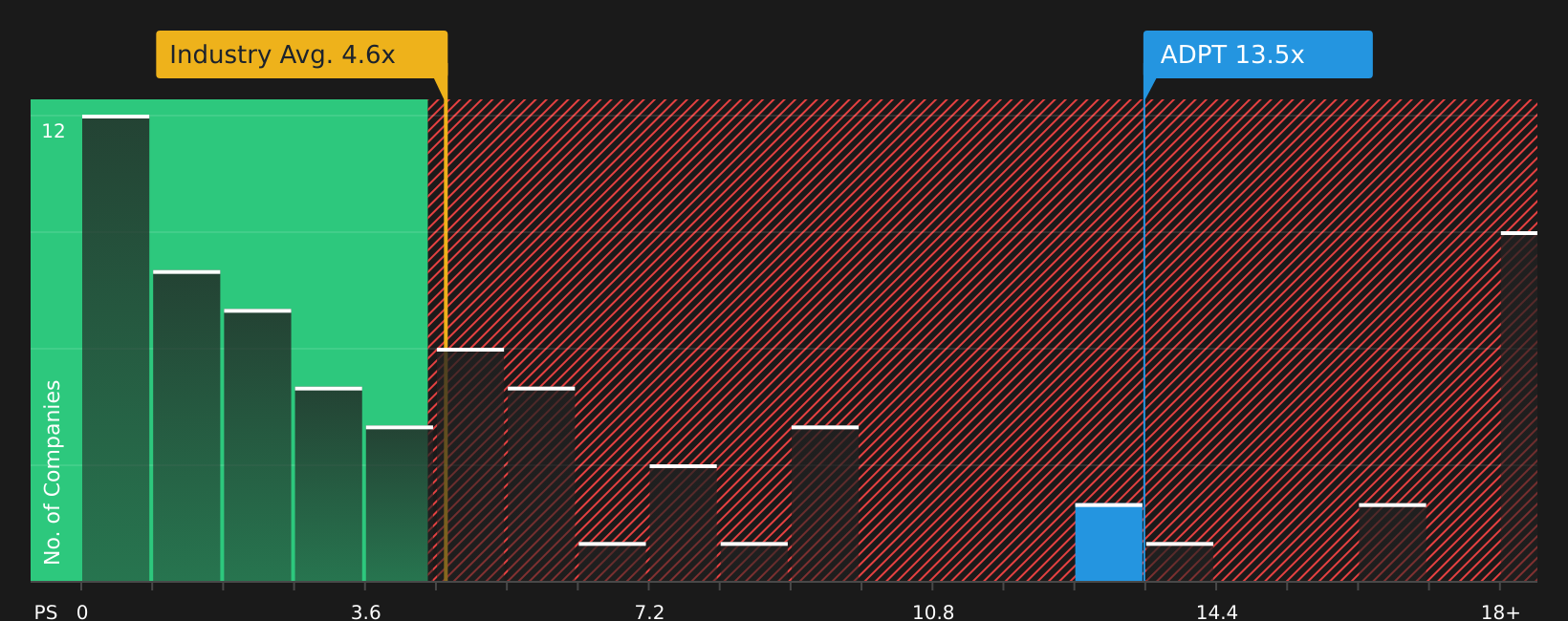
P/S is often a better fit for a company like Adaptive Biotechnologies that is still reporting free cash flow losses and is investing heavily for growth. It anchors valuation to current revenue rather than earnings that are still negative.
Adaptive Biotechnologies currently trades on a P/S ratio of about 13.1x. That is well above the Life Sciences industry average of roughly 4.1x and also above the peer group average of about 5.8x. The Simply Wall St model suggests a fair P/S ratio of around 5.1x based on the company’s characteristics.
Compared with this fair ratio, Adaptive Biotechnologies trades on a materially higher multiple, which points to a valuation that leans rich relative to what the model suggests for its risk and revenue profile.
On this P/S framework, Adaptive Biotechnologies stock screens as overvalued compared with both industry benchmarks and its modelled fair multiple.
See what the numbers say about this price — find out in our valuation breakdown.
The Adaptive Biotechnologies Narrative: What Would Justify Today's Price?
Simply Wall St Narratives pick up where the valuation puzzle around Adaptive Biotechnologies leaves off. They set out which paths for growth, margins and earnings would need to occur for the stock to be worth meaningfully more or less than today’s price. These narratives are available on Simply Wall St's Community page. Rather than relying on a single multiple or model, each one explains its underlying assumptions so you can later compare them with reported results.
You can be one of the first voices in the Simply Wall St community to set out a clear, number driven narrative on Adaptive Biotechnologies and where its growth, margins and execution might go from here. Share your thesis, track how it plays out as new results arrive, and see how it compares with what other investors are thinking.
Do you think there's more to the story for Adaptive Biotechnologies? Head over to our Community to see what others are saying!
The Bottom Line
Adaptive Biotechnologies now sits in a middle ground. The Discounted Cash Flow (DCF) work points to an intrinsic value close to the current share price, so the stock no longer screens as obviously cheap. Market multiples, especially the P/S ratio, lean toward overvalued compared with peers and the modelled fair ratio, while the broader valuation checks are also weak. The key question from here is whether future revenue growth and eventual cash generation are strong enough to justify the premium multiple that the market is currently paying.
This article by Simply Wall St is general in nature. We provide commentary based on historical data and analyst forecasts only using an unbiased methodology and our articles are not intended to be financial advice. It does not constitute a recommendation to buy or sell any stock, and does not take account of your objectives, or your financial situation. We aim to bring you long-term focused analysis driven by fundamental data. Note that our analysis may not factor in the latest price-sensitive company announcements or qualitative material. Simply Wall St has no position in any stocks mentioned.
Have feedback on this article? Concerned about the content? Get in touch with us directly. Alternatively, email editorial-team@simplywallst.com