
IPO Forward|The core products have already been ordered by Gilead. Can Qinhao Pharmaceuticals get tickets to the Hong Kong Stock Exchange?
In August 2026, the innovative drug sector continued to maintain a high level of prosperity.
Recently, Qinhao Pharmaceutical (Suzhou) Co., Ltd. (abbreviation: Qinhao Pharmaceutical) submitted a listing application to the main board of the Hong Kong Stock Exchange. Huatai International is its sole sponsor. This is the company's second attempt to enter the Hong Kong stock market after the first submission in January 2026.
As an 18A innovative pharmaceutical company, GH31, the company's core product, has received real money endorsements from multinational pharmaceutical companies, and the pipeline revolves around the “untreatable” RAS pathway and the “synthetic death” of the Blue Ocean race track, showing outstanding scarce value; however, the company's fastest progressing variety is still in clinical phase II, and subsequent efficacy results are unknown, and it will also become a risk factor that cannot be ignored.
Authorized revenue drives short-term losses, and R&D investment continues to increase
Judging from financial data, Qinhao Pharmaceutical currently has no revenue from commercial products. The revenue mainly comes from external licensing cooperation. In 2024, 2025, and the five months ending May 31, the company's revenue was about 4.69 million yuan, 1.27 million yuan and 558 million yuan (RMB 558 million, same below), respectively. Among them, revenue jumped sharply in the first five months of 2026, mainly due to the exclusive external licensing arrangement with Gilead Sciences for the GH31 project. The company received a non-refundable down payment of 80 million US dollars (approximately RMB 557.4 million before tax).
Changes in gross profit are consistent with revenue trends. Gross profit was about 2.31 million yuan in 2024, dropped to about 150,000 yuan in 2025, and surged to 556 million yuan in the first five months of 2026, also mainly contributed by Gilead's authorized down payment.
On the profit side, the company's net loss in 2024 was 152 million yuan, narrowing to 144 million yuan in 2025. Entering the first five months of 2026, thanks to a large down payment, the company achieved net profit of 355 million yuan, which significantly reversed losses over the previous year.
However, it should be noted that administrative expenses reached 73.192 million yuan during the same period, far higher than 235.96 million yuan for the full year of 2024 and 29.292 million yuan for the whole year of 2025, mainly affected by equity incentives and financing-related costs.
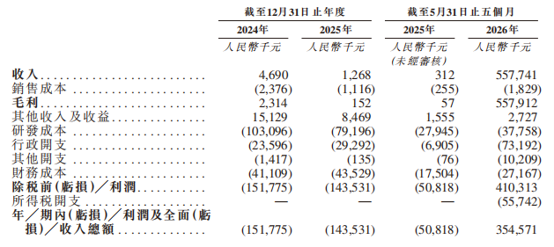
In terms of R&D, R&D expenditure in 2024 was 103 million yuan, 2025 was 79.196 million yuan, and the first five months of 2026 were 37.758 million yuan, an increase of 35.5% over the same period last year. At the same time, the company warned that as clinical trials continue to advance, future R&D expenses will increase significantly, and the average cash consumption rate is expected to reach 4.3 times the 2025 level.
In terms of cash flow, there was a net outflow of 107 million yuan from operating activities in 2024, a net outflow of 81.66 million yuan in 2025, and a net inflow of 420 million yuan due to the receipt of down payments in the first five months of 2026. As of the end of June 2026, the company's cash and cash equivalents were about $344 million, financial assets including profit and loss at fair value were about $301 million, and interest-bearing bank loans of about $477.98 million.
Debt and financing pressures cannot be ignored either. As of May 31, 2026, the company's net debt was 379 million yuan, net current liabilities were 412 million yuan, and equity share redemption liabilities were approximately $996 million. The company's early gambling agreement stipulated that if it fails to complete an eligible IPO before December 31, 2027, investors have the right to redeem the shares based on the principal amount plus 8% annual interest, which added time pressure to the company's listing process.
Pipeline focuses on RAS pathways and synthetic lethality
Established in May 2014, Qinhao Pharmaceutical is a biopharmaceutical company focusing on targeted therapies in the field of oncology. The core has built an innovative drug candidate pipeline developed independently around the RAS signaling pathway and synthetic lethal mechanism.
According to the Zhitong Finance App, the company's pipeline covers eight drug candidates, four of which are in the clinical stage, one (GH31) has received IND approval from the China National Drug Administration and the US FDA, and three others are in the pre-clinical stage. Among them, the core assets GH21 and GH31 together form the two pillars of the company's valuation.
RAS pathway: challenging “untreatable” targets, GH21 is at the top of global progress
The RAS gene is a key regulatory switch for human cell growth. Once mutated, cells will continue to proliferate, eventually leading to tumors. However, due to its smooth protein surface and lack of drug binding sites, RAS has long been regarded as an “untreatable” target. According to Insight Consulting data, in 2025, about 19.0% of the world's solid tumors are associated with RAS mutations. Among them, KRAS mutations account for 90% of all RAS mutations and are the main driver of carcinogenesis. Currently, many KRAS G12C inhibitors have been approved for marketing around the world, but there is still huge unmet demand in the broader field of RAS pathway inhibition.
Qinhao Pharmaceutical's RAS signaling pipeline is represented by GH21, GH55, and the pre-clinical candidate GH58. GH21 is a variant SHP2 inhibitor that ranks second in clinical progress globally. It is currently in phase 2 clinical trials. It is mainly used to treat KRAS G12C mutant solid tumors and third-generation EGFR-TKI-resistant non-small cell lung cancer. As a key node connecting upstream RTK signals to the RAS pathway, SHP2 has no approved drugs in the world. Although it has great potential, it is also very difficult to develop.
The design highlight of GH21 is its allosteric inhibition mechanism - it avoids problems such as off-target effects and poor membrane permeability of traditional active site inhibitors, and exerts an inhibitory effect by binding and stabilizing the inactive conformation of SHP2. In vitro and in vivo studies have shown that GH21 has limited off-target effects on non-target targets, and has good metabolic properties and oral bioavailability.
In the single-drug phase I trial, GH21 showed some initial efficacy signals: NSCLC patients with KRAS G12C mutations had a disease control rate (DCR) of 60% (6/10), patients with EGFR mutation/high expression NSCLC were 57% (4/7), 100% (4/4) of patients with squamous cell carcinoma of the head and neck, and 75% (3/4) of patients with esophageal cancer. In terms of safety, adverse events and various test data indicate that GH21 is well tolerated. However, since the Phase I trial mainly focused on safety exploration, this set of data was not enough to confirm efficacy, and the company's subsequent research and development focus has switched to combination therapy.
According to the consultation data, GH21 can be used in combination with various drugs such as KRAS inhibitors, MEK inhibitors, EGFR-TKI, and PD-1 inhibitors, covering various indications such as NSCLC, colorectal cancer, and pancreatic cancer. Currently, the company is conducting a phase 1b/2 trial (in combination with gesolese jointly developed by Chia Tai Tianqing) and a phase 2 trial (for patients resistant to KRAS G12C inhibitors) in China, and a phase 1b/2 trial exploring a combination plan with osidinib (supplied by AstraZeneca).
However, there are no key data from the above trial: only 5 patients were enrolled in the phase 2 trial and 36 people were enrolled in the osimitinib combination trial, and there were no interim analysis results. The company plans to complete phase 2 trials for drug-resistant patients in the fourth quarter of 2027 and submit conditional new drug marketing applications in 2028, but there is great uncertainty about whether these timelines can be completed on schedule.
It is worth noting that the Drug Administration has strict criteria for conditional approval, requiring drugs to be used to treat diseases that seriously endanger lives and have no effective treatment, and there are data showing their efficacy and clinical value. Whether GH21 can meet this requirement is unclear. Even if approved under the terms of the notes, the company still needs to complete confirmatory clinical trials. If it fails to prove clinical benefit later, it may face the risk of withdrawing the marketing license.
In terms of commercialization, the exclusive license for GH21's global development and commercialization (excluding mainland China, Hong Kong, Macau and Taiwan) has been granted to HUYABIO International, with a total potential transaction value of up to US$282 million.
Among other layouts of the RAS pathway, GH55 is a dual-mechanism ERK1/2 inhibitor. Phase 1 clinical trials of monotherapy are being conducted in China and are expected to be completed in the fourth quarter of 2026. No ERK inhibitors have been approved for marketing in the world. GH55 is an ERK inhibitor candidate with the second fastest clinical progress in China. GH21 and GH55 regulate RAS upstream and downstream signals respectively, and have shown synergistic effects in preclinical studies. The company obtained IND approval for the combination therapy, and completed the first patient enrollment in March 2026. GH58 is a PAN-RAS inhibitor. It is in the pre-clinical stage and plans to submit an IND application in 2028.
According to the Zhitong Finance App, in terms of the market pattern, although no drugs have been approved for the SHP2 target, competition is already quite intense. Novartis's TNO-155 is the world's first high-choice SHP2 variant inhibitor to enter clinical trials, and has advanced to phase 2 for multiple indications; domestically, JAB-3312 combination therapy has entered phase 3 registered clinical trials, and is the first SHP2 inhibitor in the world to enter this stage. Previously, Tianfeng Securities expected it to be approved for listing in China in 2026.
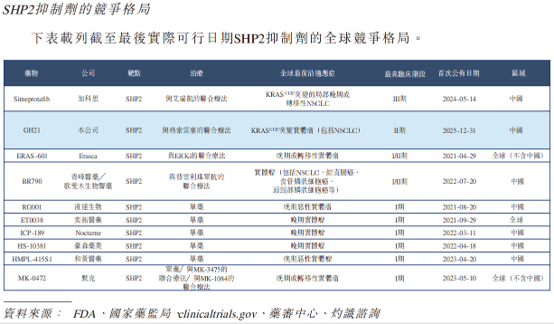
However, the development of SHP2 inhibitors was not easy: previously, another SHP2 variant inhibitor, JAB-3068, had advanced to clinical phase II, but development was terminated in 2023; Revolution's RMC-4630 was also returned by Sanofi, and its combination therapy with the KrasG12C inhibitor Lumakras and the MEK inhibitor Cobimetinib did not achieve the desired results. Furthermore, since SHP2 itself is not a tumor driver, the therapeutic activity of a single agent is limited (for example, Novartis TNO-155 has a phase I objective remission rate of 0%), and almost all subsequent industry development focuses on combined drug use.
With the same target products already entering phase III, although GH21 is second in global clinical progress, the progress advantage is not obvious, and there is great uncertainty about the market pattern.
Synthetic death: The blue ocean circuit has broad prospects, GH31 is endorsed by Gilead
The Zhitong Finance App learned that the mechanism of synthetic death is not complicated. Cells with either of the two genes alone can still survive, but inactivation at the same time causes cell death. Tumor cells naturally have certain genetic pathway defects. Synthetic lethal therapy aims to accurately block the alternative pathways they rely on, selectively kill tumor cells, and preserve normal cells. Although there are many promising targets in this field, only PARP inhibitors have been successfully marketed in more than 10 years, and PARP tracks are already quite crowded, and 7 products have been approved for the market worldwide.
Qinhao Pharmaceutical has laid out a number of drug candidates in the direction of synthetic lethality: GH31 (MAT2A inhibitor, approved by IND in China and the US), GH56 (MTA co-PRMT5 inhibitor, phase 1 clinical), GH2616 (KIF18A inhibitor, phase 1 clinical), and two preclinical varieties. Among them, GH31 and GH56 target the synthetic lethal axis of MTAP deficiency. According to research and consultation data, MTAP deficiency is present in about 15% of solid tumors. The prevalence rate is high in glioblastoma (58%), pancreatic cancer (40%), and adult T-cell leukemia (14%), and about 2% in colorectal cancer, and the market potential is impressive.
In terms of development progress, GH2616 is the third KIF18A inhibitor in the world to enter clinical trials. There is still little clinical data on the MAT2A target targeted by GH31. The domestic equivalent drug ISM3412 completed administration of the first phase I patient in June 2025, and the progress is slightly faster than Qinhao Pharmaceutical. However, GH31 has been successfully authorized to Gilead to receive an initial payment of $80 million and a milestone payment of up to $1.45 billion, which has verified the value of this target to a certain extent.
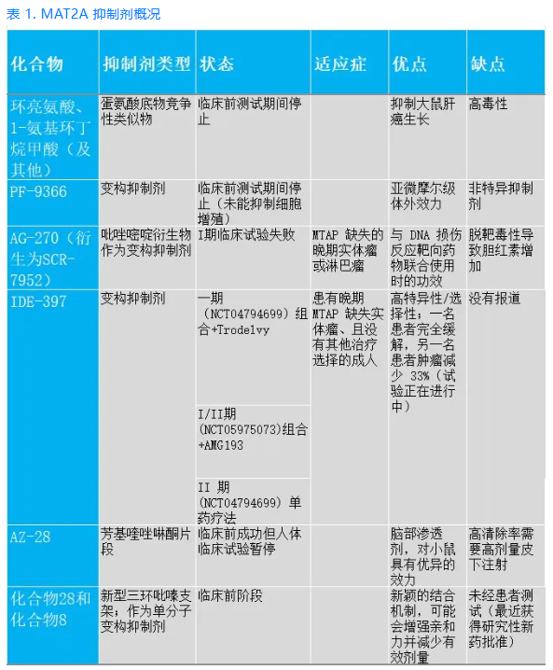
Subsequent companies' research and development in the field of synthetic lethality may focus on GH56 and GH2616. Phase 1 trials of the two drugs are expected to be completed in the second or third quarter of 2027.
Summarize
Overall, Qinhao Pharmaceutical's R&D pipeline has differentiated scarce value — one is the RAS-MAPK pathway, which is a long-term “unformable drug,” and the other is synthetic lethality, which is still at the cutting edge of the blue ocean. Both have stepped on the current core trend of innovative drugs around the world. The core product GH31 has been endorsed by Gilead. GH21 is ranked first in the world in clinical progress. The company's potential is indeed outstanding compared to ordinary 18A innovative pharmaceutical companies.
However, investors also need to carefully assess the risks involved. R&D uncertainty in the RAS pathway and synthetic lethality of the company's layout is high, and the fastest progress is only clinical phase II, which is far from commercialization, and it is expected that it will be difficult to change the continuous loss trend in the short term. Coupled with the time-to-market pressure brought about by gambling agreements, the intensity of the SHP2 target competition pattern, and the uncertainty of regulatory approval, it will still take time and data to verify whether the company can deliver on its pipeline value as scheduled.