
Tariffs Are Reshaping Value Screens for Reliance, Vulcan Materials and Nucor
Tariffs on almost everything that crosses U.S. borders are quietly reshaping where companies source, produce and earn their money, and that ripple effect is starting to show up in valuations. For investors, that creates a window where fear over higher costs and policy uncertainty may leave some domestic oriented value stocks overlooked. This article discusses three such stocks that currently screen well on value, balance sheet strength and dividends, and that are closely tied to these tariff headlines.
The three stocks highlighted below are just a sample, and the full screen surfaced 293 more U.S. headquartered companies with similar value, balance sheet and dividend profiles that are not covered here. To identify and analyze your own highest conviction domestic oriented ideas, head straight into the U.S. Domestic-Oriented Value Stocks screener.
Reliance (RS)
Reliance is a large metal solutions provider and service center that supplies processed alloy, aluminum, stainless steel, carbon steel and other metals to a wide range of industrial customers across the U.S. and Canada, from small machine shops to aerospace and semiconductor manufacturers. Its entire reported revenue of about US$15.8b comes from its Metals Service Centers segment, reflecting a focused model built around distribution and value added processing rather than mining or primary production. The company’s market cap of roughly US$21.6b puts it firmly in large cap territory.
Investors looking at tariffs and reshoring as long term themes may find Reliance worth a closer look. The company buys over 95% of its metal from domestic mills and management has described past tariff periods as positive for U.S. pricing, with recent calls flagging higher gross profit dollars even where aluminum margins are under pressure. At the same time, you are not getting a free ride. Earnings growth is expected to be modest, the stock screens as expensive on cash flow based valuation work, there has been significant insider selling and Reliance still faces cost inflation and trade policy risk. The key question is whether its scale, processing focus and solid governance can keep translating tariff driven pricing power into resilient cash generation.
Tariff driven pricing power at Reliance might be masking what really matters in the numbers. Get the full context on cash generation, valuation work and key trade risks in the DCF valuation analysis for Reliance
Build your own tariff resilient shortlist around Reliance
Reliance and the two other stocks in this article all surfaced from a single Simply Wall St screen, but the real edge comes from creating filters that match how you think about value, balance sheets, risks and dividends. Turn our customisable Screener into your own idea engine, or start with one of our curated Investing Ideas.
Vulcan Materials (VMC)
Vulcan Materials is one of the largest U.S. suppliers of crushed stone, sand, gravel, asphalt mix and ready mixed concrete that go into roads, highways, rail lines and major building projects. Most of its US$8.6b revenue comes from Aggregates at about US$6.5b, with Asphalt at roughly US$1.3b and Concrete near US$800m, partly offset by intersegment sales. The company’s market cap is about US$37.3b, which puts Vulcan firmly in large cap territory.
Vulcan Materials sits in a central position within this tariff story. It owns the rock in the ground on U.S. soil, serves largely domestic infrastructure and data center projects, and has been lifting unit profitability even through periods of high inflation. At the same time, the stock trades on a rich P/E multiple, carries meaningful debt and is tied to public funding and weather sensitive construction cycles. For investors who want tariff resistant exposure to long lived infrastructure, the more interesting questions are around how sustainable current pricing, margins and capital returns really are.
Vulcan Materials’ rich P/E and owned reserves have investors split. However, the real story sits in pricing power, debt and cash returns. Get the full picture in the analysis report for Vulcan Materials

Nucor (NUE)
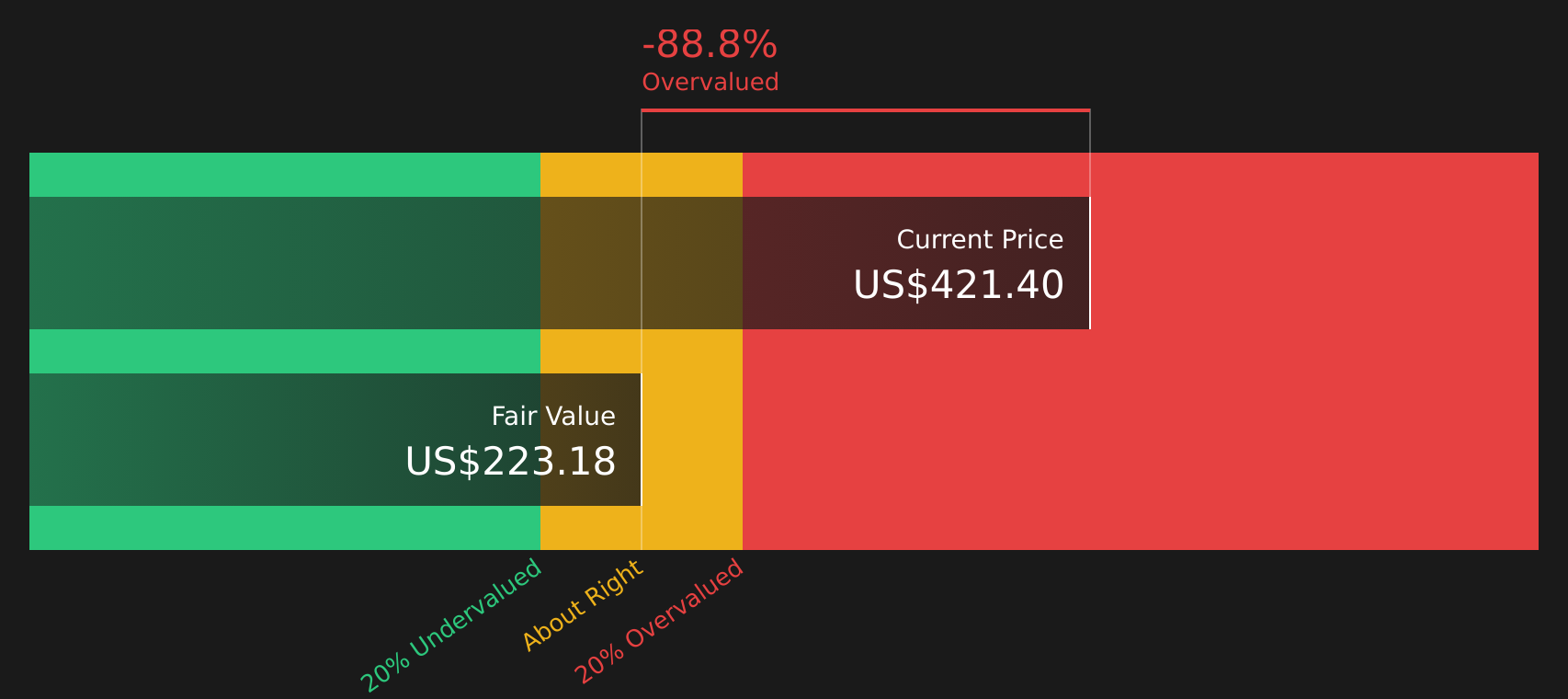
Nucor is one of the largest U.S. steel producers, supplying sheet, bar, plate and a wide range of finished steel products used in construction, autos, energy and industrial projects, alongside its own raw materials operations in scrap and direct reduced iron. The company has a market cap of about US$61.9b, which puts it firmly in large cap territory.
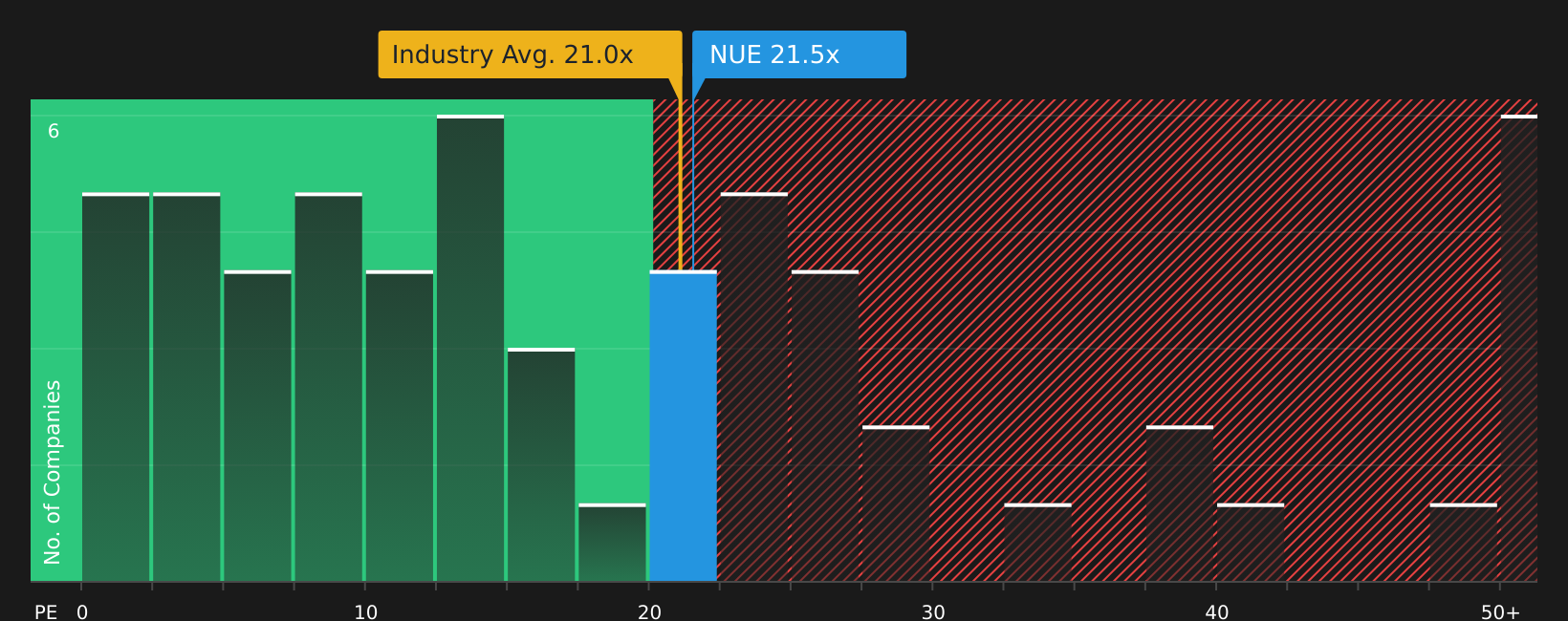
Nucor sits right at the heart of the tariff story, with management openly supporting tougher trade enforcement and reporting lower import share in the U.S. steel market. Tariffs help protect its mostly domestic mills and customers, and recent results showed strong shipments, higher pricing and capital returns through dividends and buybacks. At the same time, investors need to weigh a rich earnings multiple, heavy capex on new mills and execution risk on large projects. The real interest is how this combination of tariff support, growth projects and governance shapes Nucor’s long term cash generation and resilience against cheaper imported steel.
Nucor’s tariff backed projects and rich earnings multiple have many investors focused on the headline story. The tension between those big capex bets and long term cash resilience sits at the heart of the analysis report for Nucor
Seeking Alternatives Before The Crowd Moves
Fresh tariff driven stories move fast and the best entry points can disappear once momentum takes hold. Scan these under the radar ideas before the crowd, act now.
- Spot early movers in income focused plays by zeroing in on companies from the 9 dividend fortresses while yields are still holding up and attention is elsewhere.
- Track where real AI revenue meets discipline by using the 70 profitable AI stocks that aren't just burning cash to focus on businesses that pair growth projects with actual profits rather than constant cash burn.
- Position ahead of the next infrastructure build cycle by scanning the 36 power grid technology and infrastructure stocks and find companies geared to grid upgrades while they are still flying under most radars.
This article by Simply Wall St is general in nature. We provide commentary based on historical data and analyst forecasts only using an unbiased methodology and our articles are not intended to be financial advice. It does not constitute a recommendation to buy or sell any stock, and does not take account of your objectives, or your financial situation. We aim to bring you long-term focused analysis driven by fundamental data. Note that our analysis may not factor in the latest price-sensitive company announcements or qualitative material. Simply Wall St has no position in any stocks mentioned.
Have feedback on this article? Concerned about the content? Get in touch with us directly. Alternatively, email editorial-team@simplywallst.com