
The stock price was immediately reported, but at one point fell below net assets. Will the repurchase be Chunli Medical (01858)'s good medicine to boost confidence?
Since the stock price hit a phased high of HK$20.42 on November 3 last year, the Hong Kong stock price of Chunli Healthcare (01858) began a “continuous decline” pattern. In particular, since 2026, Chunli Medical's performance in the Hong Kong stock market has highlighted “whether performance is good or not, there are penalties for poor performance.”
Why is the stock price getting farther and farther away from fundamental performance?
Since this year, whether it is the 2025 report or the 26Q1 financial report, Chunli Medical has shown steady fundamental characteristics.
Judging from the annual report data, in 2025, the company achieved operating income of 1.05 billion yuan, a year-on-year increase of 29.8%; net profit to mother of 270 million yuan, an increase of 118%; and net profit without deductions to mother reached a year-on-year growth rate of 170%, reaching 256 million yuan.
The biggest highlight of this performance is that Chunli Medical's current net profit growth rate significantly exceeded the growth rate of its net profit to mother, indicating that the company got rid of one-time profit and loss income support on the profit side to a certain extent, and improvements in the main business have once again become the key to its profit growth.
On the other hand of profit growth, it is also important that the company achieved significant results in reducing costs and increasing efficiency. While Chunli Medical maintained a relatively high share of R&D investment of 11.33% in 2025, the total cost side was 239 million yuan, accounting for 22.86% of current revenue, a year-on-year decrease of 31.39%. Among them, the 17.51% decrease in sales expenses shows that an important effect of the company's cost reduction and efficiency is the continuous optimization of the cost structure.
On the business side, overseas revenue increased 38.2% year-on-year in 2025, accounting for 46.7%. Moreover, this performance continued into the 26Q1 quarter. The company's overseas business continued to grow rapidly during the quarter, continued to break through in the European, American and Southeast Asian markets, and high gross profit characteristics boosted overall profit.
According to the 26Q1 financial report, due to the restructuring of the price system and seasonal adjustments in the number of terminal surgeries after the contract was renewed, the company's current revenue was 217 million yuan, a slight decrease of 5.60% over the previous year. Despite short-term phased fluctuations in revenue, in terms of profit quality, the company's current gross margin was 66.26%, up 3.44 percentage points from month to month; the corresponding net profit to mother was 61.711 million yuan, an increase of 6.27% over the previous year, and an increase of 11.71% after deducting non-net profit.
Furthermore, in terms of cash flow, thanks to reasonable control of operating expenses and optimization of capital operation efficiency, the company's net cash flow from current operating activities was 10.9281 million yuan, a significant improvement over the net outflow of 75.3436 million yuan in the same period last year.
However, the secondary market does not seem to buy Chunli Medical's steady fundamental performance.
The Zhitong Finance App observed that after the market on January 29 this year, Chunli Medical announced its 2025 annual performance advance. The company's net profit for the year 2025 is expected to rise sharply by 96.01% to 130.41% year on year, and predicts that the growth rate of its net profit deducted from mother for the current period will significantly exceed the growth rate of its net profit to mother. However, feedback from the secondary market was lackluster. The day after the performance forecast was released, the company's Hong Kong stock price pulled out a large negative line and closed down 2.87%.
After the market on February 27, after Chunli Medical released the official performance report for the 2025 report, the stock price fell 4.11% the next day, and emerged from “four consecutive negative results.”
On the evening of April 29 this year, Chunli Medical issued an announcement announcing a 5.60% year-on-year decline in revenue for the 26Q1 quarter. The company's stock price plummeted 10.96% the next day. The market value evaporated by more than HK$800 million in a single day, and the stock price fell by about 24% within three trading days.
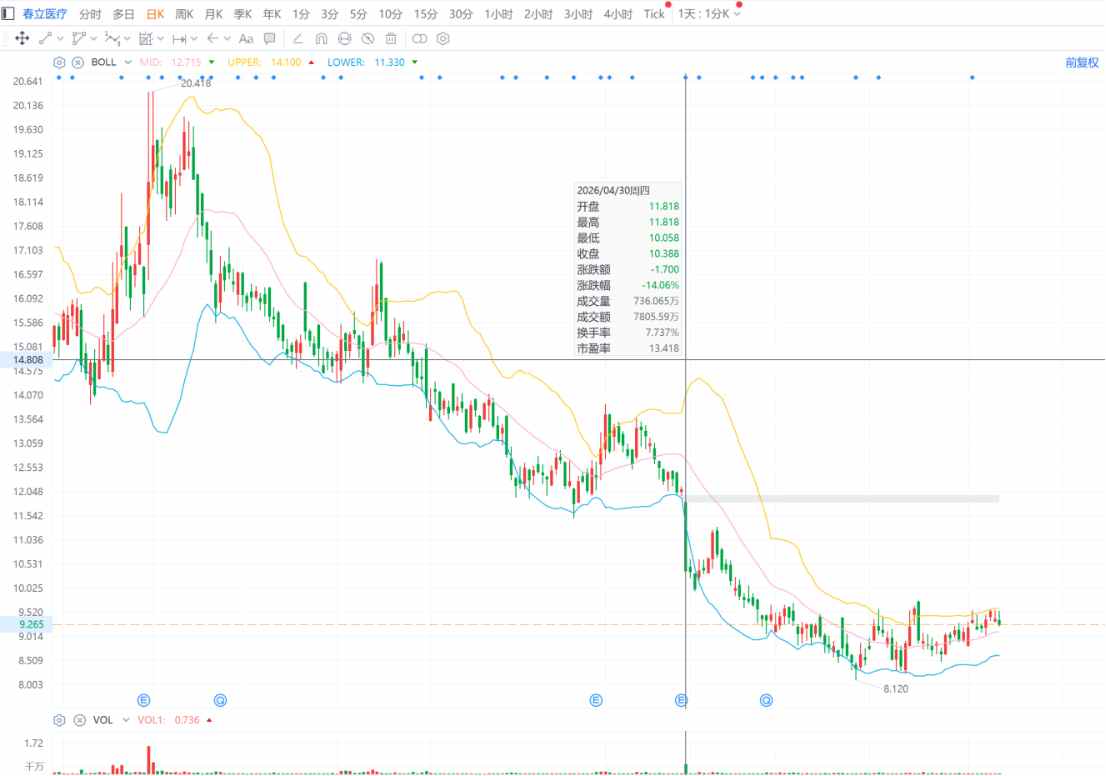
Amidst the continuous decline in the market, Chunli Medical's stock price fell all the way down and hit HK$8.12 in the intraday period on June 26, breaking its new low during the year. The stock price once fell below net assets per share.
As of August 12, the market value of Chunli Medical's Hong Kong stock had fallen to around HK$3.5 billion. In fact, it is far below the Hong Kong Stock Connect Guarantee threshold. However, since the company is listed on both AH, there is no market capitalization requirement to enter Hong Kong Stock Connect directly, and it will not be removed. However, the long-term decline has brought about a marked shift in market sentiment, and differences in Hong Kong Stock Connect funding are gradually increasing. When Chunli Medical, which is in a state of low consolidation, will emerge from a reversal of the market naturally become the focus of investors' attention.
Would a buyback be a good medicine?
From a valuation perspective, after a long period of falling stock prices, Chunli Medical's overall valuation has once again fallen below the industry average. According to the data, up to now, the company's PE price-earnings ratio is only 11.33 times, which is 17.51 times the PE level of the industry average. It is also 16% lower than the company's average PE valuation in the past year, which is clearly underestimated.
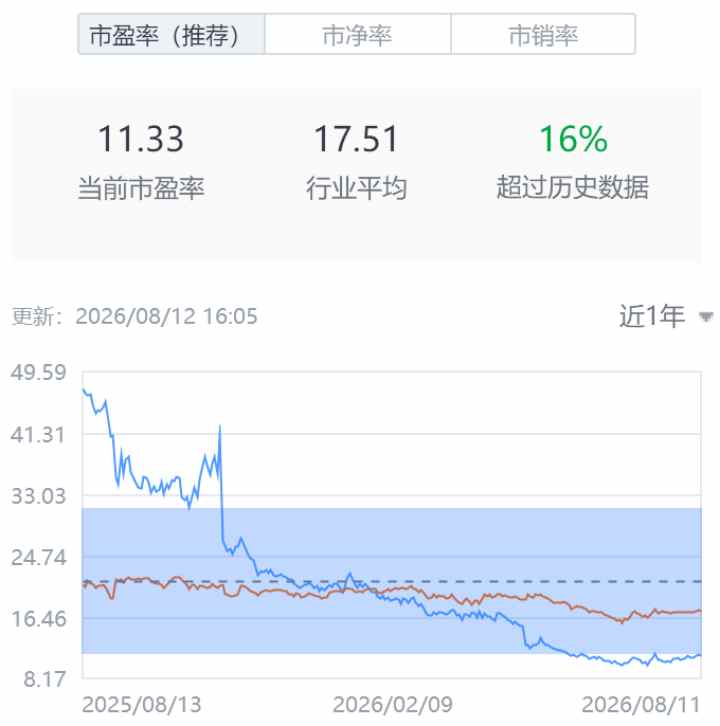
Generally speaking, under-performing targets are often an important choice for Hong Kong Stock Connect funding. Previously, there were quite a few cases where Hong Kong Stock Connect funds had undercut such targets, but with regard to the current Chunli Healthcare, there are clear differences in Hong Kong Stock Connect funding attitudes within the market.
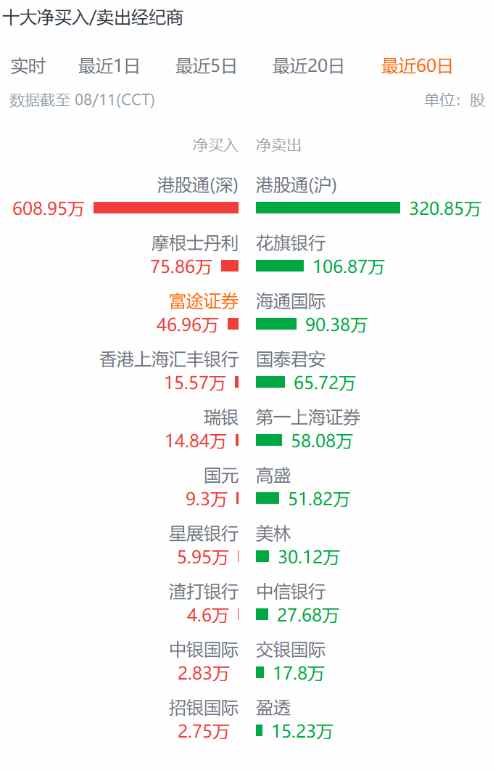
According to the Zhitong Finance App, in the past 60 days, Chunli Medical's top three net buyers were Hong Kong Stock Connect (Shenzhen), Morgan Stanley, and Futu Securities, with net purchases of 6.0895 million shares, 758,600 shares and 469,600 shares respectively; the top three sellers were Hong Kong Stock Connect (Shanghai), Citibank, and Haitong International, which sold 3.208,500 shares, and 903,800 shares respectively.
It is easy to see that the total net trading volume of the two major Hong Kong Stock Connect channels reached 9.298 million shares during the period, accounting for 74.39% of the total net trading volume of the top three institutions. Obviously, the Hong Kong Stock Connect channel was the main trading capital in Chunli Medical Center during this period. However, the two major Hong Kong Stock Exchange channels apparently had major differences in trading opinions.
This disagreement also shows the overall shareholding ratio of Hong Kong Stock Connect funds to Chunli Medical.
From the end of May to the end of June this year, as Chunli Healthcare's stock price continued to fluctuate and fall, the intention to buy Hong Kong Stock Connect funds was quite obvious. Within the range, Hong Kong Stock Connect's shareholding ratio increased as the company's stock price fell, reflecting the typical left-hand trading logic of Hong Kong Stock Connect capital. As of June 29 this year, Hong Kong Stock Connect's shareholding ratio in Chunli Healthcare reached a high of 48%.
However, after that, as Chunli Medical's stock price began to fluctuate sideways at the bottom, Hong Kong Stock Connect's shareholding ratio also slowly declined in the midst of the shock. On August 3, the shareholding ratio fell to 47.26%, which showed that the Hong Kong Stock Connect capital in the market was moving from consistency to trading differences. Also, based on holding costs, Hong Kong Stock Connect's overall capital is still in a state of loss.
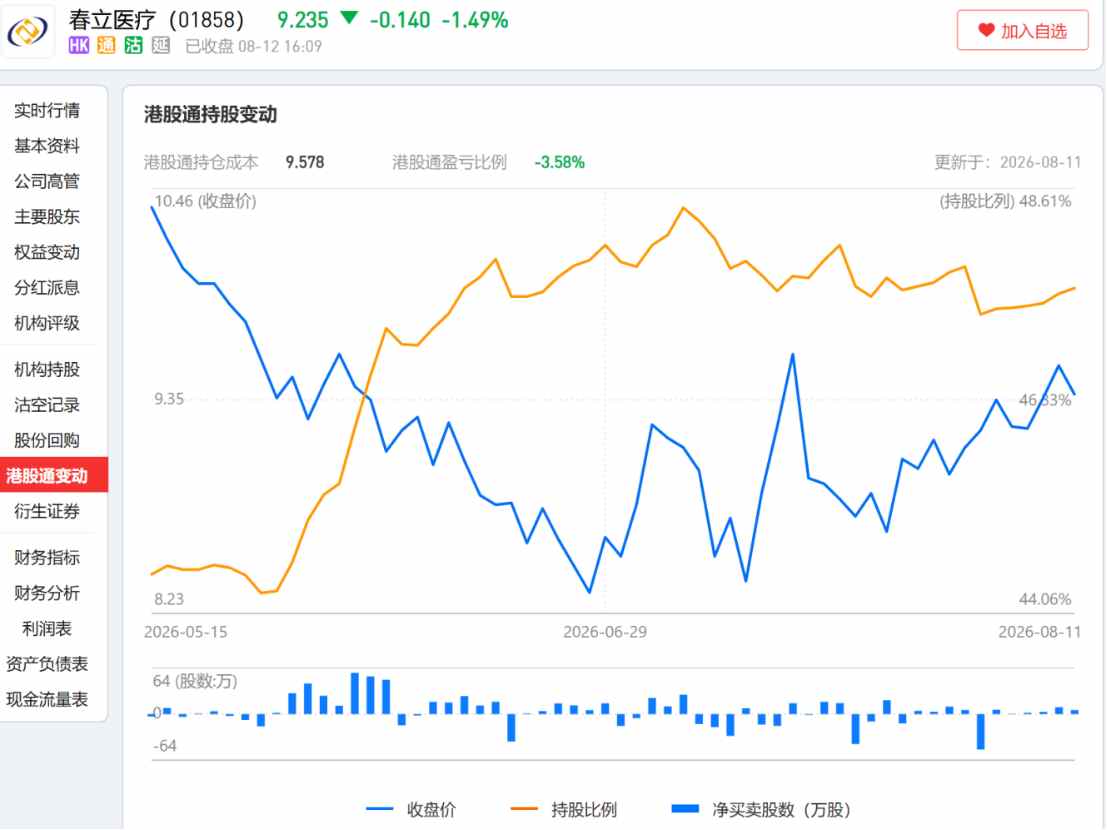
From the current trading situation in Chunli Medical Center, it is easy to see that Hong Kong Stock Connect funds have been “trapped” in the market since they accepted chips in the early stages. Since April 30, Chunli Healthcare's Hong Kong stock market has continued to show that it has consolidated at a low level, and the current state of consolidation at a low level have all shown the weakness of the funds it has received outside the market, which in turn reflects the lack of confidence of foreign currency holders. However, this probably has something to do with Chunli Medical's Hong Kong stock repurchase situation.
As mentioned earlier, Chunli Medical's fundamentals have improved at an accelerated pace in recent years and have continued to be steady. Currently, the company's net cash on book exceeds 2 billion yuan. However, Chunli Medical, which has a low stock price, has not yet implemented any stock repurchase plan. The last round of stock repurchases since its listing was limited to 2022.
On the other hand, Elken Healthcare, which mainly focuses on the joint business, only stepped down on maintenance at the end of June this year, but since the end of June, the company's stock price has rebounded in stages, and the range stock price has risen 17%. In fact, in the face of the same market environment, Elken Medical has a certain gap from Chunli Medical in terms of financial performance and overseas performance, but one important reason why investors in the secondary market are more willing to pay for it may be due to Elken Medical's repurchase efforts. The Zhitong Finance App learned that since the beginning of this year, Elken Medical has repurchased 37 times, with a cumulative total of 478.22 million shares repurchased, involving HK$264 million.
Generally speaking, choosing to buy back when the stock price is low is not only beneficial to the achievement of the company's financial and strategic goals, but also has a short-term “market protection” effect when the market is weak, which is conducive to boosting market confidence. From this perspective, for Chunli Medical, which has solid fundamentals, taking the opportunity to buy back may be a good medicine to boost market confidence in its current market situation.