
How Investors Are Reacting To Coty (COTY) Ahead Of Lowered EPS Estimates And Revenue Outlook
- In recent weeks, Wall Street analysts projected that Coty will post a quarterly loss with revenues falling year over year, and they have lowered consensus EPS estimates ahead of the upcoming earnings release.
- This reassessment, built on detailed segment and regional forecasts, highlights how sensitive Coty’s outlook is to even modest shifts in analyst expectations.
- Now, we’ll examine how these lowered EPS forecasts ahead of earnings may reshape Coty’s existing investment narrative and risk profile.
Uncover the next big thing with 18 elite penny stocks that balance risk and reward.
Coty Investment Narrative Recap
To stay invested in Coty, you have to believe that its fragrance and beauty brands can eventually turn recurring net losses into sustainable profitability, despite ongoing volatility. The recent shift to a projected quarterly loss and lower EPS estimates directly pressures the key near term catalyst of margin recovery, while also sharpening focus on the biggest current risk: that weak top line trends and inventory issues prolong Coty’s path back to consistent earnings.
The recent Gucci Beauty license transition to Kering for about US$400,000,000 is especially relevant here. The planned use of proceeds for debt reduction and core brand investment sits at the heart of Coty’s catalyst story, but the new loss forecasts raise questions about how quickly that balance sheet relief and reinvestment can translate into improved earnings power and reduced financial risk.
Yet, against this backdrop, one risk investors should be aware of is how Coty’s elevated debt and refinancing needs could...
Read the full narrative on Coty (it's free!)
Coty's narrative projects $5.9 billion revenue and $411.8 million earnings by 2029. This implies essentially flat yearly revenue growth and a $957.6 million earnings increase from -$545.8 million today.
Uncover how Coty's forecasts yield a $3.17 fair value, a 11% upside to its current price.
Exploring Other Perspectives
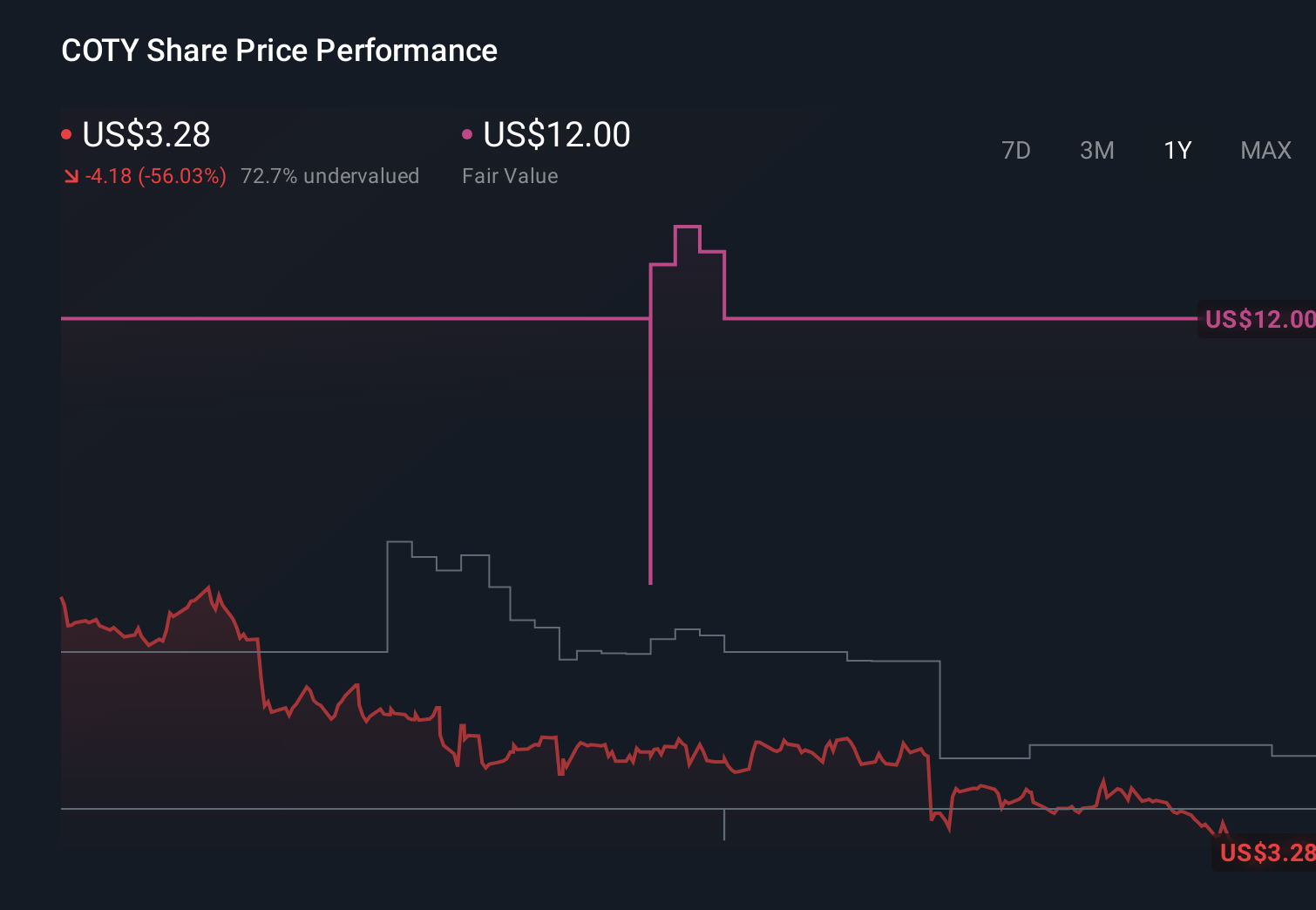
Some of the lowest analysts were already cautious, assuming roughly flat revenues near US$5.8 billion and only US$239.5 million of earnings by 2029, so you should expect that this fresh EPS downgrade might push those already pessimistic views even further, especially if you worry about high debt tightening Coty’s flexibility.
Explore 5 other fair value estimates on Coty - why the stock might be worth over 3x more than the current price!
Decide For Yourself
Don't just follow the ticker - dig into the data and build a conviction that's truly your own.
- A great starting point for your Coty research is our analysis highlighting 3 key rewards that could impact your investment decision.
- Our free Coty research report provides a comprehensive fundamental analysis summarized in a single visual - the Snowflake - making it easy to evaluate Coty's overall financial health at a glance.
Curious About Other Options?
Our top stock finds are flying under the radar-for now. Get in early:
- AI is about to change healthcare. These 44 stocks are working on everything from early diagnostics to drug discovery. The best part - they are all under $10b in market cap - there's still time to get in early.
- Invest in the nuclear renaissance through our list of 91 elite nuclear energy infrastructure plays powering the global AI revolution.
- Find 50 companies with promising cash flow potential yet trading below their fair value.
This article by Simply Wall St is general in nature. We provide commentary based on historical data and analyst forecasts only using an unbiased methodology and our articles are not intended to be financial advice. It does not constitute a recommendation to buy or sell any stock, and does not take account of your objectives, or your financial situation. We aim to bring you long-term focused analysis driven by fundamental data. Note that our analysis may not factor in the latest price-sensitive company announcements or qualitative material. Simply Wall St has no position in any stocks mentioned.
Have feedback on this article? Concerned about the content? Get in touch with us directly. Alternatively, email editorial-team@simplywallst.com