
Coles Stock And Australia Delivery Cost Shift Put Logistics Peers In Focus
Australia’s new safety net for gig delivery workers is shaking up how the logistics and delivery chain is priced, staffed and run. Higher mandated earnings for riders and drivers could squeeze some platforms, while leaving room for other logistics stocks to stand out. This article looks at three Australian listed Non Gig Logistics & Delivery Services stocks that are exposed to this news and explores why some investors are watching them closely right now.
The three stocks below are just a starting sample from this theme, and the full screen surfaced 8 more Australian logistics and delivery companies with equally compelling narratives that are not covered here. To identify and analyze those extra high-conviction ideas straight away, head into the Non-Gig Logistics & Delivery Services screener.
Coles Group (ASX:COL)
Overview: Coles Group is one of Australia’s largest supermarket retailers, running Coles supermarkets, liquor chains such as Liquorland and Vintage Cellars, online grocery and liquor delivery, plus financial services and the flybuys loyalty program.
Operations: Coles generates the bulk of its revenue from supermarkets at about A$40.7b, with liquor contributing A$3.6b and other activities A$610m.
Market Cap: A$31.5b
Coles Group sits at the crossroads of supermarket retail, in house delivery and liquor, so the new Fair Work safety net for gig delivery workers is worth your attention. Coles relies on enterprise agreements and a more traditional workforce, which management has previously said can shield it from some external wage pressures. Ongoing automation and cost saving programs aim to offset wage inflation. At the same time, you are dealing with a high P/E, slower revenue growth and a dividend that is not fully covered by earnings, plus potential acquisition ambitions like the Greencross talks. For investors watching how gig delivery costs and online grocery evolve, Coles offers a detailed story worth unpacking further.
Coles Group’s high P/E, automation push and enterprise workforce could be masking where the real pressure and opportunity sit in this shift away from gig delivery. Get the analysis report for Coles Group to see what might be missing from the story

Build your own logistics and retail shortlist
Coles Group and the other two stocks here all came from a single Simply Wall St screen, but the real opportunity is in tailoring filters to your own approach. Use our flexible Screener to mix valuation, growth, balance sheet and dividend criteria, or tap into pre-built themes through our Investing Ideas.
Lindsay Australia (ASX:LAU)
Overview: Lindsay Australia provides end to end transport, logistics and rural supply services for food producers and horticulture businesses, running refrigerated linehaul, warehousing and value added services like ripening, fumigation and export handling alongside farm inputs such as seed, chemicals and irrigation equipment.
Operations: Lindsay Australia generates most of its revenue from Transport at about A$678 million, with Rural contributing about A$179 million, Hunters A$118 million, small Corporate revenue and inter segment eliminations bringing total Australian revenue to about A$961 million.
Market Cap: A$247 million
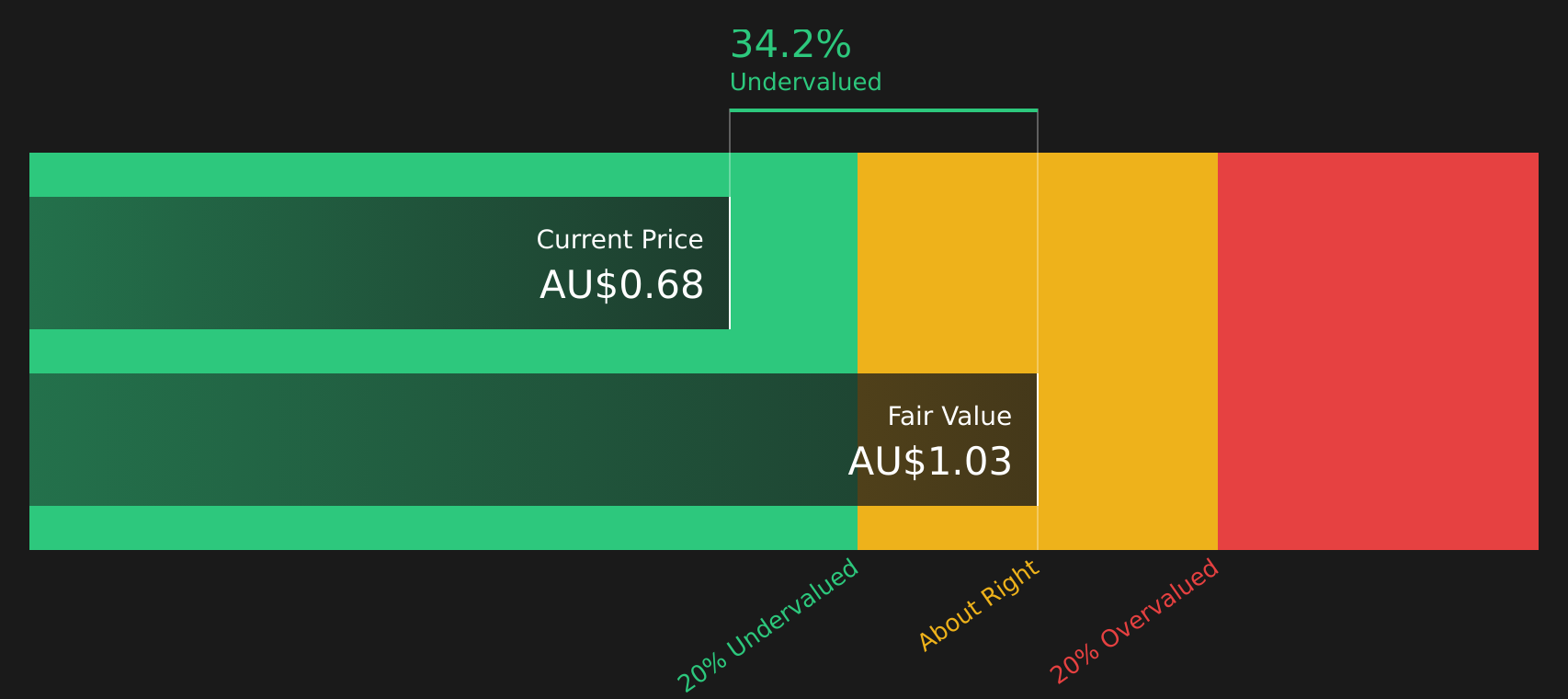
Lindsay Australia sits close to the regulated end of food and fresh produce logistics, with structured fleets and facilities rather than gig couriers, which is why the Fair Work safety net has put it on more radars. The stock screens as meaningfully below some fair value estimates, with analysts expecting strong earnings growth, yet net profit margins have softened and the balance sheet leans on external debt with weaker interest cover. Management is pushing a transformation program focused on larger truck combinations, new depots in Adelaide and Perth, and using fewer subcontractors to improve efficiency. For investors who want exposure to food freight as gig delivery costs rise, the key question is whether this efficiency push can offset funding and margin risks over time.
Lindsay Australia appears to be an efficiency story that the market has not fully priced in yet, with food freight, depot expansion and margin pressure all colliding. Get the 3 key rewards and 3 important warning signs (1 is major!)
CTI Logistics (ASX:CLX)
Overview: CTI Logistics is an Australian transport and logistics company that runs courier and taxi trucks, heavy haulage and freight forwarding, warehousing and contract logistics, temperature controlled storage and delivery, plus security, records management and property rental services.
Operations: CTI Logistics generates most of its revenue from Transport at about A$243 million and Logistics at about A$131 million, with smaller contributions from Property and Other activities, all from Australia.
Market Cap: A$207 million
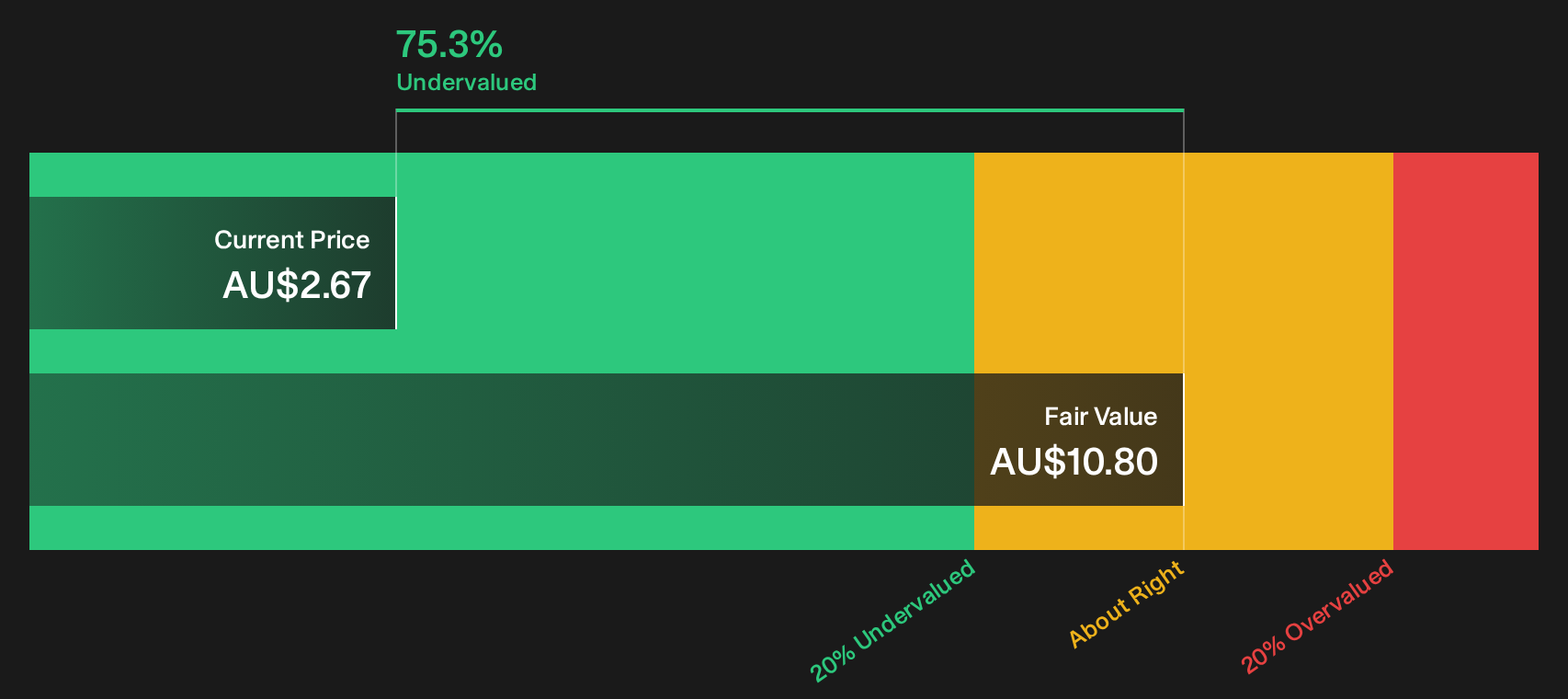
CTI Logistics stands out in this non gig logistics theme because its core business is employed and contracted transport and warehousing. Any rise in costs for gig delivery rivals can narrow the competitive gap in last mile services. The stock is priced at a discount to several valuation estimates. Earnings growth and improving margins indicate a business that has been building scale. At the same time, investors need to weigh concentrated Australian exposure, an unstable dividend record and a capital structure that leans on external borrowing against that profile. For readers looking at how regulation is reshaping delivery economics, CTI Logistics provides exposure to that shift without relying on gig models.
CTI Logistics appears to be an employed-fleet story that could be quietly decoupling from gig-heavy rivals as regulation takes effect. Get the 4 key rewards and 1 important warning sign to see whether that margin and leverage mix is a hidden edge or a warning sign investors are overlooking.
Curious To Seek Fresh Alternatives?
Some of the most interesting ideas often move from quiet to breakout before most investors react. Keep up with the momentum while it matters and get in early.
- Spot strong cash generators before they hit the spotlight and review the curated 10 high quality undervalued stocks that still look under the radar for now.
- Ride structural trends instead of chasing late movers by scanning the hand picked 38 power grid technology and infrastructure stocks supporting critical energy and infrastructure momentum.
- Track potential earnings resilience as conditions shift by checking the curated 10 resilient stocks with low risk scores that focus on durable balance sheets and disciplined risk profiles.
This article by Simply Wall St is general in nature. We provide commentary based on historical data and analyst forecasts only using an unbiased methodology and our articles are not intended to be financial advice. It does not constitute a recommendation to buy or sell any stock, and does not take account of your objectives, or your financial situation. We aim to bring you long-term focused analysis driven by fundamental data. Note that our analysis may not factor in the latest price-sensitive company announcements or qualitative material. Simply Wall St has no position in any stocks mentioned.
Have feedback on this article? Concerned about the content? Get in touch with us directly. Alternatively, email editorial-team@simplywallst.com