
The commercialization of the core products behind Yingjing in the US was blocked. How did Xianruida Medical-B (06669)'s stock price drop reverse?
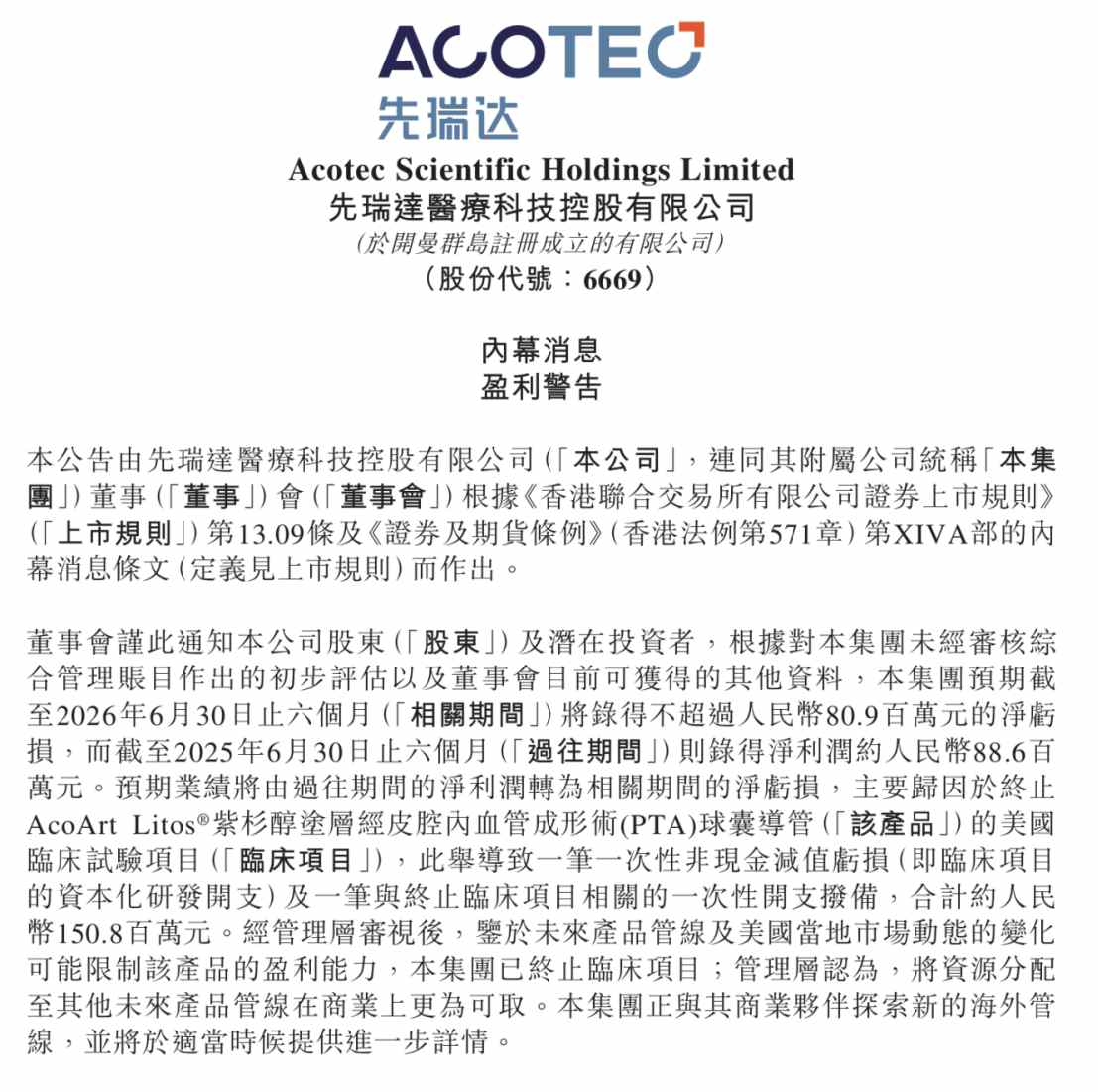
After the market on August 12, Xianruida Medical-B (06669) disclosed the financial results announcement for the 26H1 fiscal year. The company stated in the announcement that it expects a net loss of no more than RMB 80.9 million for the six months ending June 30, 2026, while net profit for the same period last year was about RMB 88.6 million, changing from profit to loss over the same period last year.
The company mainly attributed this fiscal quarter's profit to loss due to the termination of the US clinical trial program for ACoArt Litos® paclitaxel coated percutaneous endothelial angioplasty (PTA) balloon catheters. The move resulted in a one-time non-cash impairment loss and a one-time provision relating to the termination of the clinical program, totaling approximately RMB 151 million.
The Zhitong Finance App observed that due to this negative news, the company's stock price opened low and went low on August 13, and the stock price drop widened to more than 10% within an hour of opening. Although the stock price rebounded slightly throughout the day, it remained below the daily average. The biggest stock price drop during the day reached 18.26%, and finally rebounded slightly at the end of the session, closing down 15.33%.
From a high point during the year to a “slump” in stock prices
Due to the latest disclosure, the market was greatly affected by negative losses. After the company's stock price fell sharply by more than 15% on August 13, Xianruida Healthcare's stock price fell again in early trading on August 14. At one point, the intraday decline reached 5.45%, and the stock price fell as low as HK$6.16, setting a new low during the year.
Looking at the long-term timeline, the company's stock price has fallen by more than 50% during this year. Based on the January 26 phased high of HK$15.32, up to now, the biggest drop in the company's stock price during the year has reached 59.79%.
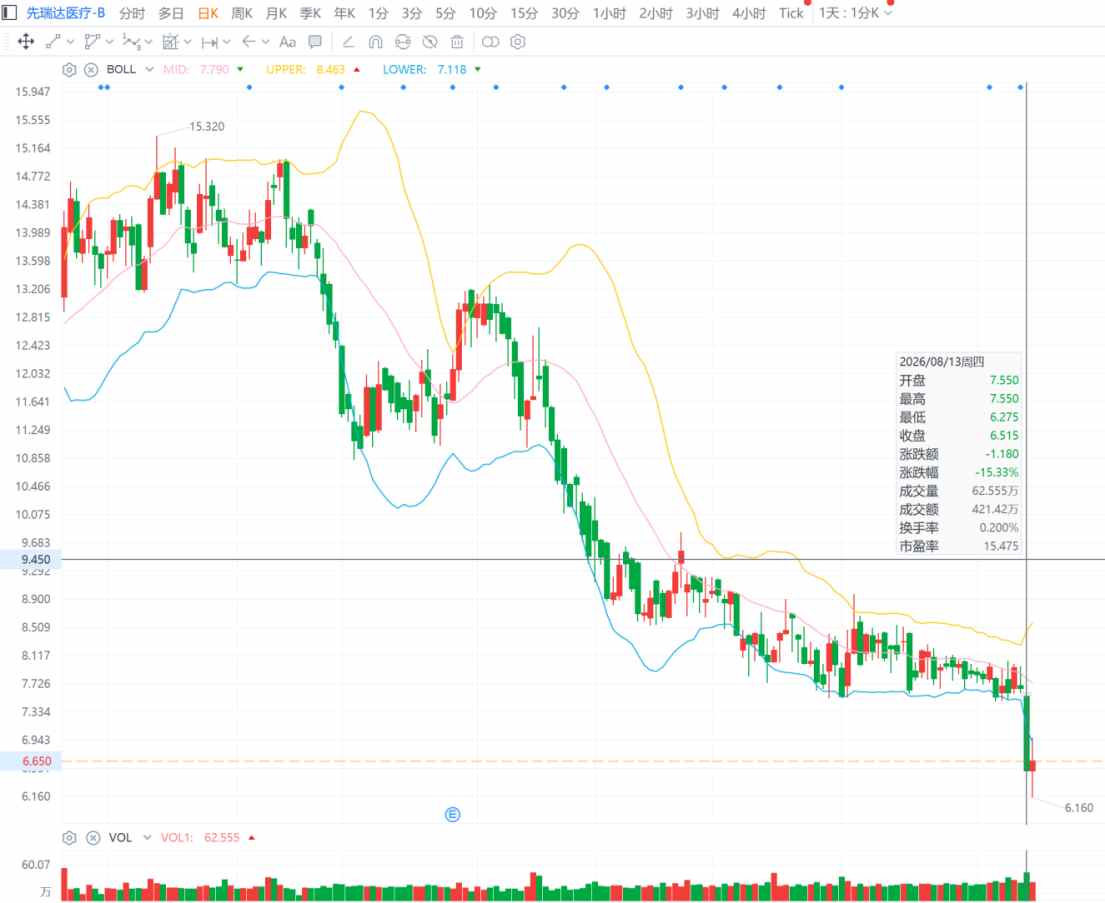
Looking at the market, since the beginning of this year, Xianruida Healthcare's stock price has experienced three key market technology points, driven by various events.
First of all, from January to early February of this year, from a technical point of view, the stock price of Xianruida Healthcare showed a volatile peak. At that time, the company's stock price basically fluctuated and rose around the BOLL line. However, at this time, the company's stock intraday trading volume shrank significantly compared to the second half of last year. This shows that the buyer power in Xianruida's market weakened at the time, and the upward momentum was insufficient.
Judging from the core driving events, the launch of the sixth batch of domestic procurement of high-value medical consumables is an important driver affecting the mood in the market.
On January 13 of this year, the sixth batch of centralized procurement of high-value medical consumables organized by the state was opened in Tianjin. This is the first national collection in 2026. A total of 496 products from 227 companies participated in the bidding. In the end, 440 products from 202 companies were successfully selected, with a winning rate of about 89%, setting a new high for the national procurement of consumables. Among them, 32 drug-coated balloon companies bid for 42 products and selected all of them, achieving “zero elimination”.
With the launch of domestic booties, Xianruida experienced a favorable empty window period from February to March of this year. During this period, some investors chose to profitably exit the market at a high stock price. Combined with the turbulence in the Hong Kong stock market at the time due to external circumstances, Xianruida's stock price was affected by this and came out of a clear technical correction. From February 23 to March 5, the company's stock price experienced a wave of “nine consecutive losses” and basically followed the BOLL offline trajectory. It wasn't until March 26 that the company officially disclosed its 2025 results announcement that there was a brief improvement.
On March 26, Xianruida Healthcare released its 2025 annual report. Among them, the company's current net profit increased 128% year-on-year to 119 million yuan, showing impressive performance. However, the favorable increase in net profit in financial reports did not drive the rebound growth of Xianruida's stock price.
Innovation overseas has been the core catalyst that has supported Xianruida's valuation in recent years. Especially after Boston Scientific was introduced as the controlling shareholder, the trend of going overseas became one of the most popular focuses of investors' attention in the company's financial reports. However, according to the 2025 financial report, Xianruida's revenue in countries and regions other than mainland China has dropped from 25.201 million yuan in 2024 to 19.163 million yuan. Furthermore, in the company's remaining research pipeline, the only major product facing the European and American markets is AcoStream II (peripheral suction system), which has raised concerns in the short term about the business collaboration between the company and the controlling shareholder Poco and the company's continued overseas prospects, and ultimately led to a sharp decline in the company's stock price since April this year.
The Zhitong Finance App observed that in April, Xianruida's stock price began to weaken markedly. The continuous decline from April 8 to May 6 reflected to a certain extent the spread of pessimism in the market.
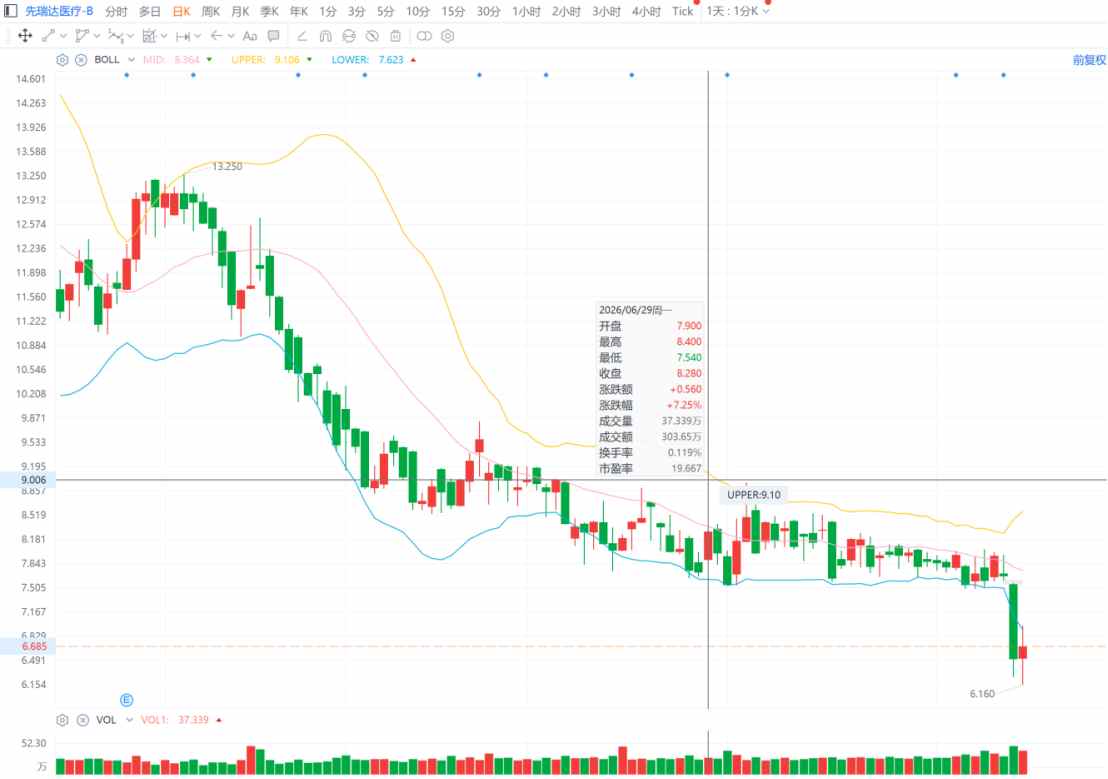
At the same time, the fluctuating decline in the company's stock price was also related to the market capital preferences and liquidity factors at the time.
The Zhitong Finance App observed that in the past year, Nanxia Capital's overall holdings in Hong Kong pharmaceutical stocks increased by about 2 percentage points. As of March of this year, in the Hong Kong Stock Exchange, there are 250 individual stocks with a shareholding ratio of more than 20% in the Hong Kong Stock Exchange. Among them, the healthcare industry is at the top of the list with 54.
However, for Hong Kong pharmaceutical stocks, southbound capital is both a “ballast stone” and a “double-edged sword.” In April and May of this year, the shift in south-bound capital sector preferences became more obvious: the Internet and banking sectors attracted recent marginal increases in southbound capital, while the pharmaceutical sector's share of total transactions on the main board of the Hong Kong Stock Exchange fell to a low level from 7% at the beginning of the year.
However, in this market environment, Xianruida once again welcomed the “first step” in July and August of this year.
FDA policy “backstabbing”, core varieties discontinued clinical trials
In the domestic innovative pharmaceutical device collection environment in recent years, “going overseas” has almost become a “must option” for domestic innovative device companies. And “going overseas” is a key element that has supported Xianruida Healthcare's long-term valuation.
The Zhitong Finance App learned that the collaboration between Xianruida and Boston Science began with AcoArt Litos®, the world's first subknee medicine ball under Xianruida. This product is a paclitaxel drug-coated balloon (DCB) used to treat lower knee artery disease. It has been certified as a “breakthrough device” by the US FDA. It is the world's first subknee DCB treatment product approved for marketing based on multi-center randomized controlled clinical trial results.
Thanks to the innovative nature of this product and its effective clinical data, Senrida was recognized by Boston Scientific. In 2022, Boston Scientific announced the acquisition of approximately 65% of Senrida's shares for $523 million (completed in early 2023).
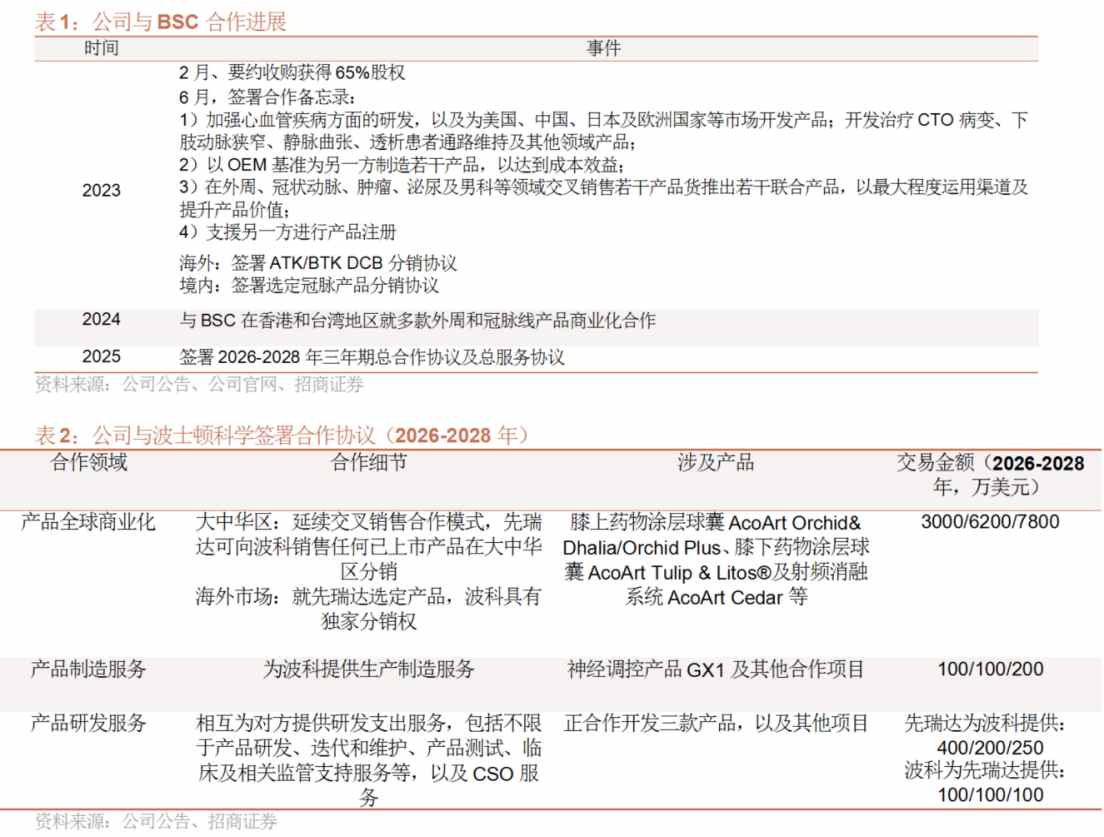
Judging from the above cooperation agreement, although Xianruida and Boston Scientific signed an overseas distribution agreement as early as 2023, the subsequent 2023-2024 overseas revenue share did not exceed 5%, indicating that the synergy effect was not released overnight. Under these circumstances, the market is also pinning more hope on ACoArt Litos®, a product certified as a “breakthrough medical device” by the US FDA.
However, in July of this year, the US CMS issued the final rules for the 2027 forward-looking hospital payment system, which plans to abolish the NTAP alternative path for breakthrough medical devices from FY2028. This cuts the key commercial transition bridge for medical devices with breakthrough FDA certification. For Xianruida, even if ACoArt Litos® was later approved in the US, it faced the dilemma of not being able to obtain sufficient medical insurance reimbursement support after marketing, and commercialization prospects were greatly affected.
Meanwhile, in the 7 years from 2019 to 2026, overseas competition has not stopped. For example, Medtronic's IN.PACT series (paclitaxel DCB) continues to accumulate long-term data on below-knee indications. Follow-up data for 3 and 5 years has been released in 2024-2025, and the clinical evidence chain has been completed; although Boston Scientific is the controlling shareholder of Xianruida, its own Ranger series is also iterating, launching a version with lower dosage and better excipients, and updated medical insurance reimbursement data in 2025; in addition, BD's Lutonix series is also being iterated and released next-generation product data for lower knee lesions in 2025.
Furthermore, as Xianruida's main competitors overseas, Medtronic and Boston Scientific already have a clear monopoly position in overseas related fields, and their products have mature medical insurance reimbursement codes and payment channels, and are not affected by the abolition of NTAP.
The above multiple factors may be an important reason why Xianruida stopped clinical trials of ACoArt Litos® in the US. However, this decision also caused Xianruida Healthcare to bear one-time non-cash impairment losses and a one-time expense provision related to this, totaling about 151 million yuan, exceeding the company's net profit of 119 million yuan for the whole of last year.