
Do These 3 Checks Before Buying Fiera Capital Corporation (TSE:FSZ) For Its Upcoming Dividend
Some investors rely on dividends for growing their wealth, and if you're one of those dividend sleuths, you might be intrigued to know that Fiera Capital Corporation (TSE:FSZ) is about to go ex-dividend in just 3 days. The ex-dividend date is one business day before the record date, which is the cut-off date for shareholders to be present on the company's books to be eligible for a dividend payment. It is important to be aware of the ex-dividend date because any trade on the stock needs to have been settled on or before the record date. This means that investors who purchase Fiera Capital's shares on or after the 20th of August will not receive the dividend, which will be paid on the 17th of September.
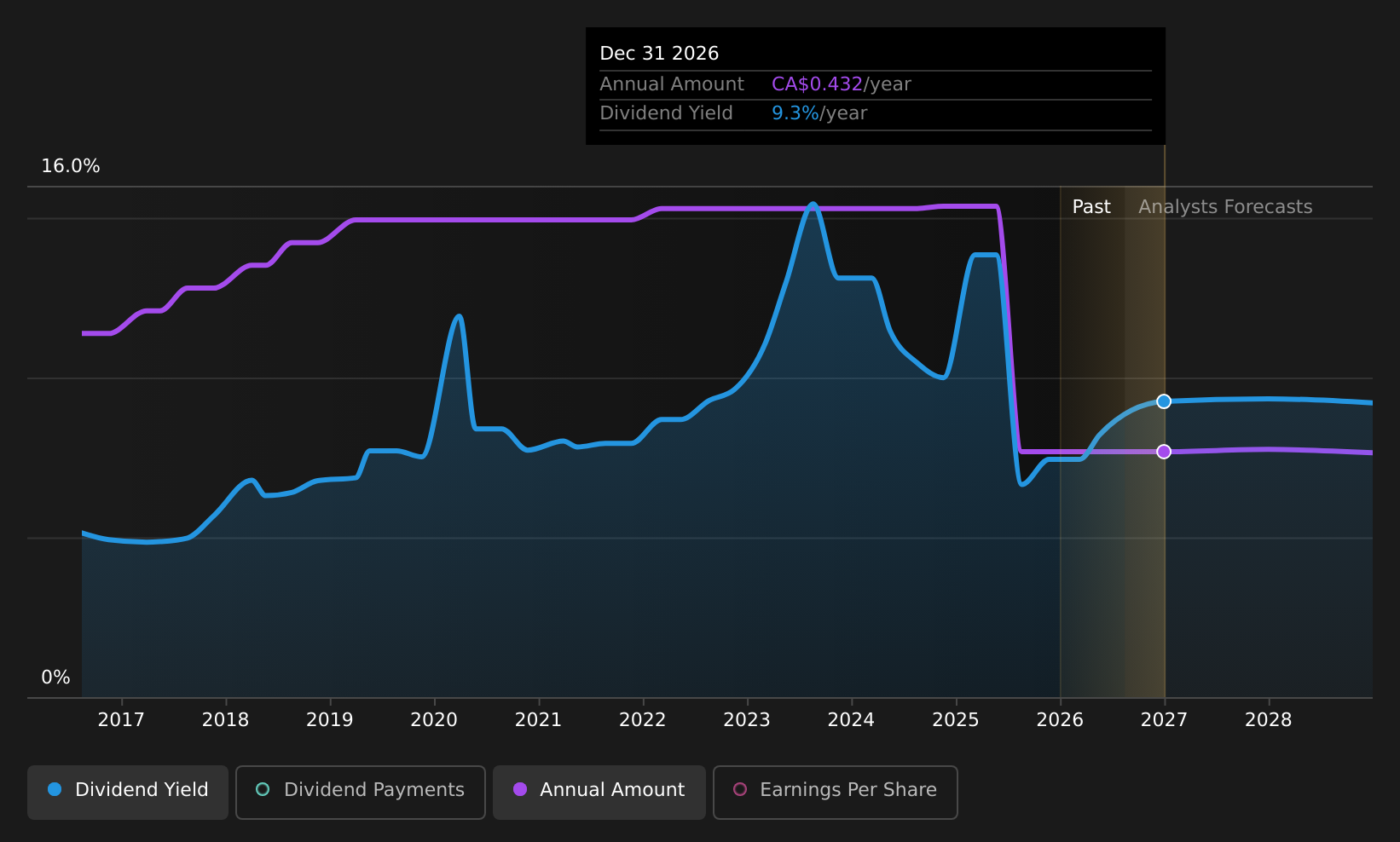
The company's next dividend payment will be CA$0.108 per share. Last year, in total, the company distributed CA$0.43 to shareholders. Calculating the last year's worth of payments shows that Fiera Capital has a trailing yield of 9.3% on the current share price of CA$4.67. Dividends are an important source of income to many shareholders, but the health of the business is crucial to maintaining those dividends. So we need to investigate whether Fiera Capital can afford its dividend, and if the dividend could grow.
Dividends are usually paid out of company profits, so if a company pays out more than it earned then its dividend is usually at greater risk of being cut. Fiera Capital paid out a disturbingly high 232% of its profit as dividends last year, which makes us concerned there's something we don't fully understand in the business.
Generally, the higher a company's payout ratio, the more the dividend is at risk of being reduced.
View our latest analysis for Fiera Capital
Click here to see the company's payout ratio, plus analyst estimates of its future dividends.
Have Earnings And Dividends Been Growing?
Businesses with shrinking earnings are tricky from a dividend perspective. Investors love dividends, so if earnings fall and the dividend is reduced, expect a stock to be sold off heavily at the same time. Fiera Capital's earnings per share have fallen at approximately 9.7% a year over the previous five years. When earnings per share fall, the maximum amount of dividends that can be paid also falls.
The main way most investors will assess a company's dividend prospects is by checking the historical rate of dividend growth. Fiera Capital's dividend payments per share have declined at 2.6% per year on average over the past 10 years, which is uninspiring. It's never nice to see earnings and dividends falling, but at least management has cut the dividend rather than potentially risk the company's health in an attempt to maintain it.
The Bottom Line
Has Fiera Capital got what it takes to maintain its dividend payments? Not only are earnings per share shrinking, but Fiera Capital is paying out a disconcertingly high percentage of its profit as dividends. Generally we think dividend investors should avoid businesses in this situation, as high payout ratios and declining earnings can lead to the dividend being cut. This is not an overtly appealing combination of characteristics, and we're just not that interested in this company's dividend.
So if you're still interested in Fiera Capital despite it's poor dividend qualities, you should be well informed on some of the risks facing this stock. For instance, we've identified 5 warning signs for Fiera Capital (1 is concerning) you should be aware of.
Generally, we wouldn't recommend just buying the first dividend stock you see. Here's a curated list of interesting stocks that are strong dividend payers.
Have feedback on this article? Concerned about the content? Get in touch with us directly. Alternatively, email editorial-team (at) simplywallst.com.
This article by Simply Wall St is general in nature. We provide commentary based on historical data and analyst forecasts only using an unbiased methodology and our articles are not intended to be financial advice. It does not constitute a recommendation to buy or sell any stock, and does not take account of your objectives, or your financial situation. We aim to bring you long-term focused analysis driven by fundamental data. Note that our analysis may not factor in the latest price-sensitive company announcements or qualitative material. Simply Wall St has no position in any stocks mentioned.