Omdia: Global wearable wristband device shipments fell 2% year-on-year in the second quarter
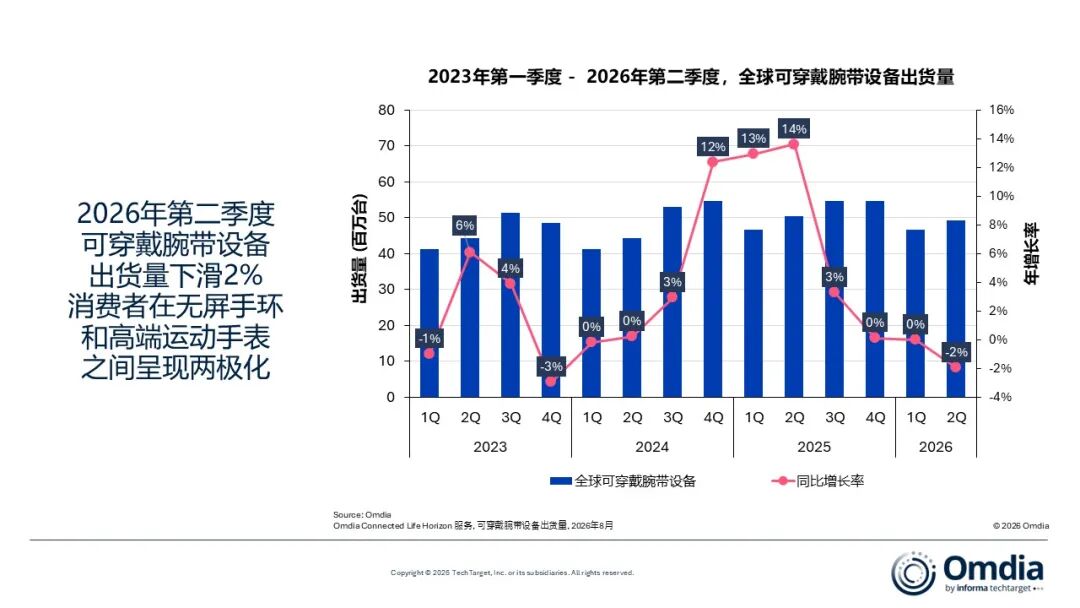
The Zhitong Finance App learned that Omdia's latest data shows that in the second quarter of 2026, global wearable wristband device shipments fell 2% year on year, but this overall decline overshadowed the growing differentiation in consumer demand. Thanks to the strong performance of high-end sports models, smartwatch shipments increased by 6%; at the same time, new screen-less basic bracelets are also gaining momentum, as consumers increasingly prefer minimalist devices or more powerful sports watches.
In contrast, as major manufacturers adjusted the pace of new product launches and product lifecycles, overall shipments of basic bracelets fell by 9%; while shipments of basic watches declined by 3% due to reduced attractiveness, especially in the Indian market. The previous surge in shipments did not continue until 2026.
Jason Low (Jason Low), director of research at Omdia, said, “The wearable wristband device market in the second quarter is gradually dividing into two clear winners. Consumers either prefer minimalistic screen-less bracelets that can be worn around the clock, or sports watches that are rich in features, are more accurate, and have a battery life of up to several days. High-end and screen-less devices are growing steadily, while basic watches and mid-range smartwatches are gradually being phased out of the market.”
Advanced features shape the competitive landscape of the smartwatch market
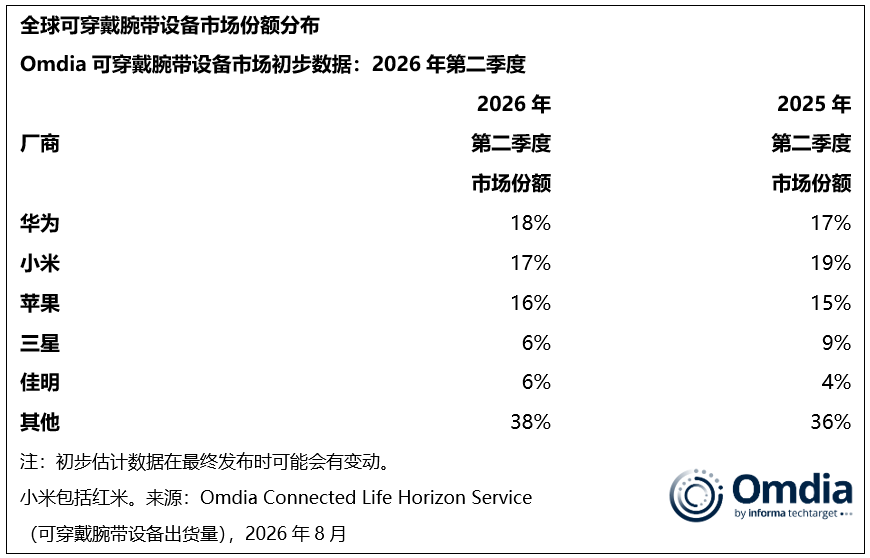
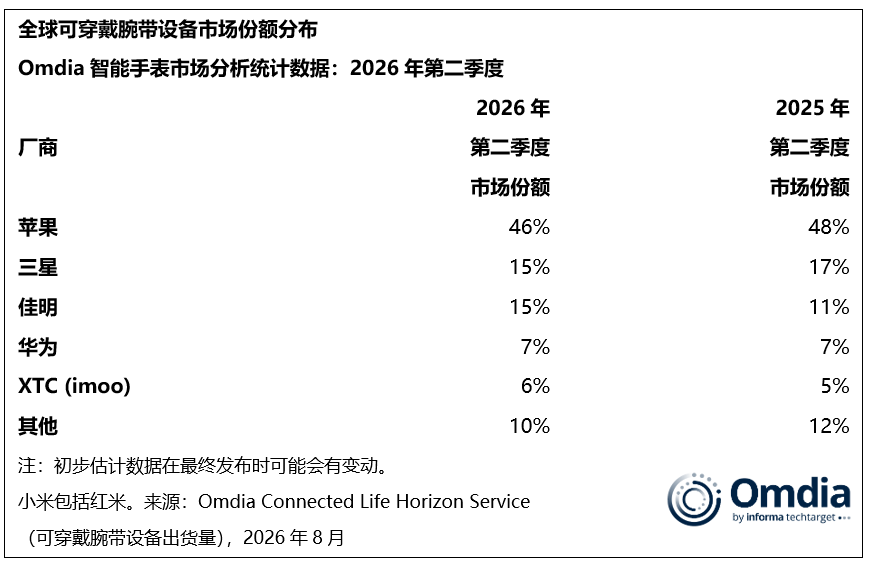
Apple (AAPL.US) maintains an absolute leading position in the smartwatch field, with a global market share of 46%; while Garmin (Garmin) saw the biggest increase in market share among non-Apple manufacturers, reaching 15%, in line with Samsung. Samsung is still in second place by a narrow margin.
Garmin's performance growth reflects the continued strong demand for advanced application scenarios, including running, cycling, and outdoor activities, and the company's efforts to improve the accessibility of its product portfolio through the recent expansion of the Forerunner series product line also supported this growth.
Liu Jiansen added, “Garmin's market share growth highlights a clear trend: consumers are increasingly willing to pay a premium for devices that provide accurate, advanced training data and turn it into actionable insights. Garmin's brand image is built around data quality and performance features, and this positioning resonates strongly with a wider range of consumers.”
In the second quarter of 2026, Huawei led the overall wearable wristband device market with an 18% market share, up one percentage point from 17% in the second quarter of 2025. Its performance has benefited from the continued expansion of its wearable product line, including the global launch of its flagship kids' smartwatch.
Omdia Research Manager Cynthia Chen (Cynthia Chen) said, “This launch is an important milestone for Huawei to expand its cellular wearable wristband device product line to the international market. Thanks to cross-platform smartphone compatibility, Huawei's wearable wristband devices are booming globally and provide comprehensive health and fitness features, such as its newly launched 'Diabetes Risk Study' feature, which has attracted a wide range of consumers.”
In the basic bracelet category, bracelets without a screen already account for more than 15%
Although the overall market for entry-level smart bracelets, commonly known as “fitness bracelets,” is still facing challenges, screenless models are gradually becoming a unique area of growth.
With the recent release of Google Fitbit Air and Garmin Cirqa, screenless devices accounted for more than 15% of basic bracelet shipments this quarter. Fitbit Air's shipments are rising rapidly, making it a trusted choice in the screen-less bracelet segment.
Liu Jiansen said, “The initial momentum is encouraging, but continued success requires continuous improvements in stability and careful expansion of functionality to effectively compete with existing performance-focused competitors such as Whoop.”
In the field of wearable wristband devices, rising memory and storage costs are driving up average sales prices. The recent price increase of the Samsung Galaxy Watch series and subsequent price adjustments in some high-end sports watch product lines reflect this. Leading brands with mature ecosystems should demonstrate deeper device integration capabilities and enhanced personal AI capabilities to highlight the value of their products and justify their high prices. Omdia anticipates that in the context of increased cost pressure in the second half of 2026, manufacturers will further differentiate their products around the quality of data insight, battery life, and cross-platform experience.