
Are the “good days” coming to an end for Japanese car companies? The flames of war in Iran and the rebound of the Japanese yen may be a double blow
The Zhitong Finance App learned that Japanese automakers are increasingly feeling the double pressure from the spillover effects of the war in Iran and the recovery in the Japanese yen exchange rate.
In the latest quarterly earnings report, Toyota (TM.US), Honda (HMC.US), and Nissan (NSANY.US) benefited from the historic weakening of the yen and performed brilliantly — the first two companies raised their full-year profit expectations, while Nissan achieved its first profit in about two years. However, I'm afraid the future external environment will no longer “cooperate” in this way.
At the beginning of August this year, after the exchange rate of the yen against the US dollar once fell below the 163 mark and hit the lowest level in 40 years, the US Treasury Department and Japan's Ministry of Finance carried out a rare joint intervention to buy yen in the foreign exchange market. This move is historic. Since Japanese car companies have traditionally relied on the depreciation of the yen to lower the price of exported vehicles and enhance their competitiveness in the global market, this intervention unquestionably sends a warning signal.
Vincent Sun, a senior stock analyst at Morningstar, said, “If the government interferes to strengthen the yen, it will be an adverse factor for Japanese car companies.”
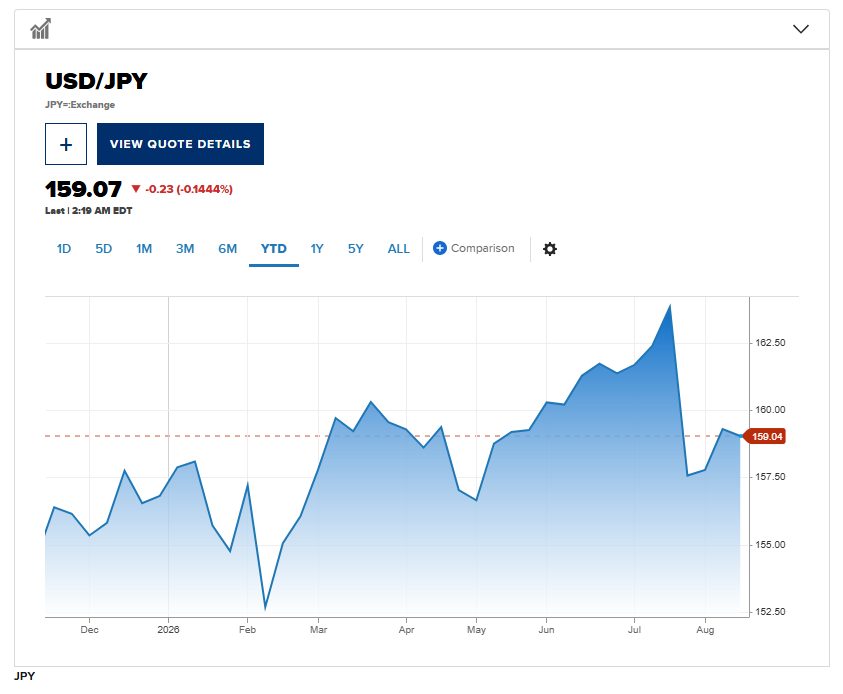
He pointed out that the appreciation of the yen will force car companies to face a dilemma in overseas markets: either raise sales prices, which may cause loss of market share; or suffer the consequences of shrinking foreign currency revenue and putting pressure on operating profits after conversion to yen.
Bernstein senior analyst Masahiro Akita said, “Every 1% change in the yen exchange rate usually affects the operating profit of Japanese car companies by about 2%. Although each company has different sensitivities, the impact of some car companies can even reach about 4%.”
Analysts also believe that the ongoing Middle East conflict also poses a hidden danger. Vincent Sun pointed out that this will cause more supply chain disruptions and rising costs. The Strait of Hormuz and the Red Sea are critical shipping channels for Japanese car companies. They are highly dependent on petrochemical raw materials such as aluminum and naphtha in the production process.
Masahiro Akita added, “The biggest headwind facing auto companies' profits is the sharp rise in raw material costs, and this trend is further intensifying as the Middle East conflict continues to unfold.”
He also pointed out, “Prices of key inputs, including naphtha and resin linked to oil prices, memory chips, and industrial metals such as aluminum, copper, and steel have generally risen, which is having a widespread negative impact on the overall profitability of the industry.”