
DexCom (DXCM) Stock May Be Cheap As Its 35% Run Tests Value
DexCom stock has delivered a strong 34.9% return year to date, yet the valuation picture is mixed, with the Discounted Cash Flow (DCF) intrinsic value estimate pointing to meaningful upside while the broader checks remain cautious.
- Year to date, DexCom is up 34.9%, which means anyone looking at the stock today is assessing it after a solid move higher.
- For a business that relies on continued adoption of its glucose monitoring products, expectations for sustained revenue growth can support the DCF case, while any slowdown in device uptake or pricing pressure may weigh heavily on what investors are willing to pay.
- DexCom scores 2 out of 6 on our valuation checks, which suggests that on the broader set of measures the stock does not screen as a clear bargain.
The issue now is whether the current DexCom share price of US$89.75 still leaves enough upside relative to the DCF based intrinsic value estimate to compensate for the risks in the business.
Is DexCom Still Cheap on Cash Flow?
The Discounted Cash Flow (DCF) approach values DexCom based on the cash it is expected to generate for shareholders over time. For DexCom, the model uses latest twelve month free cash flow of about $1.38b and assumes that cash flows continue growing from this base rather than shrinking.
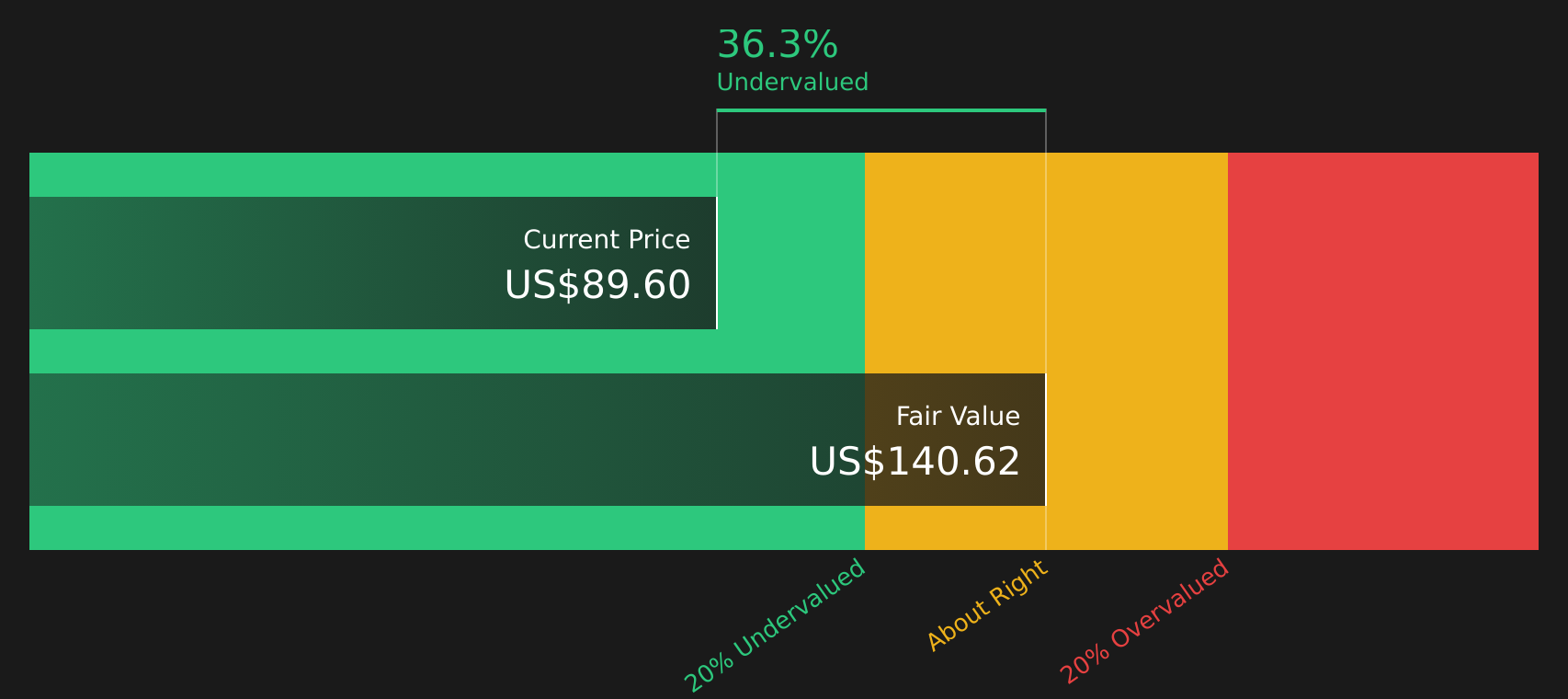
On these projections, the DCF model points to an estimated intrinsic value of about $140 per share. That sits well above the current share price of $89.75, and implies the stock trades at a 36.1% discount to this cash flow based estimate.
On this DCF view, DexCom stock currently screens as undervalued relative to its projected cash generation.
Our Discounted Cash Flow (DCF) analysis suggests DexCom is undervalued by 36.1%. Track this in your watchlist or portfolio, or discover 52 more high quality undervalued stocks.
Does DexCom Look Fairly Valued on Earnings?
The P/E ratio is a useful cross check for DexCom because it ties the current share price directly to the earnings that support it. It is also a familiar yardstick for many healthcare and medical equipment stocks.
DexCom currently trades on roughly 33.9x earnings, compared with about 26.2x for the wider Medical Equipment industry and a peer average of around 26.1x. That puts the stock at a visible premium to many listed peers. However, a more tailored fair P/E ratio that factors in DexCom’s growth profile, margins, size and risk comes out at about 32.5x. This sits only slightly below the current market multiple, so the gap is not extreme.
On this P/E view, DexCom stock appears broadly fairly valued rather than clearly cheap or expensive.

See what the numbers say about this price — find out in our valuation breakdown.
The DexCom Narrative: What Would Justify Today's Price?
Simply Wall St Narratives for DexCom extend this valuation puzzle into a clear set of what if cases that link DexCom's current share price to different paths for growth, margins and earnings. Rather than relying on a single multiple or model output, each narrative sets out the assumptions that sit behind its own view of fair value, so you can revisit those assumptions as new results and updates come through. These narratives are available on Simply Wall St's Community page.
Community views on DexCom sit far apart, with one side leaning into expanding access and digital tools while the other worries about how much is already priced in.
Bull case: roughly fairly valued
"Expanded reimbursement and international coverage unlock new patient segments, fueling sustained revenue growth while diversifying global revenue streams..."
Read the full Bull Case to see why DexCom could be undervalued
Bear case: 32% overvalued
"Future revenue growth still depends on converting the roughly two thirds of covered patients who are not yet using CGM..."
Read the full Bear Case to see why DexCom could be overvalued
Do you think there's more to the story for DexCom? Head over to our Community to see what others are saying!
The Bottom Line
For DexCom, the Discounted Cash Flow (DCF) intrinsic value estimate points to meaningful upside, while the P/E based view suggests the stock is priced roughly in line with peers after adjusting for its profile. That split, together with a weak broader valuation score, means the apparent discount rests heavily on the cash flow assumptions in the model. The key question from here is whether DexCom can sustain the growth and profitability implied in those cash flows without inviting the kind of pricing pressure or slower device uptake that would justify the current multiple.
This article by Simply Wall St is general in nature. We provide commentary based on historical data and analyst forecasts only using an unbiased methodology and our articles are not intended to be financial advice. It does not constitute a recommendation to buy or sell any stock, and does not take account of your objectives, or your financial situation. We aim to bring you long-term focused analysis driven by fundamental data. Note that our analysis may not factor in the latest price-sensitive company announcements or qualitative material. Simply Wall St has no position in any stocks mentioned.
Have feedback on this article? Concerned about the content? Get in touch with us directly. Alternatively, email editorial-team@simplywallst.com