
London Office Stocks Worth Watching If UK Bank Tax Pressure Grows
Pressure for a UK bank windfall tax has put London’s financial district under a sharper spotlight and pulled its office landlords into the story. If politicians squeeze lenders, decisions on HQ moves, office downsizing or fresh investment could follow. That risk also creates potential mispricing. This article walks through 3 stocks from our screener that are closely exposed to the news and how investors might think about them.
The stocks below are a starting sample from this theme, while the full screen surfaced 9 more UK commercial real estate owners with London office exposure that carry equally detailed narratives. To see the wider field and identify which stories line up best with your thesis, head straight into the UK Commercial Real Estate Owners with Major London Office Exposure screener to filter, compare and analyze potential higher conviction ideas.
Derwent London (LSE:DLN)
Overview: Derwent London is a central London office focused REIT that owns and manages a £5.0 billion portfolio of mainly West End and City fringe offices, often buying older buildings in improving areas and upgrading them into design led, amenity rich space for tenants. The company also has a strong emphasis on sustainability, targeting net zero carbon by 2030 and regularly winning industry awards for the quality and design of its projects.
Operations: Derwent London generates most of its £412 million revenue from office buildings at about £209 million, with additional income from service charges at about £57 million and trading property sales at about £123 million, all from the UK.
Market Cap: £2.3b
Derwent London is closely linked to the current debate over UK banks and headquarters locations, with a large, design focused central London office portfolio that caters to tenants who treat workspace as a tool for culture and talent rather than just a cost line. Analysts note the potential for higher earnings, yet recent results include a reported net loss, a sharp drop in margins and a high P/E ratio, which together highlight execution and valuation risk if leasing or refinancing are weaker than expected. At the same time, an experienced management team, modest leverage, fresh financing capacity and an active buyback program indicate that the company continues to back its own assets. For investors, a key question is whether current pricing reflects short term noise or a deeper reset in London office values.
Derwent London’s design led assets and buyback support could mean the headline net loss and high P/E ratio are only part of the picture. See how the full 1 key reward and 3 important warning signs might change your view

Build your own London office shortlist
Derwent London and the two other stocks in this article all surfaced from a single screener, which is exactly how you can start building a shortlist that fits your own thesis on UK offices, banks and balance sheets. Use our flexible Screener to mix filters like valuation, earnings quality and risks, or jump straight into our curated Investing Ideas for ready made starting points.
British Land (LSE:BLND)
Overview: British Land is a long established UK commercial property company that owns and manages large London office campuses and UK retail parks. It aims to create high quality places where businesses and shoppers prefer to spend time over the long term.
Operations: British Land generates most of its £523 million revenue from Retail and London Urban Logistics at about £289 million and London campuses at about £108 million, with the rest from various service charges and management or performance fees, all from the UK.
Market Cap: £4.5b
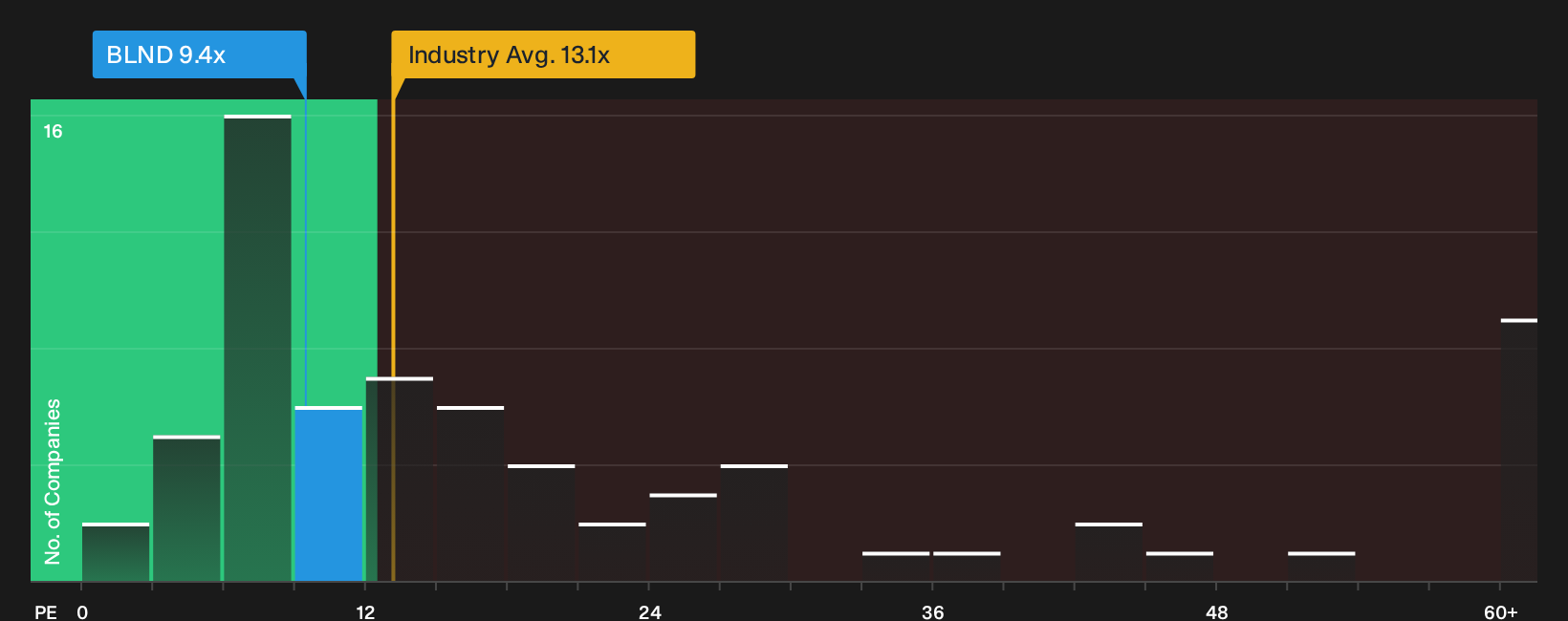
British Land provides direct exposure to the London office market, with major campuses and mixed use sites that rely on large corporate and financial tenants at a time when banks are weighing their UK footprint. Analysts report solid earnings growth potential, net margins stand at 73.7% and the stock trades on a modest P/E relative to peers. However, debt is not well covered by operating cash flow and all liabilities sit with external lenders, which increases sensitivity to higher rates or refinancing friction. A refreshed leadership team and a growing focus on retail parks and urban logistics add another layer to the thesis that the current valuation might not fully reflect the mix of income resilience and execution risk tied to large development schemes.
British Land’s combination of high net margins and a modest P/E relative to peers suggests that the market may be mispricing both its office exposure and its shift toward retail. Scan the 4 key rewards and 3 important warning signs (1 is major!) to see what could be hiding in that gap.
Great Portland Estates (LSE:GPE)
Overview: Great Portland Estates is a FTSE 250 property company that owns and develops a £2.4b portfolio of central London offices and mixed use buildings. It aims to buy underused space and refurbish it into higher value workplaces for a broad mix of tenants.
Operations: Great Portland Estates generates around £75 million from the remainder of its portfolio and about £45 million from fully managed offices including joint ventures, with smaller losses from joint venture managed offices, all from the UK.
Market Cap: £1.5b
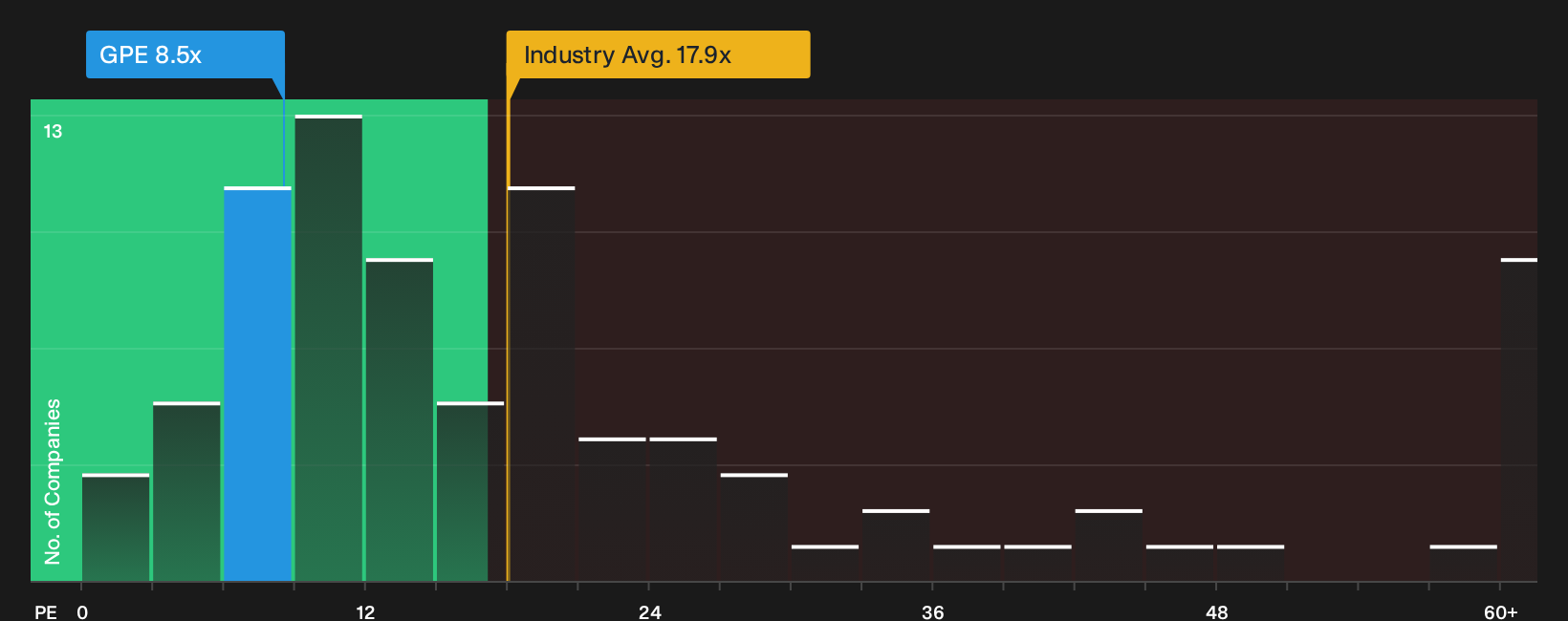
Great Portland Estates gives investors concentrated exposure to prime central London offices at a time when any shift in bank taxation or headquarters plans could matter most for core locations. The stock trades on a lower P/E than many peers. Recent lettings show tenants paying above estimated market rents for high quality space, which supports the company’s focus on fully managed, amenity rich offices. Earnings growth and higher margins sit alongside some clear pressure points, including dividends that are not fully covered by earnings and a balance sheet funded entirely by external borrowings, which raises financing risk. That mix of improving income quality and more fragile funding makes the current valuation and news flow worth a closer look for long term investors.
Great Portland Estates sits at the point where prime London office rents and a fully borrowed balance sheet intersect, which can create pricing that feels out of sync. Walk through the full 4 key rewards and 2 important warning signs (1 is major!) to see what might be masking the real story
Seeking Alternatives Before The Crowd?
Fresh ideas can move first when sentiment shifts and capital chases the next breakout. Do not get caught watching from the sidelines while it matters. Act now.
- Spot strong balance sheets before momentum starts flying by scanning companies in the list of solid balance sheet and fundamentals (19 results) that still sit under the radar for now.
- Track potential yield engines while prices are dropping or drifting by checking out the curated 7 dividend fortresses that focus on income strength while it still matters.
- Ride structural growth themes early by reviewing hand picked infrastructure stocks in the 40 power grid technology and infrastructure stocks before attention and pricing catch up.
This article by Simply Wall St is general in nature. We provide commentary based on historical data and analyst forecasts only using an unbiased methodology and our articles are not intended to be financial advice. It does not constitute a recommendation to buy or sell any stock, and does not take account of your objectives, or your financial situation. We aim to bring you long-term focused analysis driven by fundamental data. Note that our analysis may not factor in the latest price-sensitive company announcements or qualitative material. Simply Wall St has no position in any stocks mentioned.
Have feedback on this article? Concerned about the content? Get in touch with us directly. Alternatively, email editorial-team@simplywallst.com