
It just ushered in the biggest weekly inflow since April. Bitcoin ETF turned a net outflow of 390 million US dollars, and institutional sentiment once again became empty
The Zhitong Finance App learned that last week, the US Spot Bitcoin Exchange-Traded Fund (ETF) recorded the largest weekly net outflow of capital since the end of June, reversing the strong start in early August. According to compiled data, the 13 Bitcoin ETFs listed in the US had a total net outflow of US$389.7 million in the week ending August 10, while the previous week recorded a net inflow of US$853.5 million.
The first week of August set the record for the largest weekly capital inflow since April, and at the end of July 2026, a large-scale firmware vulnerability attack against the Coldcard hardware wallet broke out. The attack not only caused huge financial losses, but also shook the market's trust in the security of “self-hosting” cryptocurrencies. The incident reignited investors' interest in protecting digital assets through traditional financial channels.
ESME Pau, head of capital markets and policy at blockchain security agency CertiK, said: “The net ETF outflow last week reflects the overall slump in the Bitcoin market. The inflow of funds that occurred briefly after the Coldcard hacking incident now seems more like an abnormal fluctuation, while the broader institutional sentiment remains cautious and even pessimistic.”
The price of Bitcoin hovered around $63,000 at a time when the ETF resumed selling pressure, which has retracted about 50% from the all-time high set in October last year. The risk of rising interest rates continues to dampen market sentiment, while the proposed US crypto market structure bill, the “Clarity Act” (Clarity Act), lacks progress at the legislative level, making potential buyers tend to wait and see.
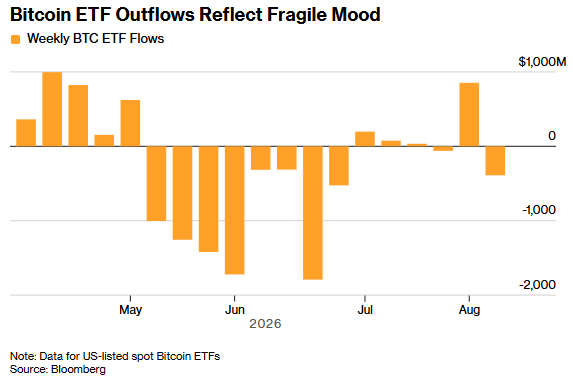
Bitcoin ETFs provide investors with a channel to gain exposure to the Bitcoin price without directly holding or keeping their own tokens. Although a slight net inflow was recorded for three weeks last month, confidence at the bottom is still weak.
Recently, the Coldcard brand offline wallet under Toronto-headquartered Coinkite revealed a security flaw. The key generation mechanism had predictability issues, shaking the market's trust in what should be regarded as the most secure cryptoasset storage solution. In this context, some investors believe that the logic of obtaining exposure to Bitcoin through traditional asset channels has been strengthened.
Bitcoin prices traded almost sideways last week, and the fluctuation range narrowed to less than 2%. As of press time, the price of the currency is estimated at around $63,650.
The implied volatility index (which measures the price fluctuation over the next 30 days based on option prices), which measures Bitcoin's expected volatility, was reported at around 37 on Monday, lower than the average for the year, and far below the peak of 82.2 set in early February.
ETF capital flow is an important weather vane for measuring institutional demand, as this type of product has become one of the main channels for traditional investors to gain exposure to Bitcoin. Continued net outflows may put pressure on currency prices and liquidity, especially as other sources of demand remain sluggish.