
EchoStar (ECHO) Stock Looks Above Fair Value After Its 393% Run
EchoStar stock has delivered a very strong 392.7% return over the past three years, yet both the Discounted Cash Flow (DCF) intrinsic value estimate and market multiple checks currently point to the shares trading at a premium rather than at a clear bargain.
- EchoStar's 392.7% return over three years sets a high bar for future returns and raises the question of how much of the story is already priced in.
- The recent Chapter 11 filing for Hughes Satellite Systems may weigh on risk perceptions, even as any successful refocus toward enterprise, government and defense markets can support long term cash flow potential.
- EchoStar scores just 1 out of 6 on the broader valuation checks, which leans expensive rather than pointing to a clear value opportunity.
The issue now is whether EchoStar's current share price leaves enough room between expectations and intrinsic value to justify taking on that risk.
Has EchoStar Run Too Far on Cash Flow?
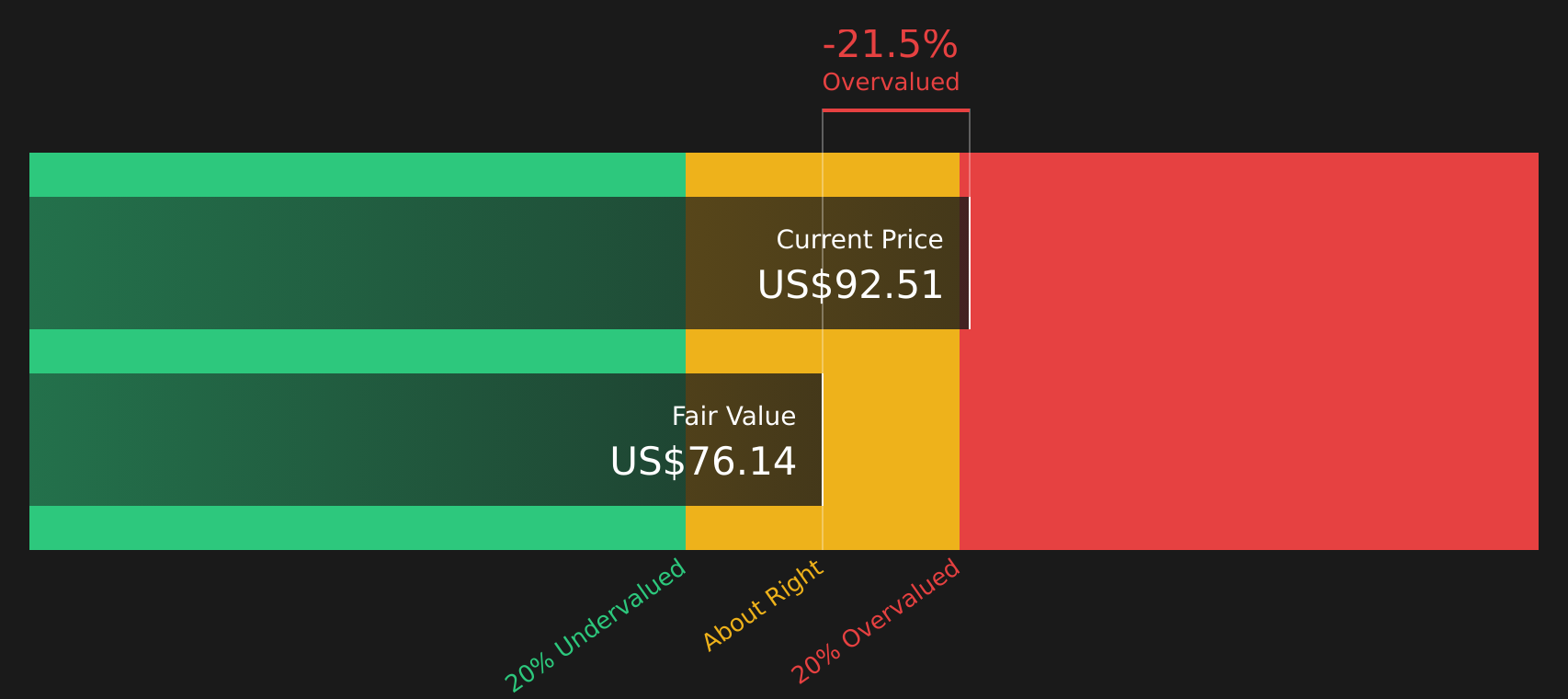
The Discounted Cash Flow (DCF) model estimates what EchoStar might be worth based on its future cash flows, translated back into today’s dollars. For EchoStar, the latest twelve month free cash flow shows an outflow of about $2.1b, and the model assumes a recovery to positive and growing cash generation over time. On that basis, the DCF indicates an estimated intrinsic value of about $76 per share.
Compared with the current share price, that intrinsic value suggests the stock is about 20.7% overvalued. The recent Chapter 11 filing for Hughes Satellite Systems highlights that the business is still in a repair phase, which helps explain why the market is pricing EchoStar ahead of what the cash flow model supports.
On this Discounted Cash Flow view, EchoStar stock currently appears overvalued.
Our Discounted Cash Flow (DCF) analysis suggests EchoStar may be overvalued by 20.7%. Discover 52 high quality undervalued stocks or create your own screener to find better value opportunities.
Does EchoStar Look Pricey on Sales?
P/S is a useful cross check for EchoStar because the business is still working through losses, so revenue offers a cleaner anchor than P/E right now.
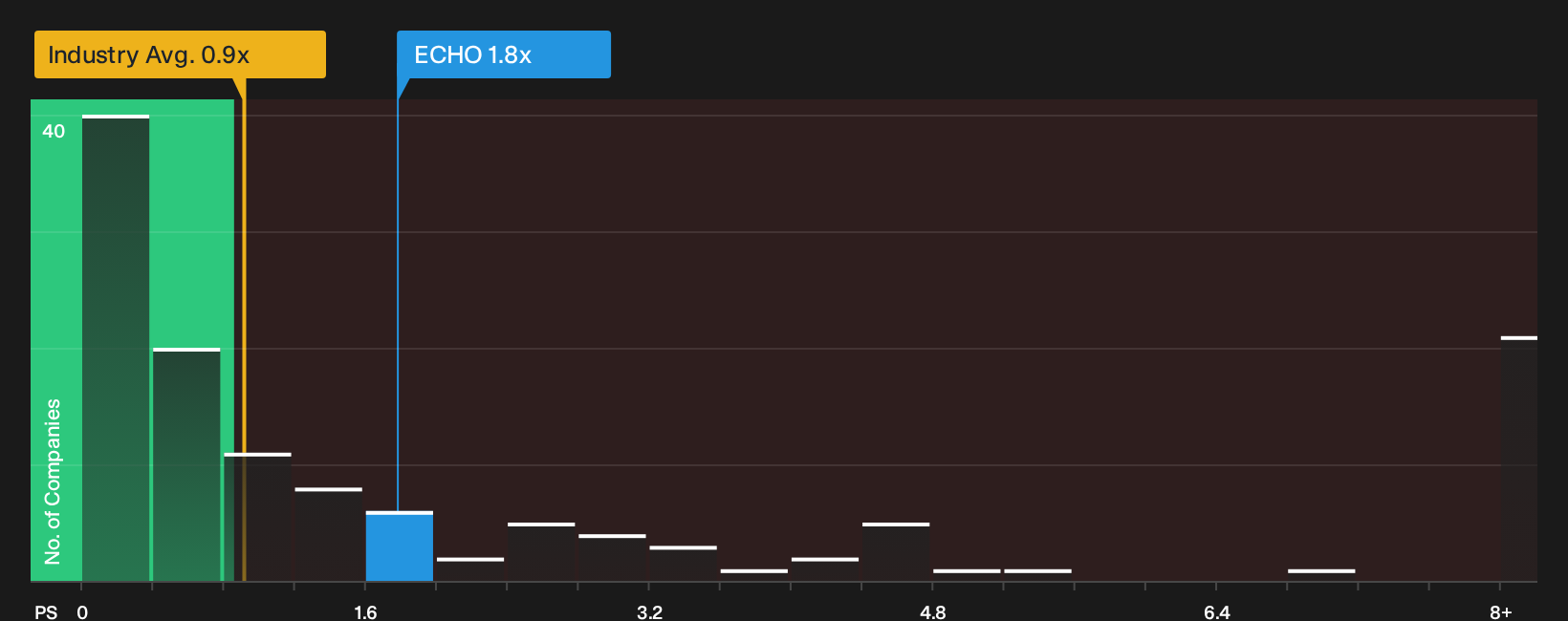
EchoStar currently trades on a P/S of about 1.8x, which sits above the Media industry average of roughly 1.1x and also above the peer group level of about 1.0x. On the internal fair ratio framework, which blends factors such as margins, size and risk, EchoStar screens closer to 1.3x. That is a clear gap to where the stock trades today.
This indicates that investors are paying a premium for each dollar of EchoStar revenue relative to both the sector and peers, even with the recent Chapter 11 filing at Hughes Satellite Systems in the background.
On the P/S multiple, EchoStar stock currently appears expensive compared with what its revenue profile would typically justify.
See what the numbers say about this price — find out in our valuation breakdown.
The EchoStar Narrative: What Would Justify Today's Price?
Simply Wall St Narratives pick up where the valuation puzzle for EchoStar leaves off and spell out what would need to happen to growth, margins and earnings for the stock to be worth materially more or less than today’s price, based on community views. Rather than relying on a single multiple or model output, each narrative sets out the assumptions behind its fair value so you can compare those expectations with EchoStar's actual results over time.
The community is split on EchoStar, with one camp focused on long term space exposure and another worried about funding, regulation and competition.
Bull case: 33% undervalued
"EchoStar's investment in a unique wideband LEO direct-to-device satellite constellation, leveraging its global S-band and AWS-4 spectrum rights, positions it to address skyrocketing global demand for ubiquitous connectivity across consumer, enterprise, government, and IoT applications. This is likely to create new, high-margin wholesale revenue streams and accelerate long-term revenue growth…"
Read the full Bull Case to see why EchoStar could be undervalued
Bear case: 109% overvalued
"Let’s be real: if you just looked at EchoStar’s legacy financials, you’d run the other way…"
Read the full Bear Case to see why EchoStar could be overvalued
Do you think there's more to the story for EchoStar? Head over to our Community to see what others are saying!
The Bottom Line
EchoStar screens as overvalued on both the Discounted Cash Flow (DCF) intrinsic value estimate and the P/S multiple checks, and the broader valuation score is weak. The big question from here is whether management can turn the current cash burn and balance sheet repair into a steadier, self funded cash flow profile that would justify the premium. For you as an investor, the crux is whether EchoStar can deliver the kind of revenue mix and margins implied by today’s price or whether expectations have run ahead of what the business can reasonably support.
This article by Simply Wall St is general in nature. We provide commentary based on historical data and analyst forecasts only using an unbiased methodology and our articles are not intended to be financial advice. It does not constitute a recommendation to buy or sell any stock, and does not take account of your objectives, or your financial situation. We aim to bring you long-term focused analysis driven by fundamental data. Note that our analysis may not factor in the latest price-sensitive company announcements or qualitative material. Simply Wall St has no position in any stocks mentioned.
Have feedback on this article? Concerned about the content? Get in touch with us directly. Alternatively, email editorial-team@simplywallst.com