
IPO News | Yimufeng Biotech once again submitted the Hong Kong Stock Exchange's core product IMC002 has submitted an application for a new experimental drug to the State Drug Administration
The Zhitong Finance App learned that according to the Hong Kong Stock Exchange's disclosure on August 18, Shenzhen Yimufeng Biotechnology Co., Ltd. - B (hereinafter referred to as “Yimufeng Biology”) once again submitted a statement to the main board of the Hong Kong Stock Exchange, with Huatai International as the sole sponsor.
Company profile
According to the prospectus, the company was founded in 2020 as an innovative cell therapy company focusing on the discovery, development, manufacture and commercialization of chimeric antigen receptor (CAR) T-cell therapy, using a dual engine with both external and in vivo CAR-T cell therapy to treat solid tumors, hematological malignancies, and autoimmune diseases.
The company has a core product (IMC002), which is a potential best-in-class anti-Claudin18.2 (CLDN18.2) CAR-T cell therapy candidate developed independently. The company is currently conducting a registered phase III clinical trial of IMC002 for the treatment of advanced gastric cancer/gastroesophageal junction (GC/GEJ) adenocarcinoma in China, and submitted a new experimental drug application (IND) for IMC002 as a first-line treatment for pancreatic cancer as an additional indication in June 2026.
In addition to IMC002, the company's pipeline also has eight self-developed candidate products for cell therapy, including (1) IMC001, a potentially first-of-its-kind clinical-stage (phase I/IIa) anti-epithelial cell adhesion molecule (EPCAM) CAR T cell therapy candidate for the treatment of EpCaM positive solid tumors; (2) in vivo CAR-T cell therapy candidates for treating hematologic malignancies and autoimmune diseases (IMV101) and hematologic malignancies (IMV102). These therapies have already been initiated by researchers Test (IIT); (3) a candidate product for in vivo CAR-T cell therapy (IMV103) for treating solid tumors. The therapy has been approved by the Ethical Committee to carry out IIT, and it is currently expected that such treatment will enter the IND declaration phase in the first half of 2027; (4) a candidate product for CD19/CD20 bispecific in vivo CAR-T cell therapy for treatment of B-cell diseases (IMV104); (5) a “synthetic NKG2D receptor” CAR-T cell therapy for treatment of CLDN18.2 positive solid tumors; and (6) Two other CAR-T cell therapy candidate products that are in the pre-clinical development stage.
Financial data
Earnings
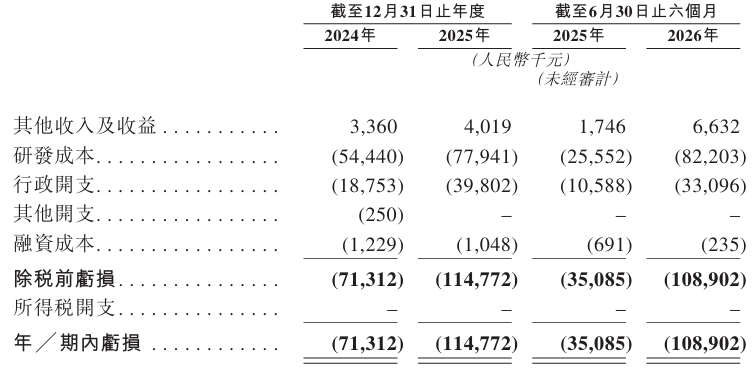
In 2024, 2025, and 2026 for the six months ended June 30, the company achieved other revenue and revenue of RMB 3.36 million, RMB 4.09 million, and RMB 6.632 million, respectively.
loss
In 2024, 2025, and 2026 for the six months ended June 30, the company lost approximately 71.312 million yuan, 115 million yuan, and 109 million yuan respectively for the annual/period.
Industry Overview
Cancer is one of the leading causes of death worldwide, and the incidence of cancer is expected to continue to rise due to population aging, lifestyle-related risk factors, and population growth. In 2025, 21.9 million new cases of cancer were added worldwide, and there were about 11 million cancer deaths, highlighting the high incidence of the disease and the heavy burden of death.
In 2023, cancer caused a total of 271 million disability-adjusted life years, 97% of which were due to lost years of life, reflecting the global burden of cancer deaths. In terms of global incidence, solid tumors account for the vast majority of global cancer cases, accounting for about 90% of all new cancers in the world in 2025, and are expected to remain at a similar level until 2035. The number of new cases of solid tumors worldwide is expected to increase from 20.5 million in 2025 to 25.3 million in 2035. At the same time, hematologic malignancies also constitute an important category of malignant diseases.
In 2025, the five solid tumors with the highest incidence rates in the world are lung cancer, breast cancer, colorectal cancer, prostate cancer, and stomach cancer. Gastric cancer adds about 1 million new cases a year worldwide, ranking in the top five in the number of newly diagnosed solid tumor indications.
Cancer treatment has gone through a long process of development in history and will continue to evolve in the future. Existing treatments for cancer include surgery, radiation therapy, chemotherapy, targeted therapy and immunotherapy, and cell and gene therapy. Together, these methods cover strategies such as cure, condition control, and mitigation, and reflect a gradual shift in treatment concepts from broad-spectrum cytotoxic treatment to more accurate, biologically driven intervention methods.
Immuno-oncology therapy is an emerging pillar of cancer treatment. Immuno-oncology is expected to achieve the highest compound annual growth rate among major cancer treatment models from 2025 to 2035, reflecting the rapid spread of its clinical application and its strategic importance in the field of oncology treatment. This process can be achieved by activating the immune system to attack cancer cells or supplementing immune system components. According to market standards, immuno-oncology therapies are mainly divided into cellular immunotherapy (such as CAR-T and TCR-T), cytokines, immune checkpoint monoclonal antibodies, oncolytic viruses, T-cell connectors (TCE), and cancer vaccines. These treatment modes are aimed at modulating, activating, or redirecting T cell function to enhance anti-tumor immunity. In these strategies, T cells are the main effectors of adaptive anti-tumor immunity. Specifically, genetically-modified T cell therapy (such as CAR-T cell therapy) can directly modify patients' T cells, making them tumor-specific recognition and effective cytotoxic activity, making CAR-T one of the most mature and clinically proven treatment modes in the field of immuno-oncology.
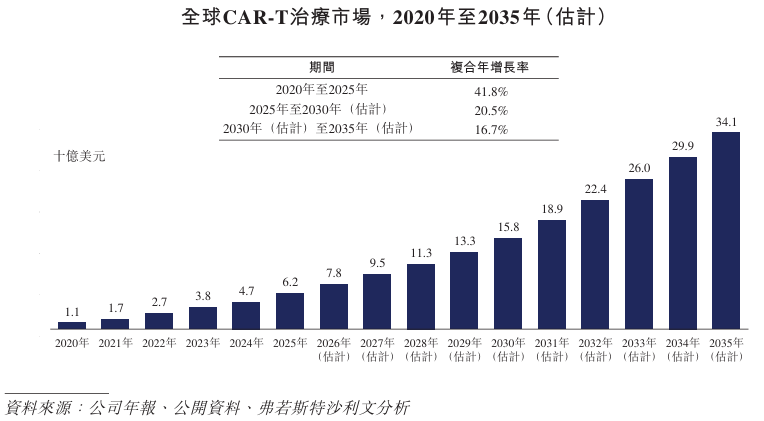
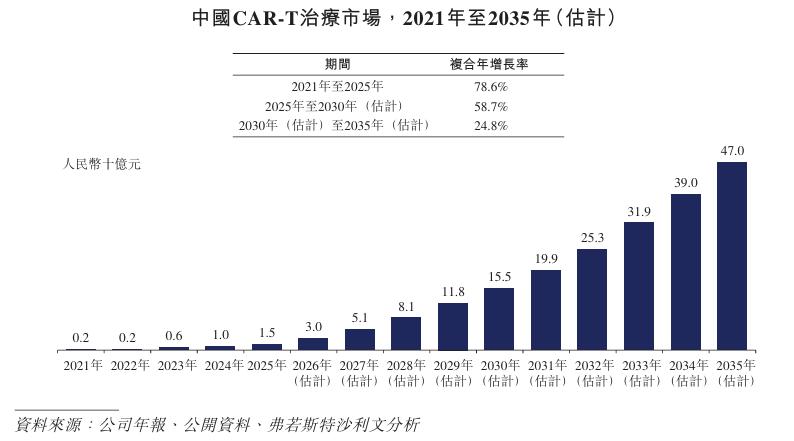
The following figure shows the historical scale of the global and Chinese CAR-T cell therapy markets from 2020 to 2025 and the forecast scale from 2026 to 2035, respectively:
Board Information
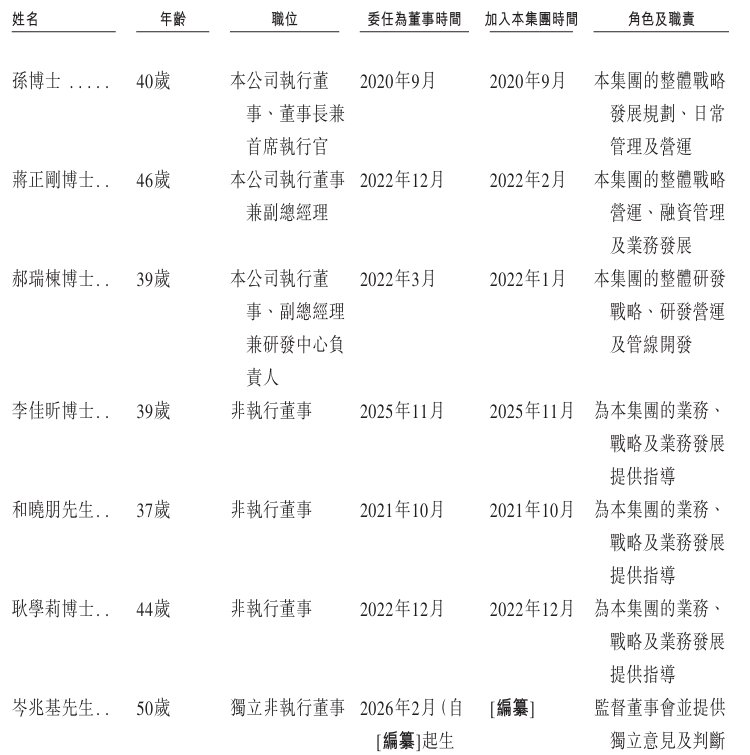
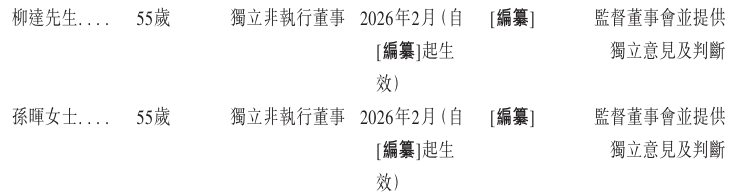
After compilation, the board of directors will be composed of nine directors, three of whom are executive directors, three are non-executive directors, and three are independent non-executive directors. The board of directors is responsible for the management and operation of the business and has general powers over it.
Shareholding structure
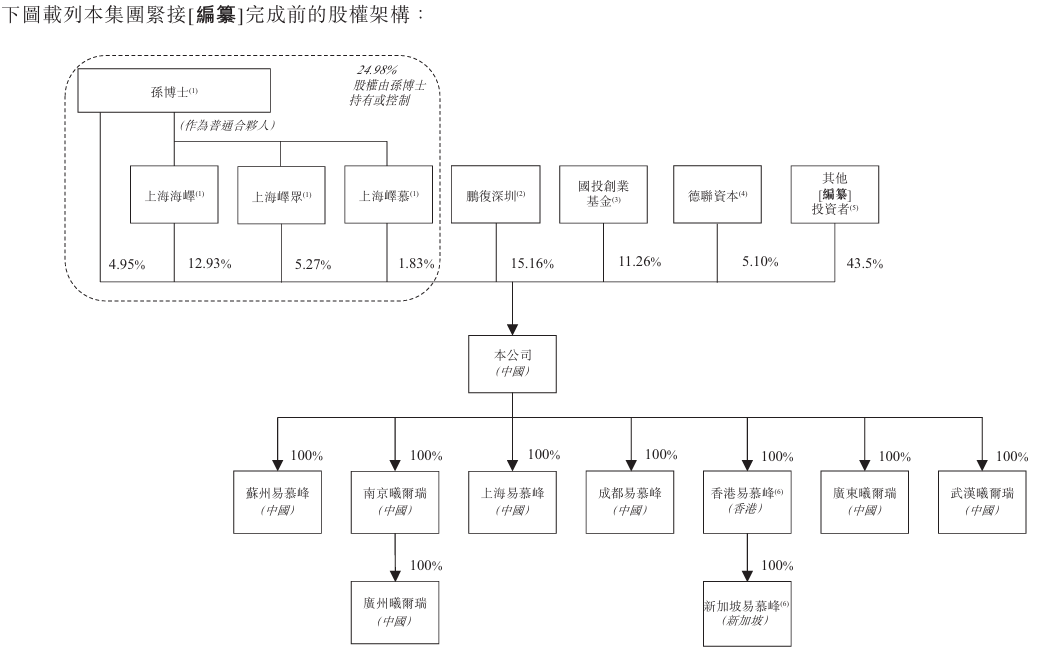
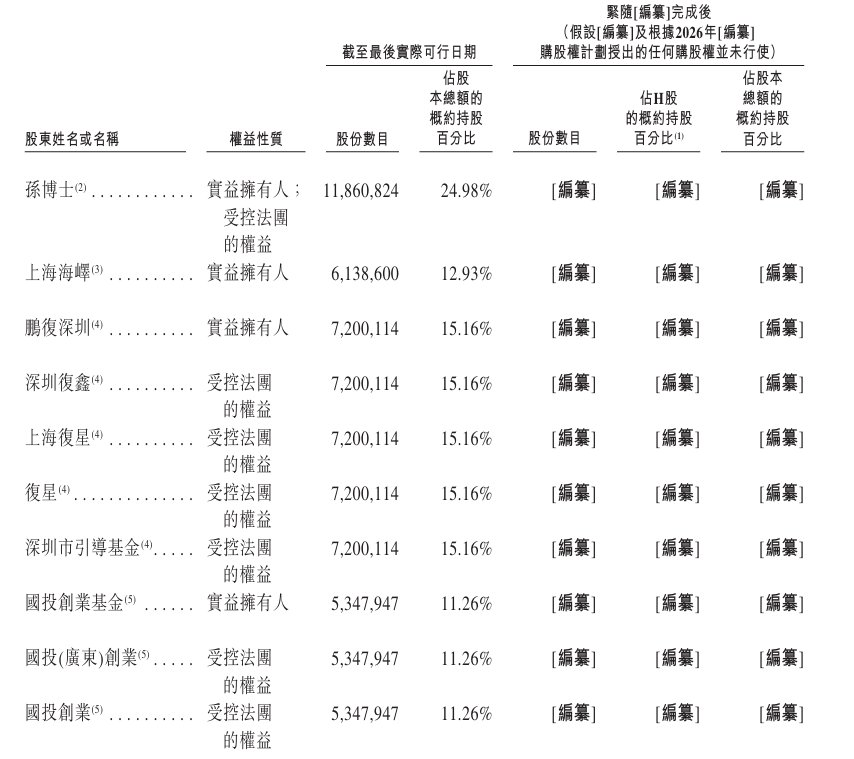
As of the last practical date (August 11, 2026), Dr. Sun has the right to control about 24.98% of the total issued share capital, of which about 4.95% of the total issued share capital is directly held by him, and about 20.03% of the total issued share capital is indirectly controlled by him as general partners of Shanghai Haiyi, Shanghai Yizhong, and Shanghai Yimu. The three controlled entities held 12.93%, 5.27% and 1.83% of the total issued share capital, respectively. Furthermore, prior to compilation, Dr. Sun had the power to control the composition of most members of the board of directors in accordance with shareholders' agreements. Therefore, Dr. Sun and his controlled entities were treated as controlling shareholders prior to codification.
Intermediary team
Sole sponsor: Huatai Financial Holdings (Hong Kong) Limited;
Legal advisors: Fangda Law Firm, Zhong Lun Law Firm;
Sole sponsor's legal advisors: Jingtian Gongcheng Law Firm Limited Liability Partnership, Jingtian Gongcheng Law Firm;
Auditors and reporting accountants: Ernst & Young;
Industry consultant: Frost & Sullivan (Beijing) Consulting Co., Ltd. Shanghai Branch;
Compliance Advisor: Zibo Capital Co., Ltd.